LISTEN TO THE PLACE
A story worth knowing
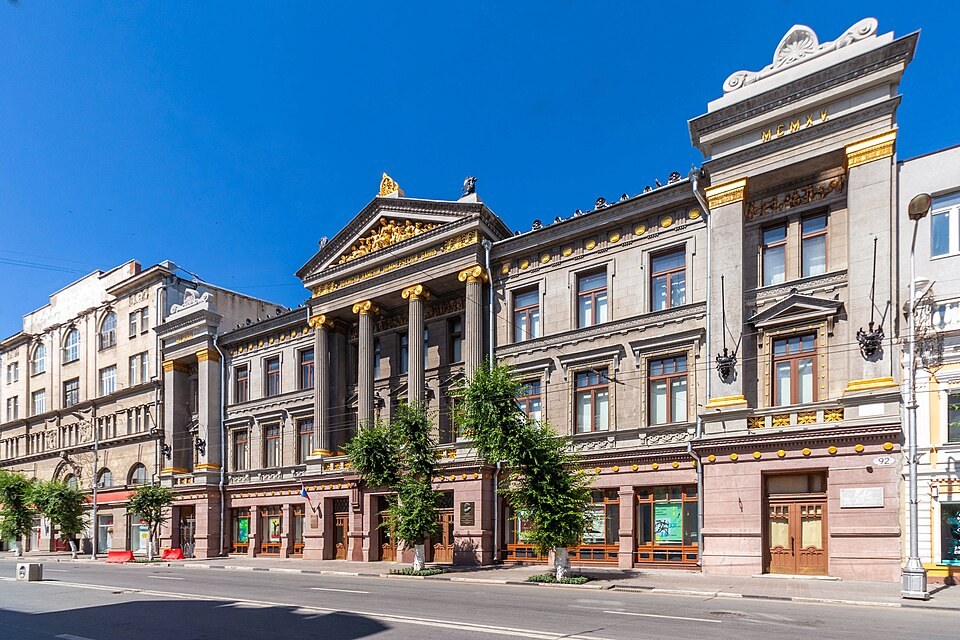
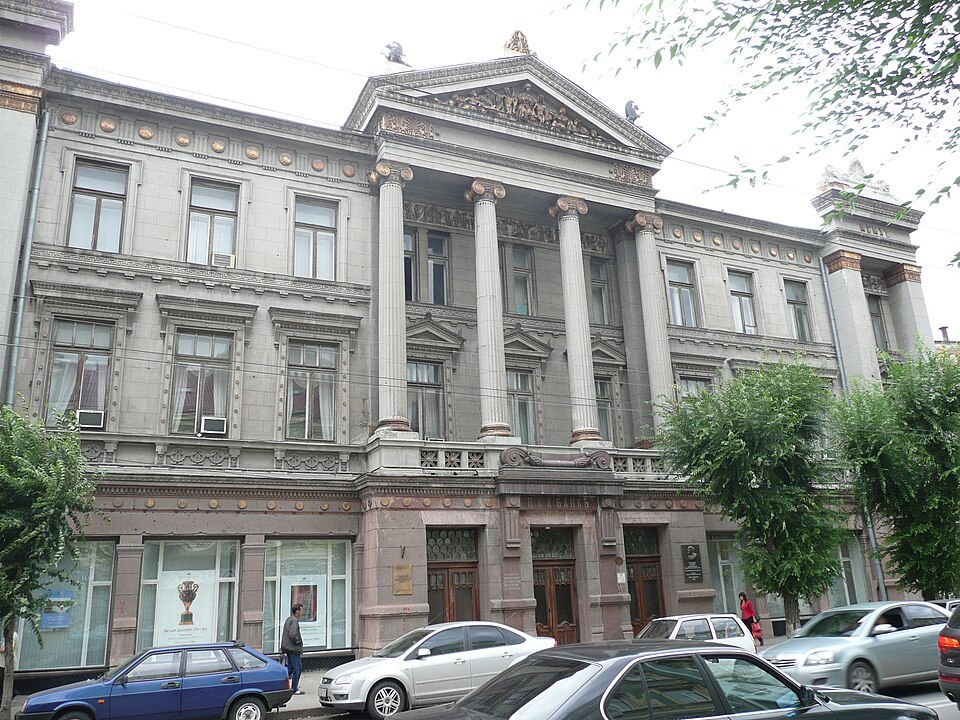
Before thinking about the paintings, look at the museum building. Its formal, imposing facade gives a clue that it was not originally designed as an art gallery. A bank occupied it in the early twentieth century. That earlier purpose adds another layer to the museum’s story.
Samara’s art collection began long before it moved into this building. It grew through the efforts of people who believed that art should have a place in the city’s public life. The museum now brings together works from different periods and traditions. Here you can see not only changes in artistic style but also changes in what people have chosen to preserve.
Try to hold two views of the building at once. The first sees the former bank: its symmetry, scale, and carefully composed facade. The second sees today’s museum, where the rooms bring visitors face to face with art. The purpose of the space has changed, but it has retained an ability to make an impression.
There is no need to enter with the aim of seeing everything in one visit. A large collection resists that approach. Choose a room or a single work and give it time. What has the artist placed at the centre? What remains in the background? How does your impression change when you move closer, then step away?
The museum reminds us that a city’s history is not only made of streets, factories, and monuments. It is also shaped by the decision to collect art, care for it, and share it with future generations. In this building, that work continues.
Standing outside the museum, you might think that art begins only beyond the doors. The building itself offers a first lesson. Study the rhythm of the windows, the treatment of the entrance, and the museum's place among the neighbouring facades. Every museum enters into a conversation with its street. It keeps works inside while showing the city that there is room for attention, debate, and beauty.
Samara's art collection developed over time. That is part of the value of a museum as an institution. No single person can see everything a city wants to preserve in one lifetime. A collection keeps works available for new generations to encounter and reconsider. If you go in, do not expect yourself to respond equally strongly to every painting. Choose one room, one work, or one question and give it more time.
If you are only passing today, think of the museum as an invitation to return. Walking through a city and meeting a work of art have something in common. You first take in a whole, then notice details, and perhaps revise your first impression. Look at the facade once more. It may now seem less like a closed boundary between the street and an exhibition, and more like the beginning of a longer conversation.
Learn more
Try treating the museum building as you might treat a painting. First step back and find its composition. What feels like the centre? Where does your eye travel? How does the facade relate to its neighbours? Then move closer to one element and ask whether it changes the overall impression. You can do this even without a ticket.
If you enter, choose a work in front of which you can spend three minutes. For the first minute simply look. During the second, seek out smaller details. In the third, try putting into words what changed in your perception. There is no single answer to guess. A museum is interesting partly because it gives you a place to practise your own attention.