LISTEN TO THE PLACE
A story worth knowing
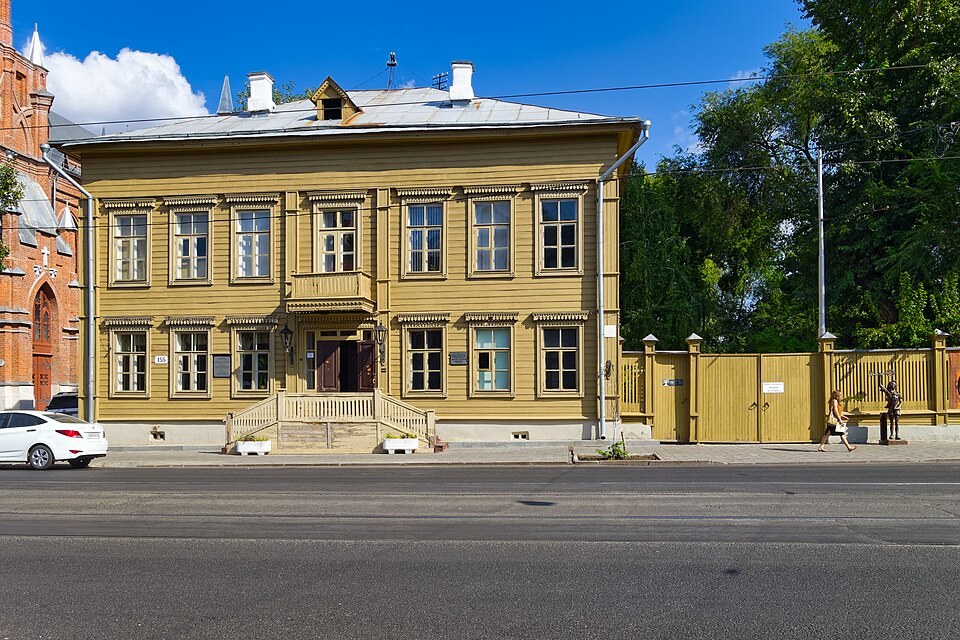
This is not a grand palace celebrating a famous writer. It is an urban estate where you can imagine the ordinary rhythm of family life. That makes it especially valuable: it helps us see Alexei Tolstoy before his name became part of literary history.
The future writer’s family lived here during his youth. The estate combined a private home with the practical business of city property that could provide an income. Behind the facade were rooms, a garden, daily work, and family conversations. Such details rarely fit into a short biography, yet they form a young person’s first impressions of a city and its people.
The museum now explores both Tolstoy’s work and the period in which he lived. As you walk near the buildings, try to picture the place before it became a museum with signs and displays. Someone might have been hurrying to an appointment, welcoming a guest, or waiting for a letter. History can feel closer when its scale is a house rather than a whole country.
It is tempting to search here for a direct explanation of every book Tolstoy wrote. His life, however, was longer and more complicated than one address. Think of the estate instead as a starting point: a part of the environment he knew and carried in his memory.
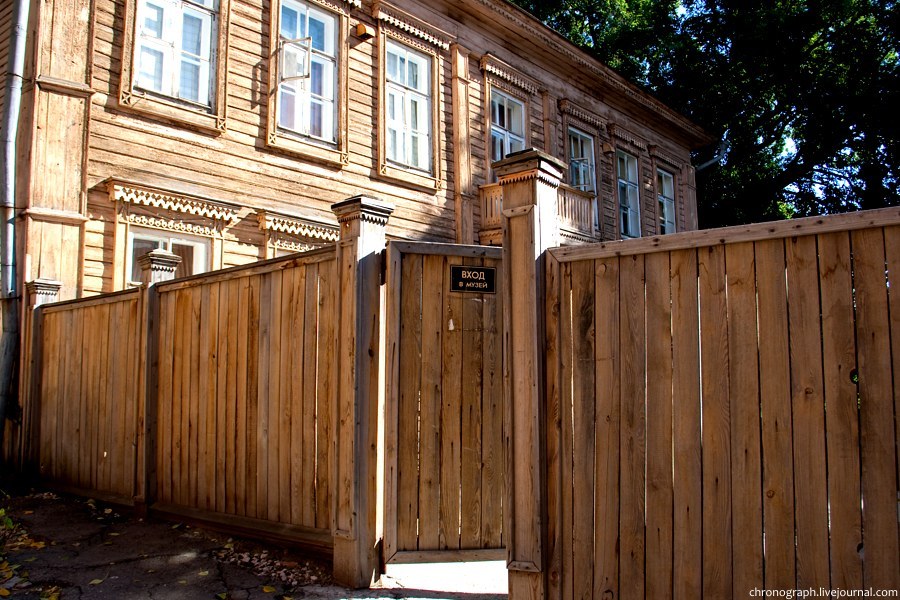
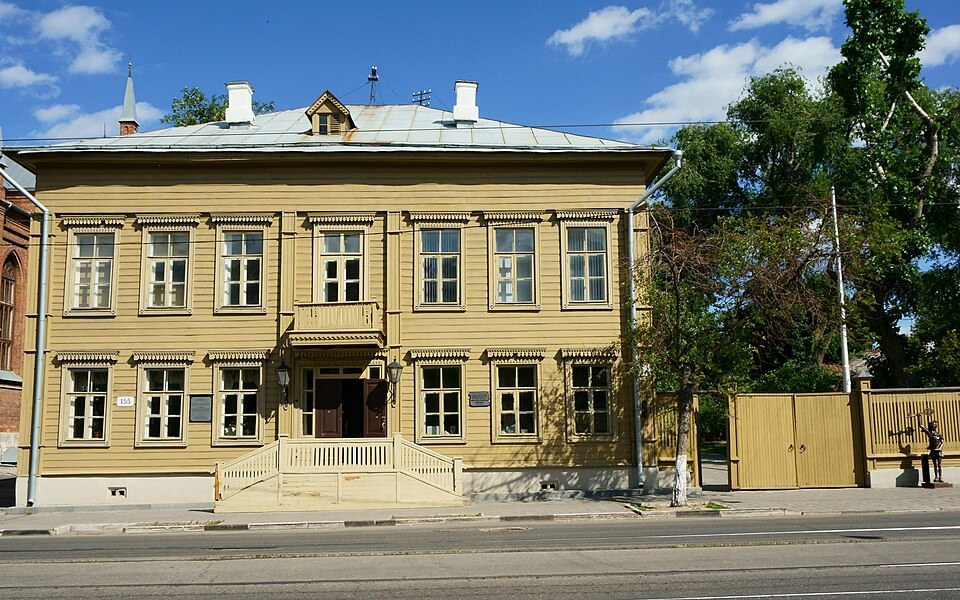
Notice the timber, the windows, and the distance between house and street. The estate retains something large cities often erase: a sense of human scale. Continue your Samara walk with not only the writer’s name in mind, but also the city that helped shape his way of seeing.
At a literary museum it is easy to expect portraits and dates. The estate offers another route into a writer's story: the space of a home. Think about the sounds and habits that fill a childhood: adults talking, a familiar staircase, a window seen every day. There is no need to claim that each object directly shaped a future book. It is enough to remember that literature begins in a world of impressions and close observation.
Alexei Tolstoy is connected with Samara through family history and his early years. That gives the city a chance to present not only a famous name but also a setting in which a person grew up. Compare the scale of the estate with the neighbouring street. Within a single block the rhythm changes. The public life of the city gives way to the more personal history of a household.
If you go inside, choose one everyday object and stay with it for a moment. What could it tell you about its time even without a long label? How was it held? Who might have used it? What place did it have in an ordinary day? If the museum is closed, try the same approach with the facade and grounds visible from public space. A literary stop becomes more interesting when the building is allowed to speak about people, rather than serving only as a marker for a familiar surname.
Learn more
An estate museum invites a small thought experiment. Imagine two accounts of the same person. One consists of dates, awards, and book titles. The other begins with a home, family relationships, and everyday objects. Both matter, but the second helps us sense the distance between a famous writer and the child he once was.
Look at the neighbouring buildings and street. The estate did not exist in isolation. Its residents stepped each day into a changing city. Literary biography thus connects with Samara's wider history. After your visit, you might return to Tolstoy's writing with a fresh eye for details of ordinary life. That attention can begin here, at the threshold of a house, before you open a book.