LISTEN TO THE PLACE
A story worth knowing
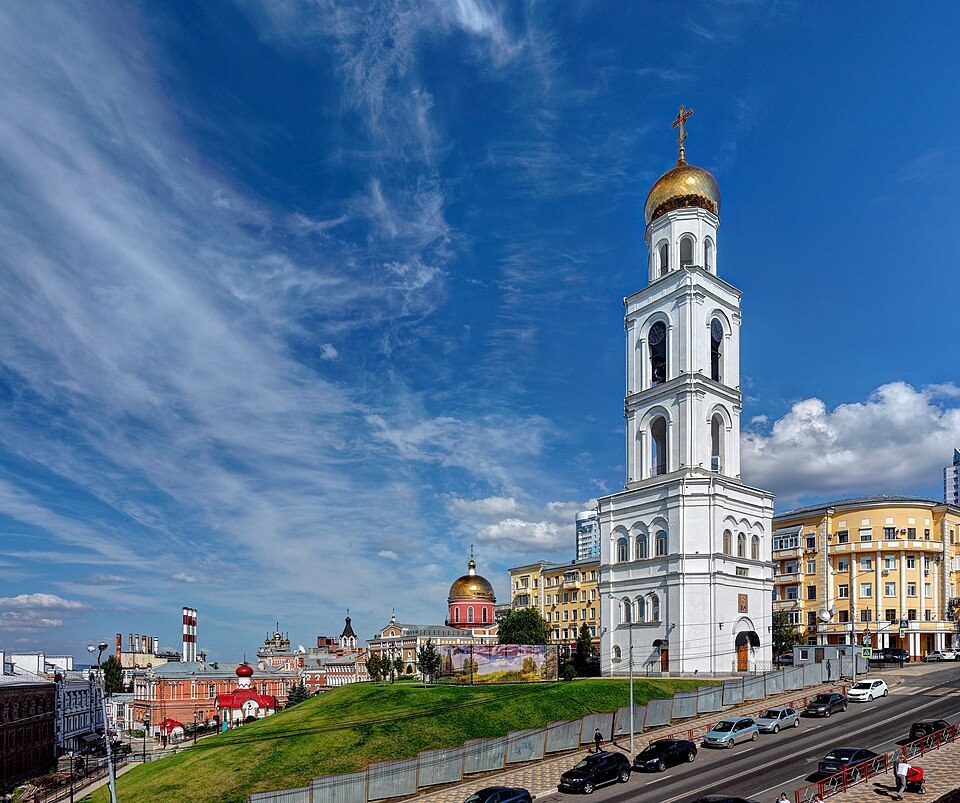
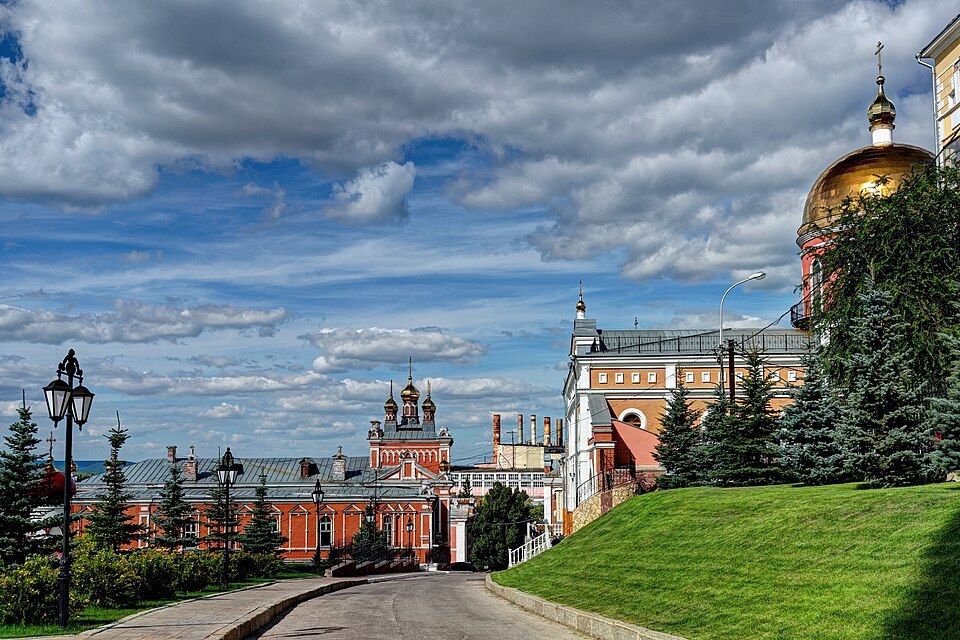
Iversky Convent stands on a slope above the Volga. Its position already makes this stop feel different from an ordinary city street: architecture, landscape, and quiet come together here.
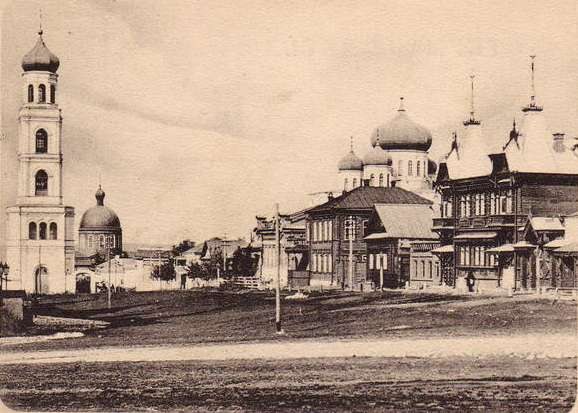
The convent began as a women’s religious community formed through the initiative of Samara residents. Over time it grew into a complex with churches, living quarters, and working buildings. It was not simply one attractive church. It was a way of life shaped by prayer, work, education, and care for others. In the nineteenth century, the convent was also connected with the making of the Samara Flag for Bulgarian volunteers, a moment when local history reached beyond the city and even beyond Russia.
The twentieth century brought profound disruption. Some buildings were lost, and the community’s religious life was interrupted. Later, the community returned and restoration began. What you see, then, is not an untouched piece of the past. It is a place where loss and renewal are both part of the story.
As you look around, resist the urge merely to count domes. Notice how the buildings follow the slope and how the view opens towards the river. The setting makes the convent visible from the city, although it is far more than a viewpoint.
If you enter the grounds, remember that this is a living religious community. Respect worship, daily routines, and the rules for visitors. The most thoughtful way to experience the place is to combine a traveller’s curiosity with consideration for the people for whom it is home.
Remember that this is not merely a group of historic buildings. It is a living religious community. For a visitor, that calls for an unhurried pace and respect for the rules of the place. Even if you remain outside, notice how the monastery complex changes the atmosphere of the surrounding streets. Your eye rests on domes and outlines, then unexpectedly returns to the Volga and the neighbouring blocks.
The position on a slope is particularly expressive. Seen from below, the buildings appear to belong to the high bank. From another angle they become a landmark in a walk through the old centre. The convent is not separated from Samara's wider history. It stands near commercial streets, the embankment, and houses where ordinary life went on. That proximity helps reveal the many layers of the city.
Stop somewhere that does not obstruct anyone and compare two views: one towards the architecture and one from it towards the surrounding area. Why do visitors think of some places as attractions when others experience them primarily as part of daily spiritual life? A respectful visit can hold both understandings together. It can tell you more than a list of construction dates. As you leave, notice whether the pace of the street seems to change again.
Learn more
The convent is especially rewarding to study in relation to its landscape. Follow the line of the bank, the height of the slope, and the outlines of the buildings. If the same walls stood on a level square, they would create a different impression. Here landscape and architecture seem to help each other form a landmark.
Remember the boundary between public space and the community's everyday life. Follow the rules currently in place for entering and taking photographs rather than assuming that every religious site works in the same way. Sometimes it is enough to stand quietly on a public street and look carefully. A respectful distance can also be a way of learning about a place.