LISTEN TO THE PLACE
A story worth knowing
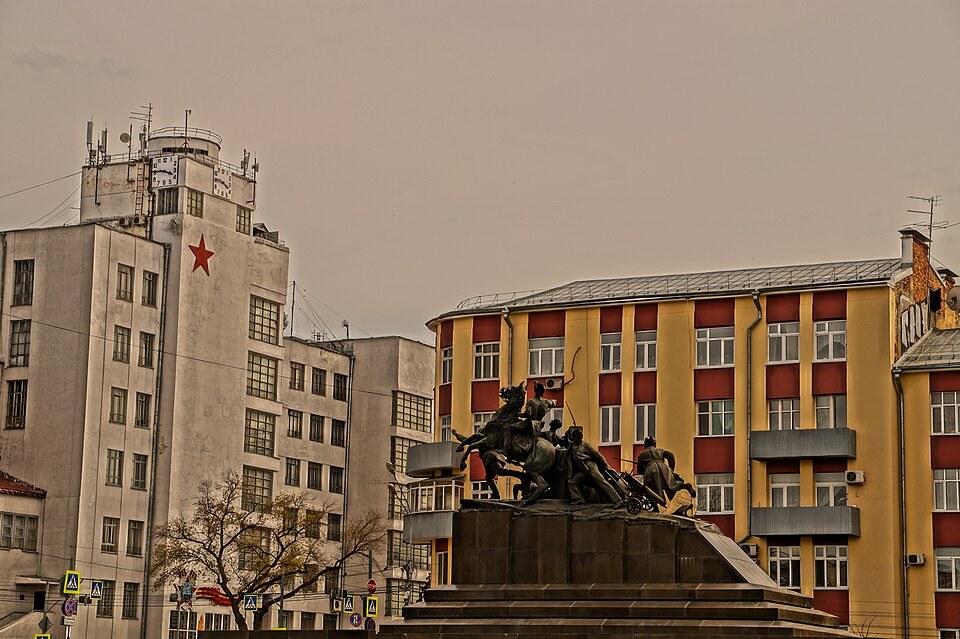
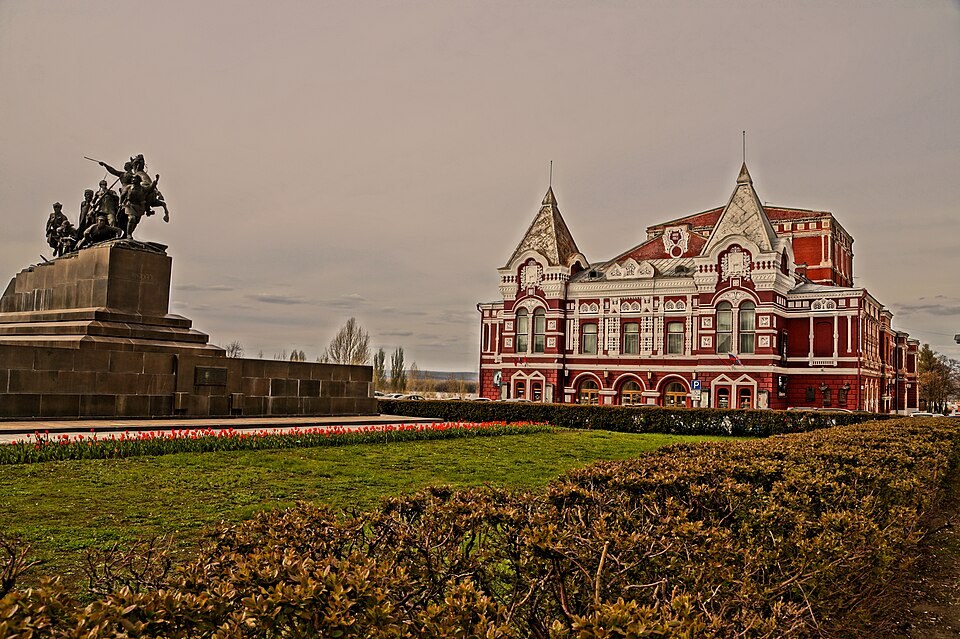
Chapaev Square has two commanding figures: a sculptural group and the drama theatre behind it. They are so different that together they form one of the city centre’s most memorable views.
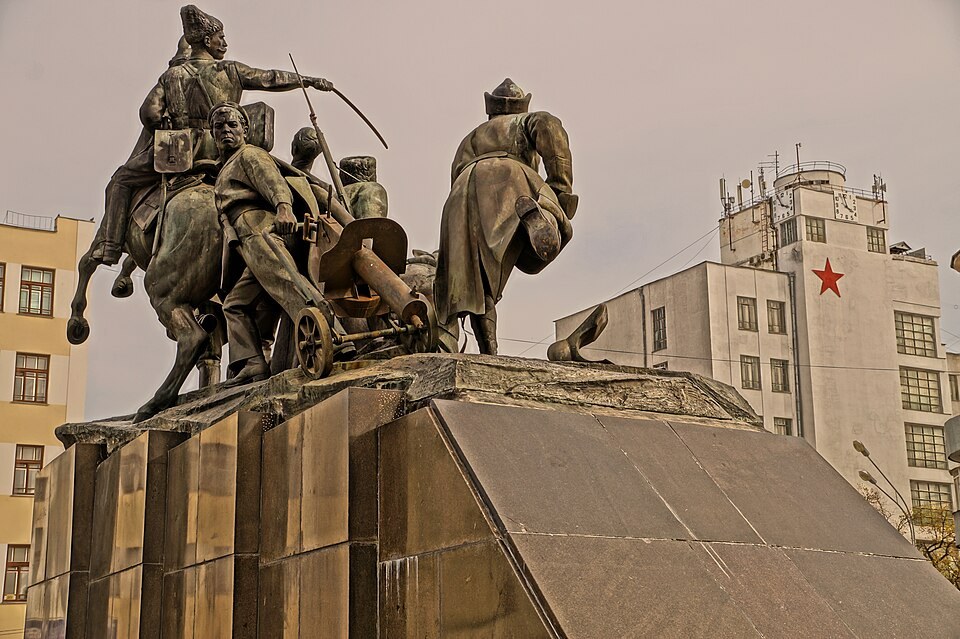
Approach the monument from a position where you can see the whole group. This is not a quiet portrait of one person on a pedestal. The composition is built around movement. Gestures, lines of sight, and the positions of its figures carry your eye through the scene. Even without knowing every historical detail, you can sense that the sculptors wanted to convey action and a shared momentum.
Now turn towards the theatre. Its turrets and decorative facade create another mood entirely. The monument speaks the language of a dramatic event; the theatre suggests the world of storytelling and the stage. The square holds both images together. That is why it rewards a closer look rather than a quick crossing.
The square takes its name from Vasily Chapaev, a historical figure whose life later entered popular culture. It is useful to distinguish the real person from the monument and from the characters shaped by books and films. They meet in the public imagination, but they are not interchangeable.
Walk towards another side of the square and look again. The monument and theatre will change roles: one moves into the foreground while the other becomes its setting. In a short distance, the square shows how much a story can change with the point of view — both literally and figuratively.
First take in the whole square. The memorial and the theatre are not two unrelated stops placed next to each other. Together they make a setting in which one part speaks about remembrance and the other about cultural life still taking place. Move your gaze between them several times. You may notice the atmosphere changing even though you have not moved at all.
The square is named after Vasily Chapaev, a figure of the Russian Civil War whose image became widely known through Soviet culture. Yet the memorial deserves a closer look than its familiar name might suggest. Study the figures, their movement, and their relationships to one another. The sculptural group creates a sense of an event rather than simply presenting one hero. It tells a story through gesture and outline.
Step to one side so that the theatre facade is in view. The square now brings together different times. The monument addresses the past; theatre posters point to the coming evening. Both layers continue to live in one city. You do not have to respond to them in exactly the same way. Notice instead how a public space can hold remembrance, debate, meetings, and an ordinary walk across town. At your next stop, look again for this conversation between history and the present day.
Learn more
Chapaev Square lets you compare two kinds of public storytelling. A sculpture addresses every passer-by and remains in place for years. A theatre presents new stories on particular evenings, and you have to be there at the right time to see them. Both work with memory, but in different ways.
If you have a minute, stand where the memorial is in the foreground and the theatre behind it. Which attracts your eye first, and why? Then change position. A simple shift in viewpoint shows how strongly the arrangement of objects influences your reading of a square. It is a useful reminder that you can understand urban history by moving through it, not only by reading a plaque.