LISTEN TO THE PLACE
A story worth knowing
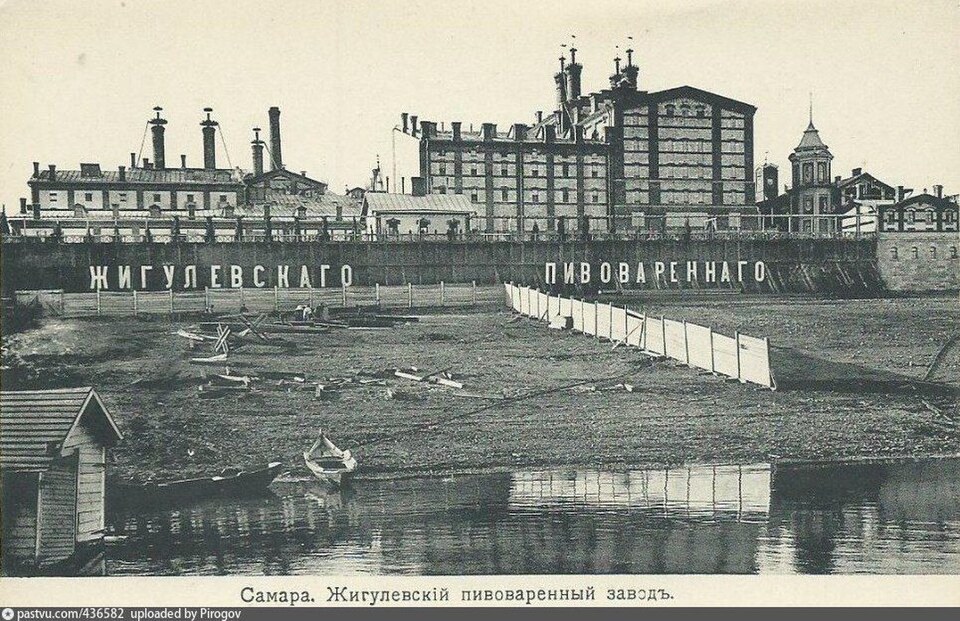
This working complex has long been part of Samara’s cityscape. Zhiguli Brewery stands near the Volga, and its story brings together entrepreneurship, industry, and the everyday habits of the city.
Alfred von Vacano founded the brewery in the nineteenth century. Consider everything required to make such an enterprise work: buildings and equipment, a supply of ingredients, the labour of many people, storage, and delivery. The brewery was never merely a name on a label. It formed part of the city’s economic life.
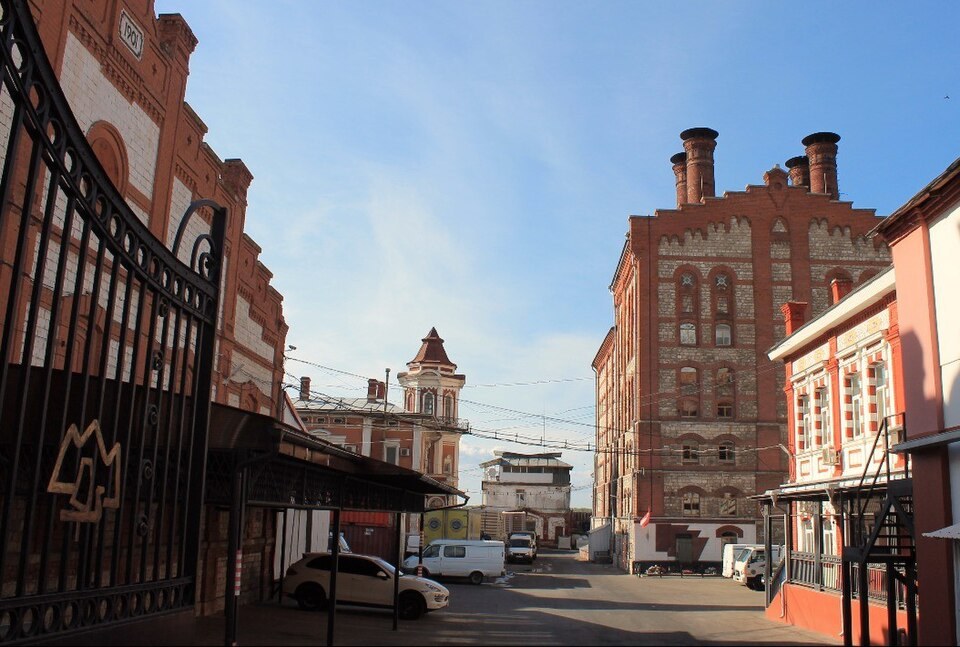
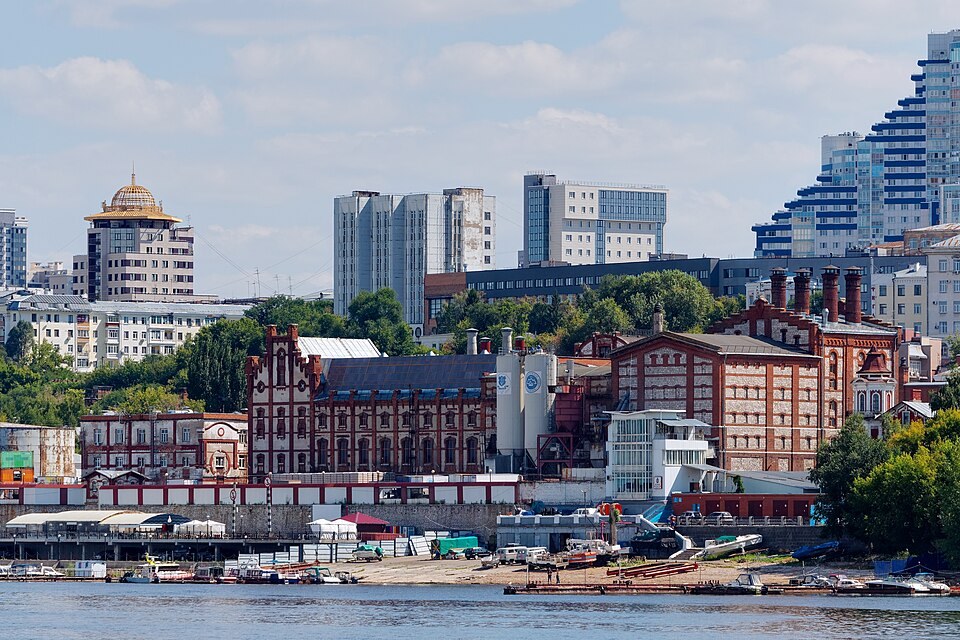
Look at the buildings as architecture made for work. Their first purpose was practical, yet over time they acquired a recognisable outline of their own. The river nearby was an important transport route. That relationship between industry and water helps explain the choice of location.
The brewery also has a place in local conversation. Names associated with the surrounding area have passed from one generation of residents to another. It helps, though, to distinguish the historic plant from the businesses operating around it today: they are different parts of the same urban setting.
You need not sample a drink to appreciate this stop. It shows how a place of production can become part of a city’s identity. From the public street, study the lines of the factory buildings and compare them with the more decorative facades of the old centre. Samara reveals a practical side here: a city that did not only stroll beside the Volga, but worked along its banks.
Begin by looking at the brewery not as the name of a well-known drink but as a group of buildings. Industrial architecture has its own logic. Spaces had to accommodate production, storage, and the movement of workers and supplies. The lines of the buildings, their openings, and their proximity to the river therefore have practical meaning. They can be as revealing as the decoration of a merchant's mansion, although they tell a different kind of city story.
Alfred von Vacano's founding of the brewery connects local history with broader networks of trade and technology. Old Samara was made of more than theatres and prosperous houses. Enterprises provided work and helped shape lasting urban habits. Imagine how this area might have changed through an ordinary day: shifts coming and going, deliveries arriving, and conversation near the gates. Much looks different now, but the industrial scale remains visible from the street.
Find a safe public viewpoint without entering any restricted area. Compare the factory walls with the riverside promenade nearby. They express two different relationships with the Volga: one based on work, the other on leisure. Together they give a fuller portrait of Samara than either image alone. Even if the drink itself holds no interest for you, this stop shows how production can leave a permanent mark on the appearance and memory of a city.
Learn more
Samara's tourism portal dates the brewery's foundation to 1881 and names entrepreneur Alfred von Vacano as its founder. Yet the brewery lives in the city through more than historical notes. It has become a recognisable landmark near the Volga, and accounts of it often mingle with residents' personal memories.
Try to study the architecture without relying on a sign. What could you infer about the building's purpose from its size, windows, and position alone? Then compare your guess with what you know. The exercise helps you see industrial heritage as part of the city's physical fabric rather than only as a background for a photograph or a story about a product.