LISTEN TO THE PLACE
A story worth knowing
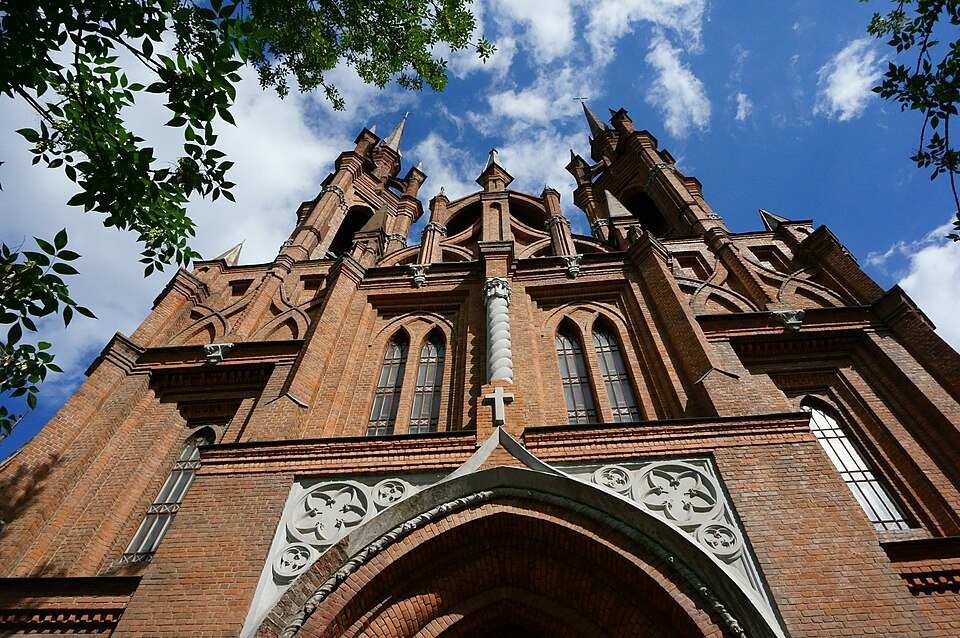
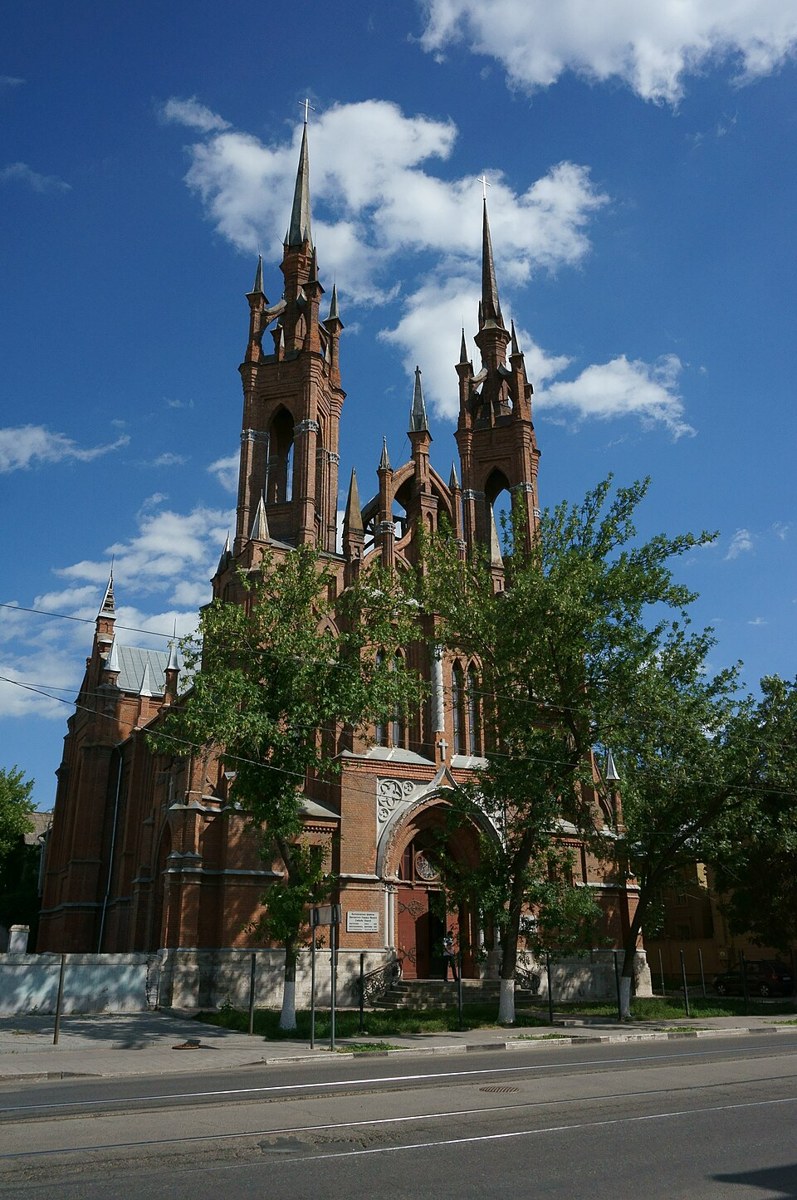
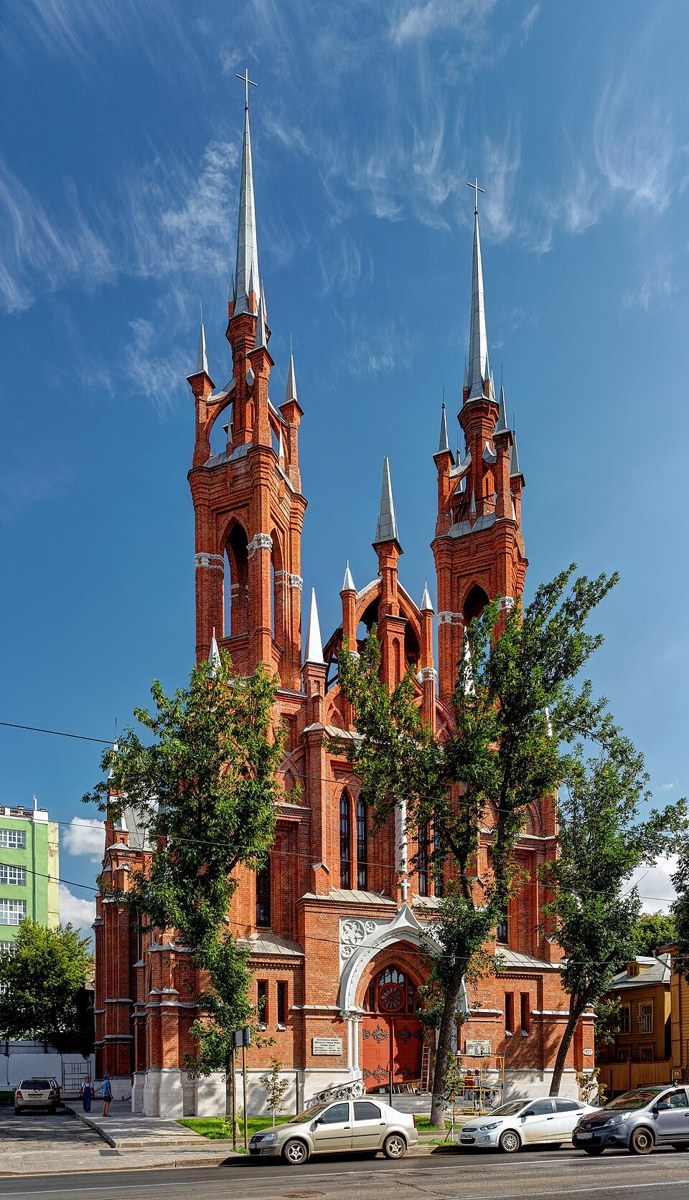
This church is easy to recognise among Samara’s streets. Two red-brick towers rise above the surrounding buildings, recalling Gothic architecture, although the church itself was built much later, in the early twentieth century.
It is connected with the history of Samara’s Catholic community, including the city’s Polish residents. The path towards a substantial church building was long. Circumstances, permissions, and resources all changed before the project could be completed. Once built, its vertical lines and pointed forms gave it a distinctive place in the city skyline.
Stand where you can see the whole facade, then move close enough to study the brickwork. The decoration does not depend only on separate sculpted details. Window shapes, projecting surfaces, and the play of light across red brick create much of the effect. The architecture directs your gaze upwards.
During the Soviet period, the building served other purposes. It was later returned to worship. What stands before you is therefore more than an example of a particular style; it is a place whose role changed as the city changed.
This remains an active church. If it is open and you choose to enter, follow the community’s rules and remember that others may be there to pray. From outside, notice how the towers reshape your view along the street. They speak of a Samara formed by different cultures and religious traditions. This facade is one of the city’s most expressive reminders of that shared history.
The two spires are clear landmarks among the surrounding blocks. Yet if you look only upwards, you may miss the finer work of the facade. Let your eye move down to the entrance and brickwork, then back up to the towers. The architecture seems to guide your gaze vertically. That is one reason the church feels tall even before you learn its measurements.
The Catholic parish recalls Samara's diversity. The city was shaped by people with different languages, occupations, and religious traditions. For some, this church was a place of worship and community; for others, it was a prominent building on a route through the centre. Both roles still exist. As a visitor, remember that parish life continues here. The place is not only a chapter in architectural history.
The changes the building went through during the twentieth century show that an urban building rarely follows a straight line through time. Its use may change while its outline remains in residents' memories. If the church is open to visitors, enter with respect for any service and for the people inside. If not, stand farther along the street and look back. A small change in distance can reveal how the spires shape the entire view of the neighbourhood.
Learn more
The city's tourism portal describes Samara's Catholic community and the skilled builders involved in making the church. A complex building is the result of many kinds of work, not only a drawing on paper. Study the brickwork and imagine the sequence of labour from an initial design to a finished spire.
The church is sometimes called the Polish church. That everyday name reflects a connection with part of its historic community, but it does not define the entire life of the place today. It is more useful to see it at once as an active parish, an architectural landmark, and evidence of Samara's varied cultural history.