LISTEN TO THE PLACE
A story worth knowing
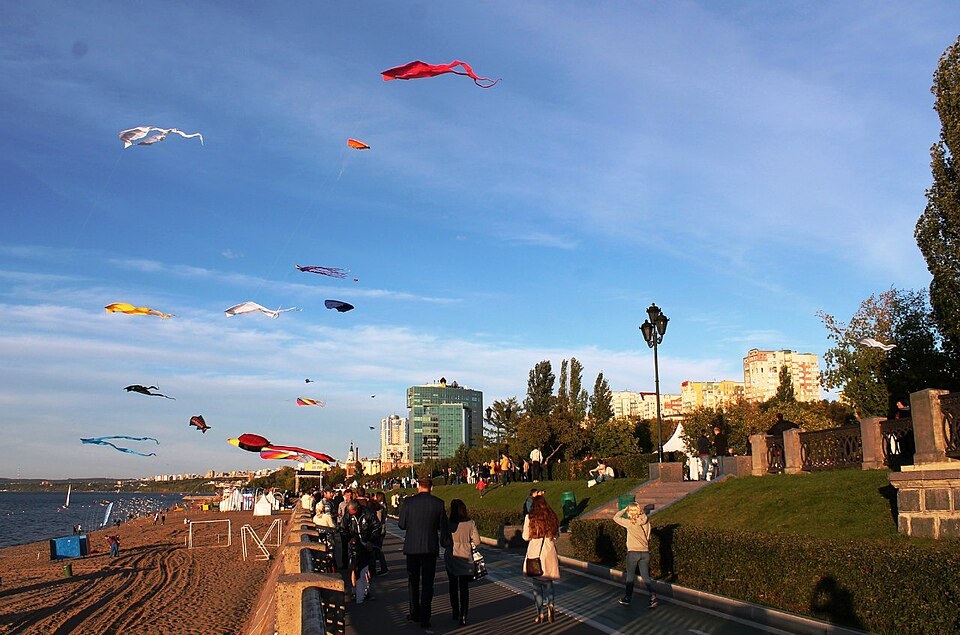
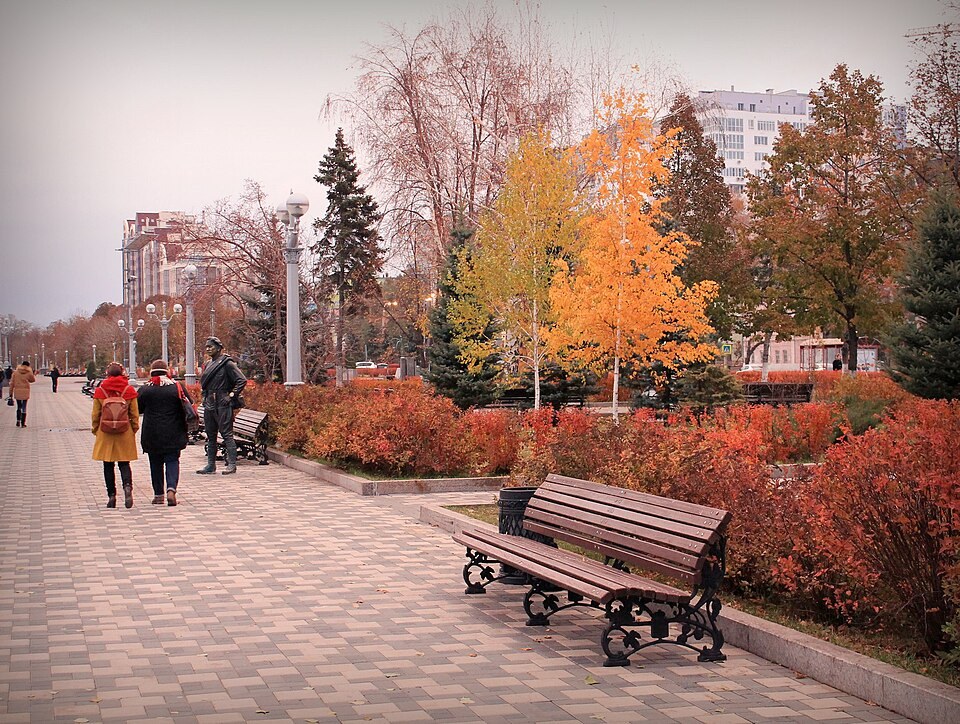
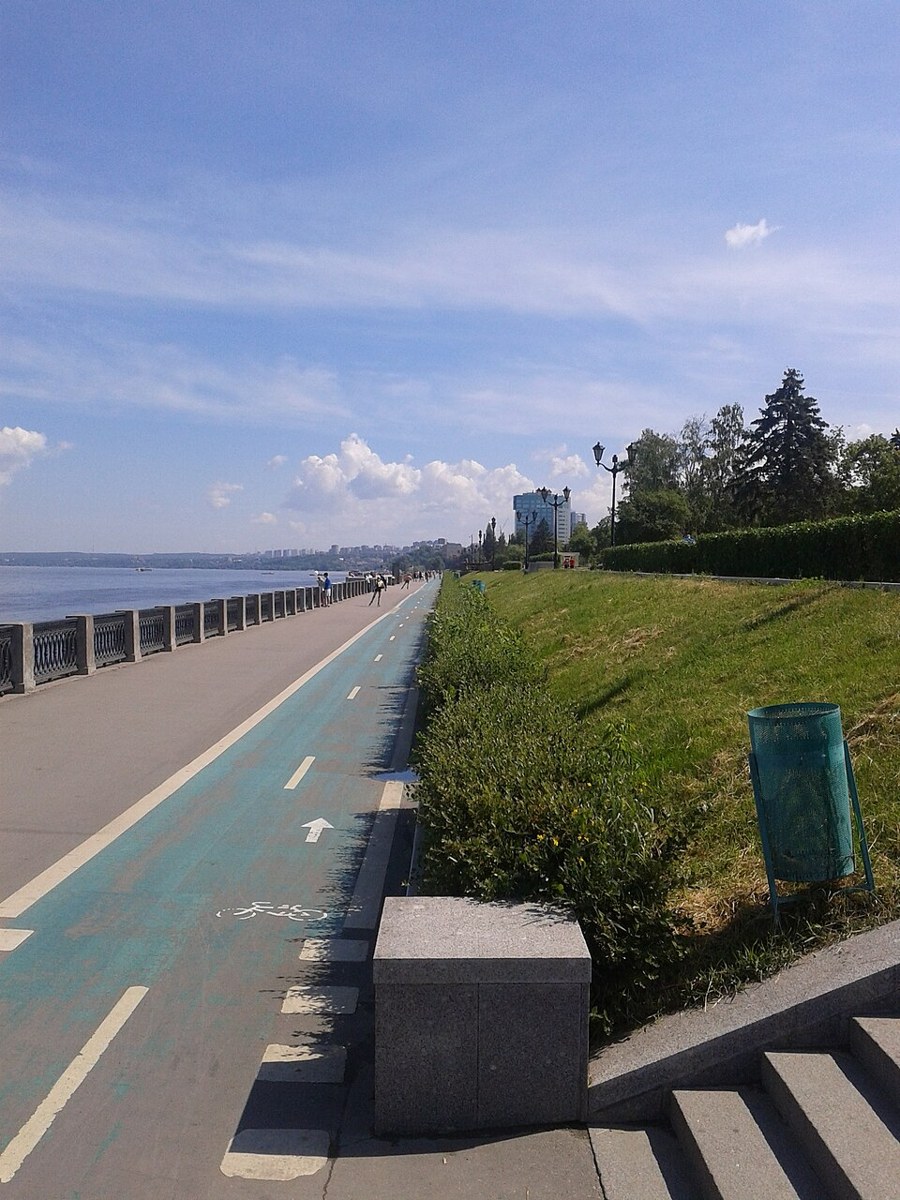
Look towards the Volga first, then turn back to the city. Samara’s embankment occupies the space between them, giving the city room to breathe. You can walk here without a particular destination, passing trees, benches, paths to the beach, and people who have come simply to watch the river.
It feels like an inseparable part of Samara today, but the waterfront was not always a place for leisurely walks. Wharves, warehouses, and other working structures once occupied the shore. The idea of making it a public space took time to become reality. Different sections were developed in different periods, which is why the promenade changes character as you move along it. One stretch feels quiet and leafy; another opens out to the water and the bustle of city life.
The Volga is more than a backdrop. It helps explain why Samara grew here, how people and goods reached the city, and why residents keep returning to the river. Slow down for a moment. Follow the line of the opposite bank, watch a boat move across your view, and notice how the light changes on the water. Even on a first visit, this scene can become your own memory of Samara.
If you keep walking, the embankment will connect you with more stories: the old centre, the brewery, and the Ladya monument. There is no need to hurry towards the next stop. For now, the walk itself is the attraction.
Pause by a safe viewpoint and follow the line of the opposite bank. The river may look calm, but for the city it has always been a way of moving, working, and looking beyond familiar streets. The promenade still expresses that relationship. It stretches along the water instead of closing around a single monument. You can continue for as long as you like, and each bend alters the view.
Listen for a moment. In one stretch you may notice conversation and footsteps; in another, wind and the sound of the water. Watch how differently people use the same space. Some pass through quickly. Others settle on a bench, meet friends, or stop to take a photograph. This is not incidental scenery. The waterfront has become one of the city's shared rooms, open without a ticket or a carefully arranged itinerary.
Now turn towards the buildings behind you. They are a reminder that the pleasant edge you see today was made through a long process of reshaping the riverbank. Face the Volga once more and compare two scales: the human scale of a path and a nearby bench, and the vast scale of the river and distant shore. The contrast is one of the pleasures of walking in Samara. It also explains why a visit to the embankment can feel like an introduction to the whole city rather than a single stop on a route.
Learn more
Try reading the embankment as a sequence of outdoor rooms. Do not attempt to take it in with one glance. Compare two neighbouring stretches. Where is there more shade? Where does the wind feel stronger? Where can you get closer to the water, and where is it easier to stop? A welcoming public place is made not only by a grand view but also by smaller decisions about paths, steps, trees, and places to rest.
Samara's tourism portal describes how different sections of the embankment were built at different times. That helps explain why the promenade does not have a single uniform character. As you continue walking, look for the change in rhythm yourself. Choose the section you might want to revisit in the evening or in another season. Such small personal discoveries often make a city feel familiar more quickly than a list of famous dates.