LISTEN TO THE PLACE
A story worth knowing
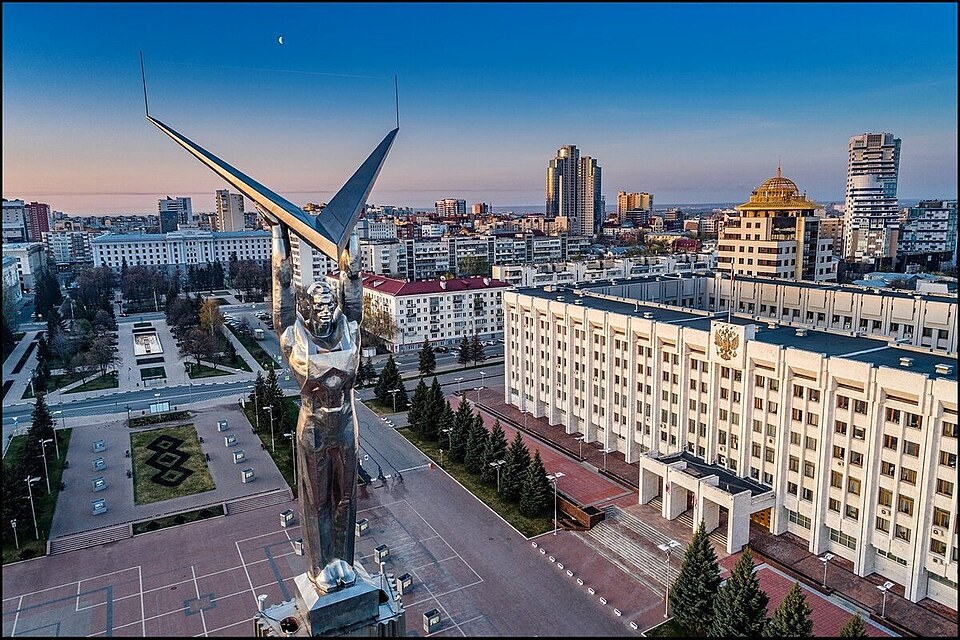
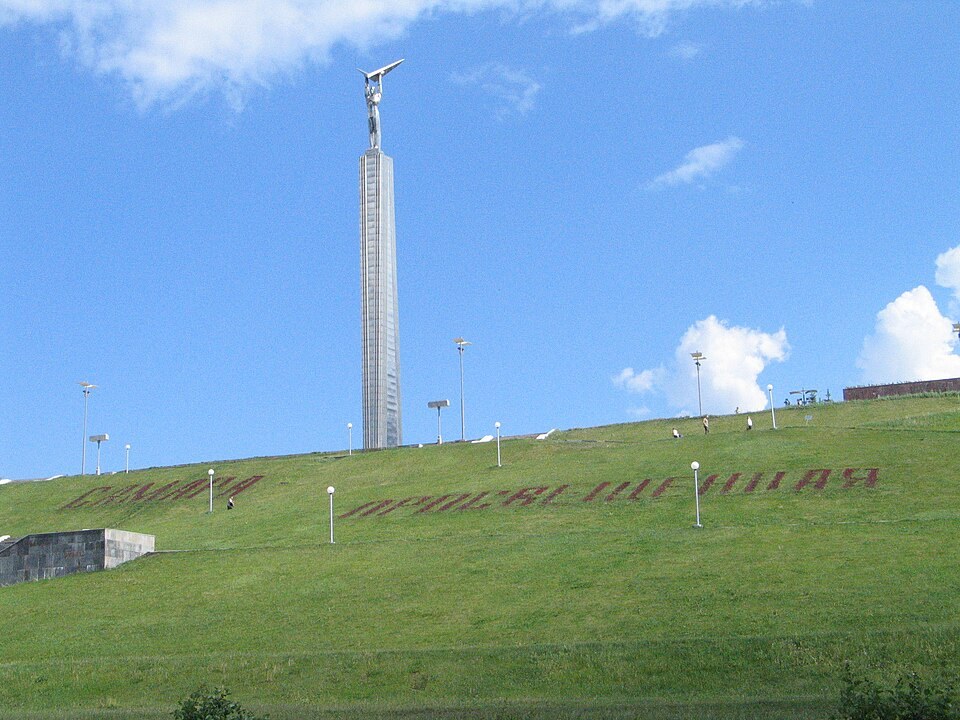
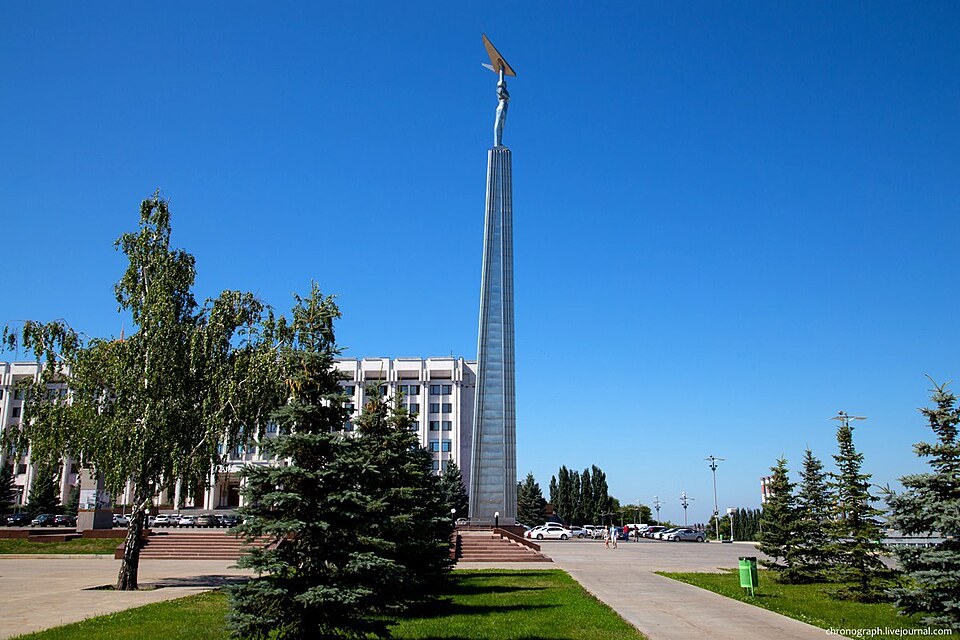
Look up at the figure above the square. A worker holds wings high overhead, yet does not fly himself. That is the monument’s central idea: it honours the people whose labour made flight possible.
During the Second World War, Samara was called Kuibyshev. It became an important centre of aircraft production, and the factories depended on the work of thousands of people. The monument is not dedicated to one pilot or designer. It recalls workers whose names rarely appear in grand accounts of wartime achievement. The wings in their hands make the outcome of that everyday labour visible.
The sculpture stands above the Volga bank. Its position gives it two settings at once: the open square below and the river landscape beyond. From a safe viewing point, notice how its outline changes against the sky. Close up, you feel its height. From farther away, it becomes one of the shapes by which people recognise Samara.
Other memorials nearby give the square a wider meaning. They remind us that stories of work and achievement cannot be separated from the human losses of the war. It is a place to pause, not merely to take a photograph.
Residents also have a humorous nickname for the monument. This piece of local folklore is a story about how people have made the landmark their own; it does not replace the meaning its creators gave it. Samara holds both things together here: an everyday view across the Volga and a lasting memory of those who worked behind the front line.
Notice how the figure relates to the sky. Seen from below, the monument can feel almost weightless, although its meaning is tied to demanding human labour. The contrast between flight and work is built into the image. Let your eye travel from the base to the raised wings, then bring it back down to the square. The memory of people who worked in the factories has been placed in an open part of the city, not confined to a museum.
War changed the lives not only of those who went to the front. Industries in the rear took on enormous tasks; families lived with pressure and uncertainty; everyday routines were reshaped. The sculpture gathers a complicated experience into the single figure of a worker. No monument can speak for every individual, of course. For a moment, step away from the symbol and imagine the ordinary dimensions of that history: long shifts, tiredness, news awaited at home, and hopes for a return to normal life.
Now turn towards the Volga. The open view gives you room to breathe after a serious subject. A memorial does not demand that every visitor feel exactly the same thing. It can prompt gratitude, reflection, or a question. Before leaving, look at the figure from the side as well. A change of angle makes a familiar city symbol less automatic and lets you notice the choices made by its creators.
Learn more
The monument has informal local nicknames. Samara's tourism portal records one of them, roughly 'Panikovsky with a goose'. It is not an official title, and it does not erase the serious meaning of the memorial. It shows how residents make a highly visible city image part of everyday conversation. Formal remembrance and ordinary speech can exist side by side.
Look at the monument from two distances. Up close, study the pose and material; from farther away, study its outline against the square and the river. If you are taking photographs, frame it once on its own and once with a person near the base. The comparison reveals how the composition controls scale and why the figure draws attention even before you know its story.