LISTEN TO THE PLACE
A story worth knowing
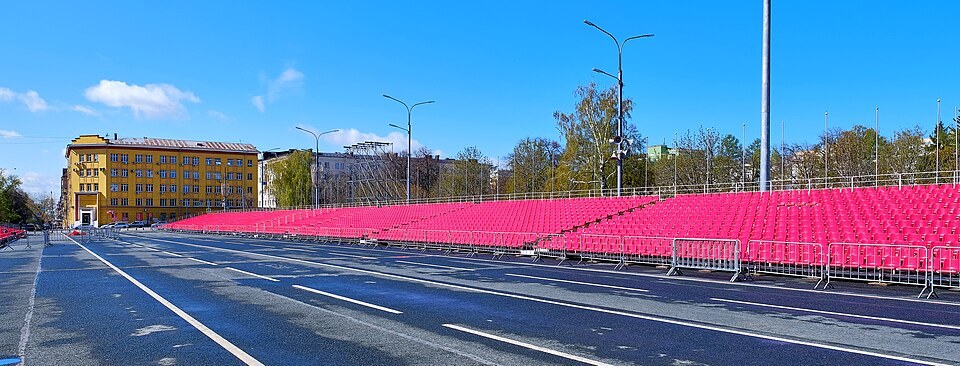
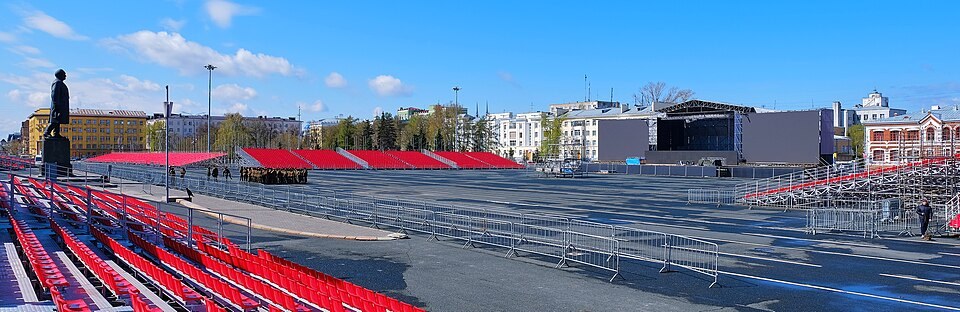
Kuibyshev Square plays a trick with distance. The opera and ballet theatre appears close until you decide to walk towards it. The space is so large that you have to recalibrate your sense of the city’s scale.
This is more than an empty area between streets. In different periods, the square has reflected different ideas about what Samara’s centre should be. A cathedral once stood here; the building associated today with opera and ballet later took its place. Names and architecture changed, while the square continued to serve as a stage for public life. Its broad open space made room for gatherings, concerts, and celebrations.
You do not need to compare it with other famous squares to feel its size. Look at someone walking along the far side. Then notice the planted areas at the corners: they soften the openness and give the square more than one rhythm.
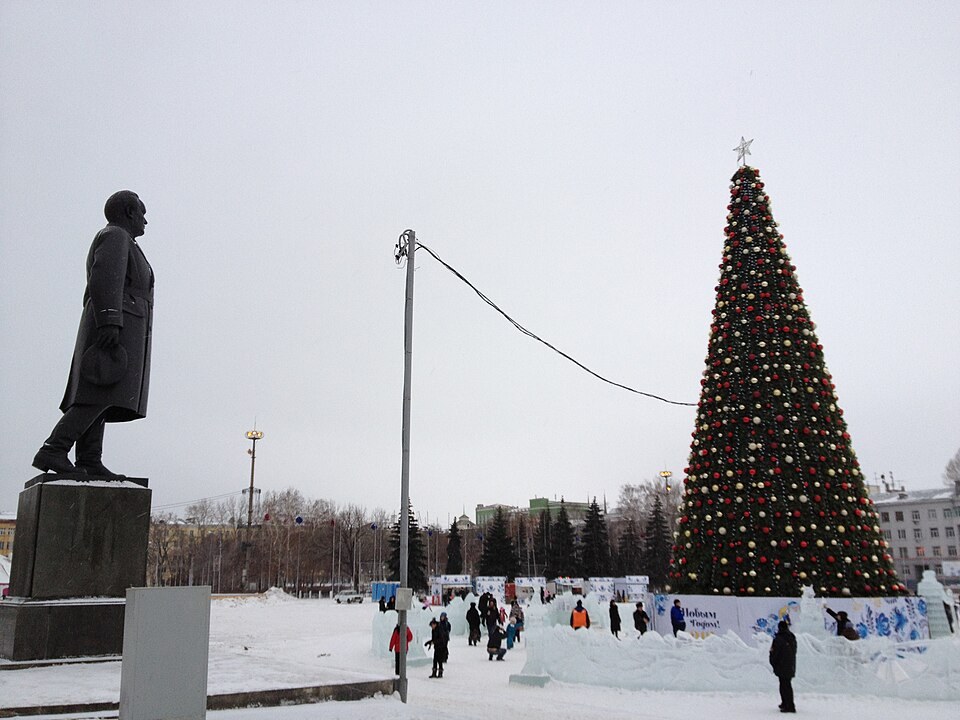
The place changes with the seasons, too. In summer it invites movement across a great urban space. Snow, lights, and festive installations give it a different character in winter. Here, Samara’s history is expressed not through one monument but through the city’s ability to gather in one place.
Before you leave, find a position where you can see both the sweep of the square and the theatre facade. Imagine how different this view must have felt to people arriving here a century ago. The scale remains, but each generation has given the space a new purpose.
Try dividing the square into several parts in your mind. Close to the theatre, the open ground feels like a formal approach to a building. Near the middle, distance itself becomes the subject: a person on the far side looks smaller than you expected. By the trees at the edge, the scale becomes familiar again. It is a simple experiment that a photograph cannot quite reproduce.
Large open places allow a city to gather, but on an ordinary day they serve quieter purposes. Someone crosses on the way to work, someone chooses a bench, and a visitor notices for the first time how far away the theatre facade remains visible. Pay attention to the sound and the feel of the wind as you move away from the surrounding buildings. The square seems to ask you to slow down and accept its dimensions before carrying on.
Imagine standing here during a major public event. Then return your attention to what is happening today. The same space can be ceremonial and entirely everyday. That double role matters more than any claim that the square holds a record. Pick out one detail on the theatre building from where you stand and walk towards it. A broad view of the city gradually becomes the story of one particular place. That change in scale is part of the pleasure of exploring on foot.
Learn more
There is a way to feel the scale of the square without memorising a single measurement. Choose a person or a clear detail on the far side and guess how long it would take to reach it. Walk part of the distance. Your estimate may change. Open space reveals its real size more convincingly through movement than through comparisons with other places.
The theatre facade is also a useful visual anchor. Approach it and notice how the composition changes. From a distance the building is a strong outline at the edge of the square; close up, it becomes a wall with doors, materials, and smaller details. Moving from a broad city view to a particular feature is a simple technique you can use throughout your walk.