LISTEN TO THE PLACE
A story worth knowing
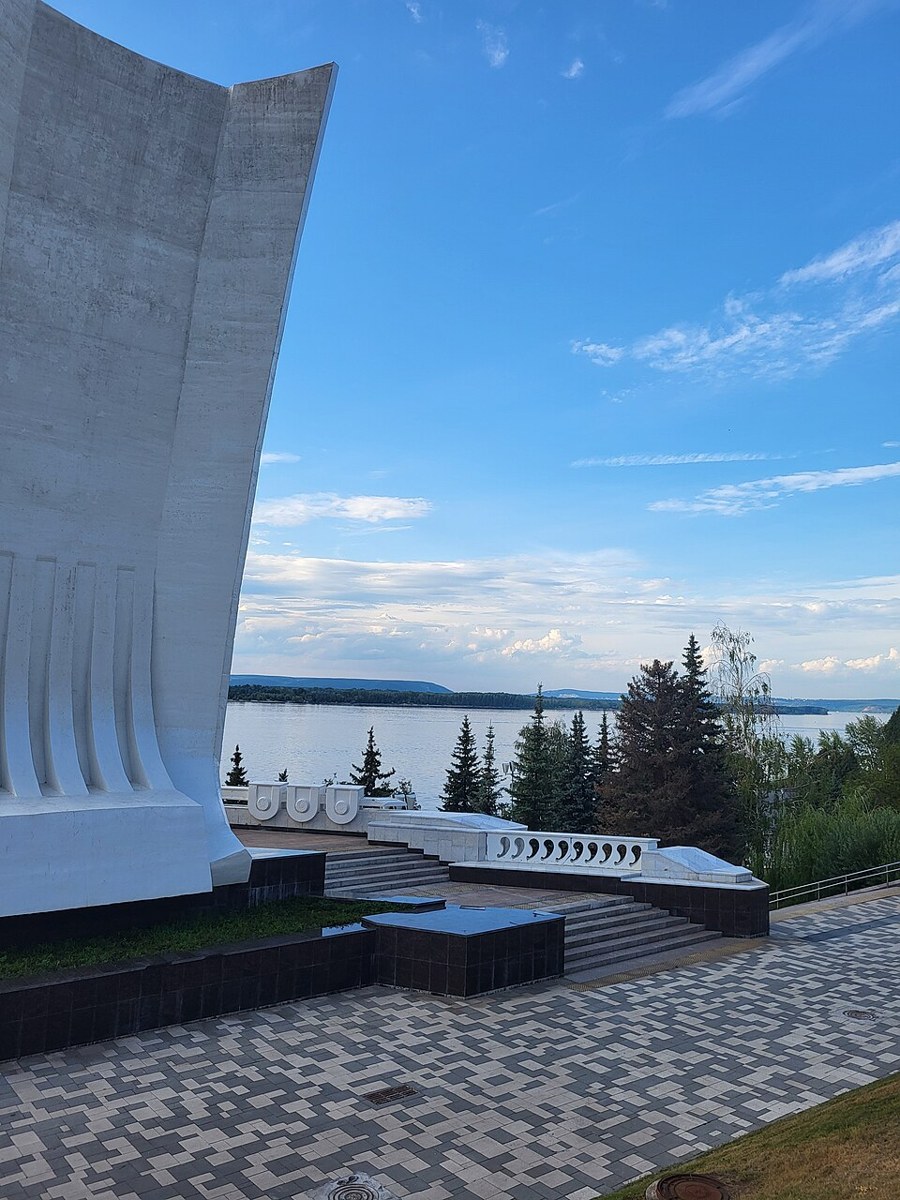
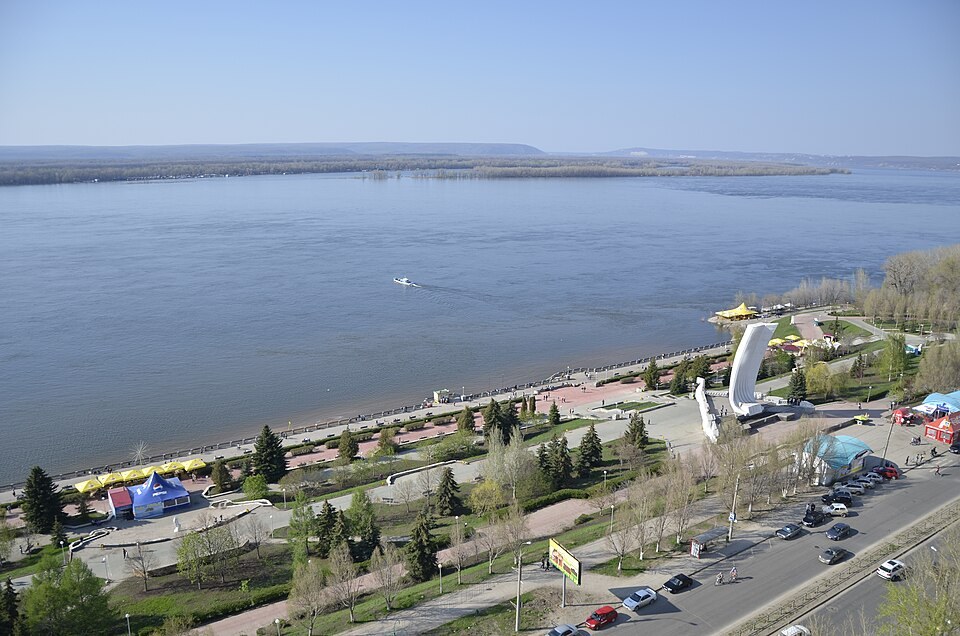
Before you is the white Ladya, a monument that resembles both a boat and the idea of movement. Its sail seems to catch the wind from the Volga even when the air is still.
The monument appeared for Samara’s four-hundredth anniversary, alongside a new section of the embankment. Its shape turns our attention towards the river. Before railways and modern roads, the Volga connected distant places, carrying people, goods, and news. The boat recalls that older route, although the monument itself belongs to the city of the late twentieth century.
Find a position where you can see both the structure and the open water. From a distance, Ladya reads as a clear, simple symbol. Up close, you notice that its apparent lightness comes from substantial material shaped with care. This is the monument’s pleasing paradox: it cannot move, yet it makes you think about journeys.
For many residents, it is also a meeting place and a familiar setting for photographs. Over time, celebrations and everyday habits have added new meanings to the architects’ original idea. The symbol now belongs to the people who use this part of the city.
Look along the riverbank from here. The monument does not really end a walk; it invites you to continue. The promenade carries on, the Volga remains beside you, and the choice of a boat as one of Samara’s symbols begins to feel natural. Ladya speaks not only of an old river route but also of the desire to keep moving.
Try walking around Ladya with your eyes before searching for the one perfect photograph. From one side the outline looks stable and weighty; from another it seems to move forwards. Its designers made a motionless structure suggest motion. The pale surface strengthens that effect against the sky and water. It is interesting to study even if you know nothing yet about the date of its construction.
The choice of symbol is no accident. A river vessel is a natural image for a city whose life is tied to the Volga. You do not need to picture a particular historical voyage. Think instead of the idea of a journey: landing places, changing banks, arrivals and departures. Look from the monument towards the river. The setting makes it easier to understand why this city symbol belongs here rather than in a square far from the water.
Now face the promenade. People do not use this spot like a museum gallery. They meet, walk, choose a place for a photograph, and watch the evening light. Those ordinary activities keep the monument part of living Samara. Stay for a minute and compare Ladya with the nearby trees and buildings. It brings them together in a single scene and helps you read the high bank as one point on a much longer river route.
Learn more
Ladya was unveiled in 1986 for Samara's four-hundredth anniversary, along with a new section of the embankment. Architects Anatoly Yankin and Igor Galakhov designed the structure, which rises about twenty metres. These details clarify the intention. The monument was meant both as a recognisable city image and as a place from which to look across the Volga.
Compare two ways of seeing it. Close up, you notice the solid material and the shapes that make up the work. From a distance, the pale outline above the riverbank becomes more important. Walk away along the path and find the point at which Ladya turns back into an instantly recognisable sign. This may help explain its long life in souvenirs and family photographs alike.