LISTEN TO THE PLACE
A story worth knowing
Leningradskaya Street is best experienced not as one attraction but as a sequence of small discoveries. A facade, shop sign, fountain, or unexpected view may hold your attention longer than any point marked on a map.
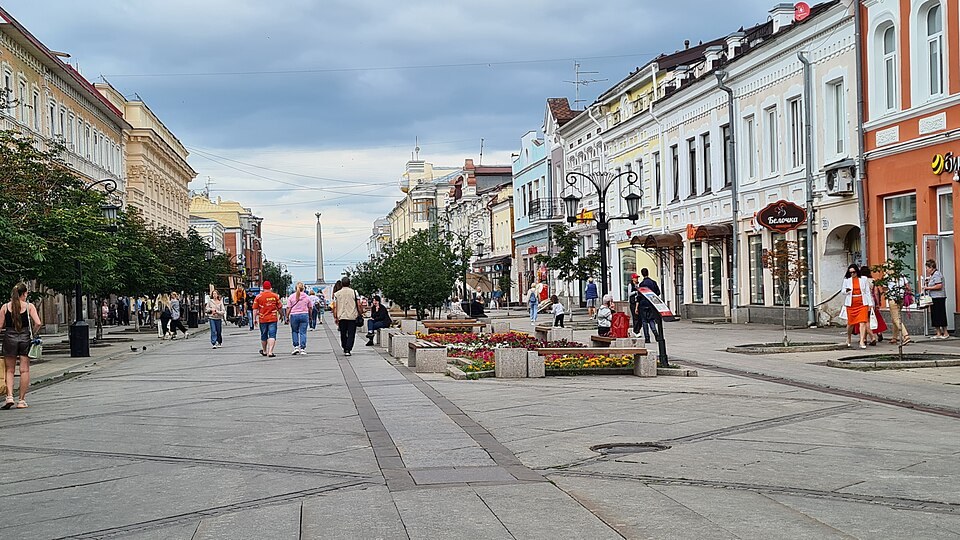
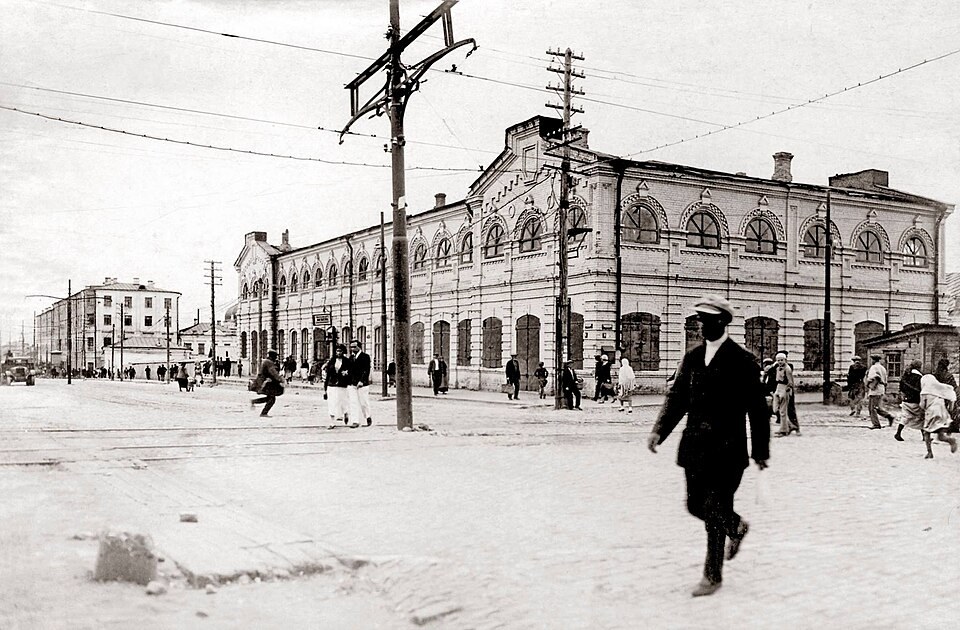
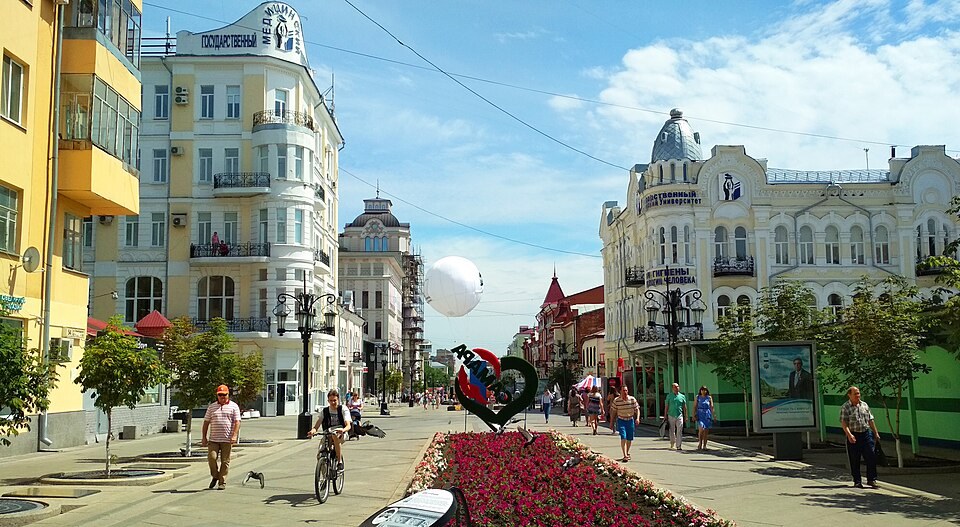
The street belongs to Samara’s historic commercial centre. Its buildings preserve traces of different periods and occupations. People once came here to conduct business, make purchases, and meet at familiar addresses. City life changed, and so did the use of the street. The pedestrian section now gives priority once again to people on foot, free to choose their own pace.
Look ahead, but look up as well. Ground-floor windows can draw your attention away from the upper parts of older buildings. There you may find carefully shaped windows, decorative details, and striking differences between neighbouring facades. The street resembles an open-air exhibition without a prescribed order.
Its value goes beyond architecture. Here you can see a city using its past while continuing to live in the present. People hurry to work, take a walk, or arrange to meet. A historic street does not stand still for photographs.
Choose a short stretch and walk it slowly. Then look back at what you have just passed. You may notice something you missed on the way forward. That is a good way to get to know Leningradskaya: let the street itself suggest where to pause.
This is a street worth walking slowly. Choose the two nearest buildings and compare them. Do their storeys, windows, and ground-floor treatments match? Then look at the shopfronts and the people. A historic commercial street continues to change its contents while remaining a place for encounters. Architecture and present-day life are constantly layered over one another here.
The pedestrian section lets you notice details that disappear from a car window. Your steps give the right scale. You can stop at a sign, step back to see a facade, turn into a side street, and return. The road begins to unfold not as one long straight line but as a sequence of small urban scenes.
The street's current name is only one layer of its history. Buildings had owners, businesses, and earlier purposes. New generations have found their own ways to use them. You do not need the biography of every house in a single visit. Start with a simpler question: what remains from the older city, and what arrived recently? The answer may change every few metres. At the end of your chosen stretch, turn around. The same street may now look like an entirely different sequence of details. This is a useful lesson for walking in any city: direction itself changes what you see.
Learn more
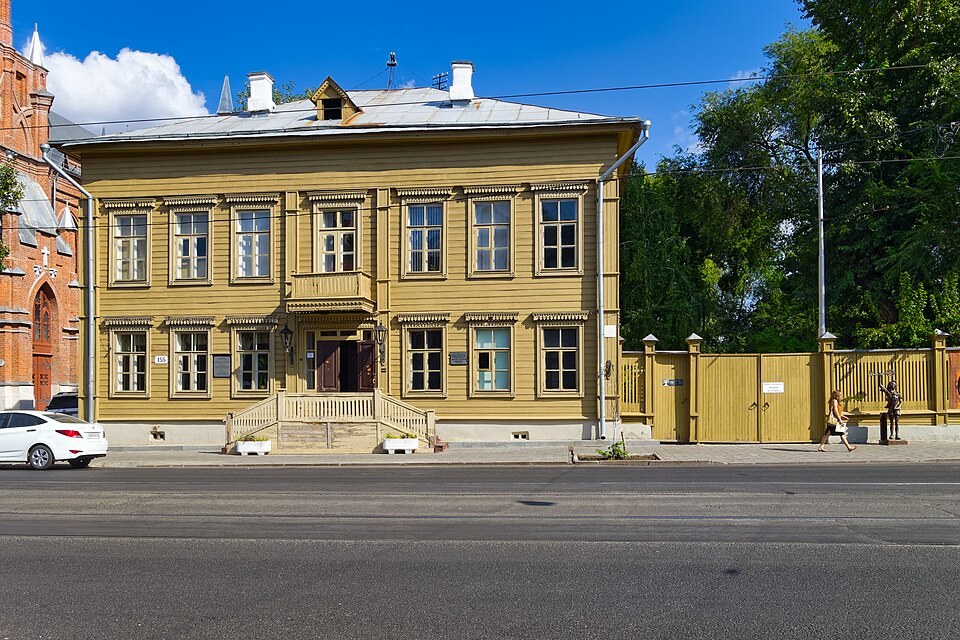
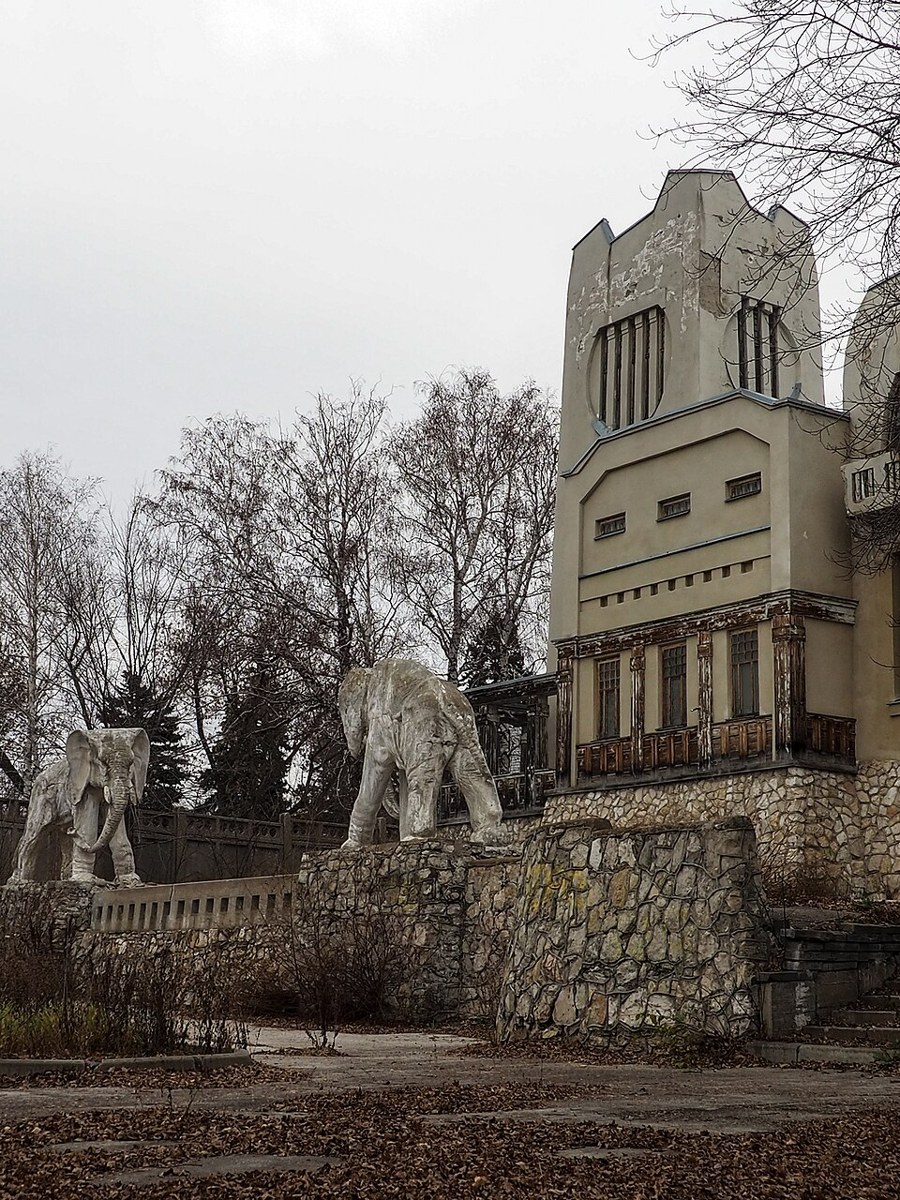
Samara's tourism portal notes that Konstantin Golovkin lived and worked on Leningradskaya Street. The artist and entrepreneur is also linked to another stop on this route, the House with Elephants. Connections like this turn isolated attractions into a network of urban lives.
Choose one building and imagine it at three moments: when it was new, in the middle of the twentieth century, and today. What might have remained, and what could have changed? The answer will not always be visible at once. The question nevertheless makes you look more carefully at upper floors, entrances, and signs. If you want to learn more, start with an address and a reliable source rather than a particularly attractive local legend.