LISTEN TO THE PLACE
A story worth knowing
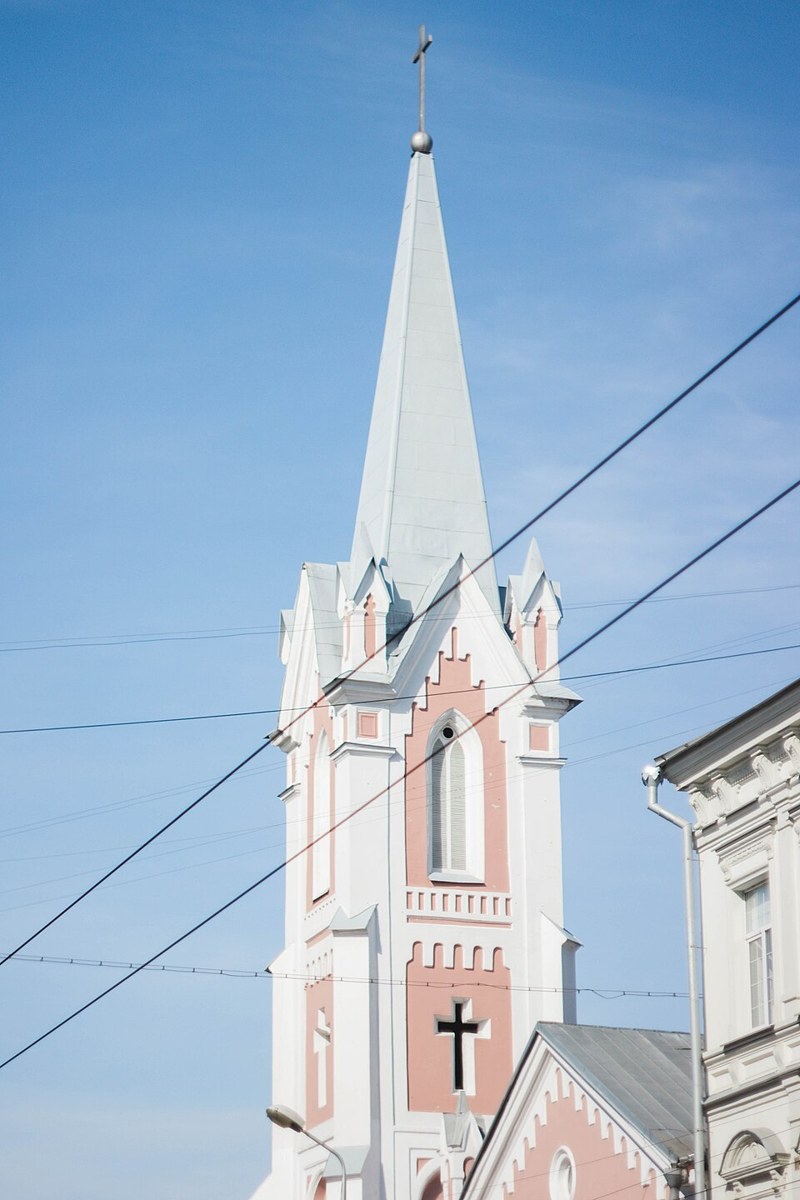
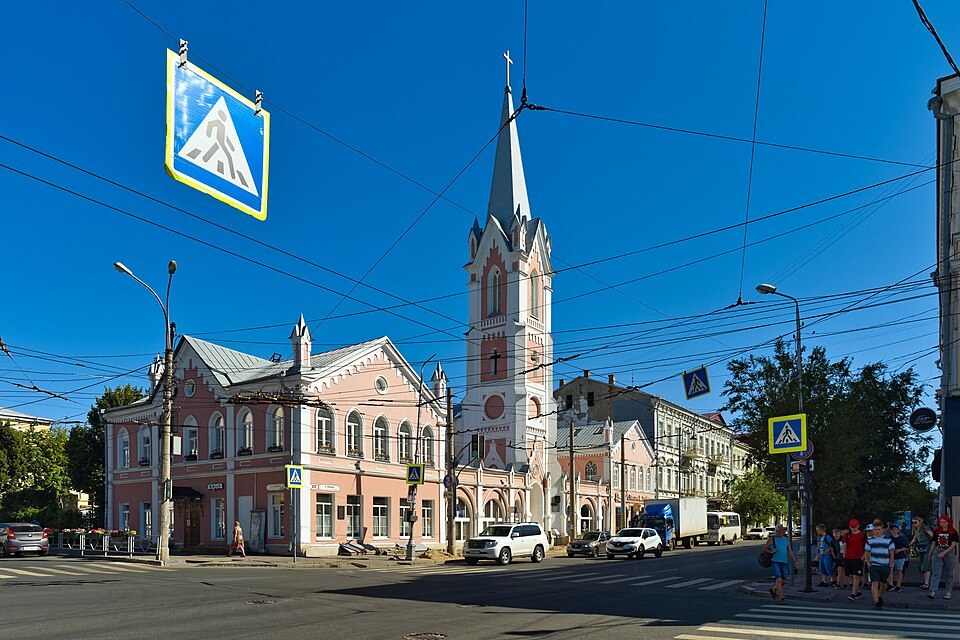
St George Lutheran Church shows why a building’s present use does not always reveal its entire past. It is a Lutheran church today, but construction began with a Catholic congregation in mind. Political circumstances in the nineteenth century changed those plans, and the building passed to the Lutherans.
People of different nationalities and faiths made their lives in Samara. The German Lutheran community became part of the city’s story. It needed not only a space for worship but also a place for meeting, education, and mutual support. The church’s history is therefore the history of a community, not merely of a facade.
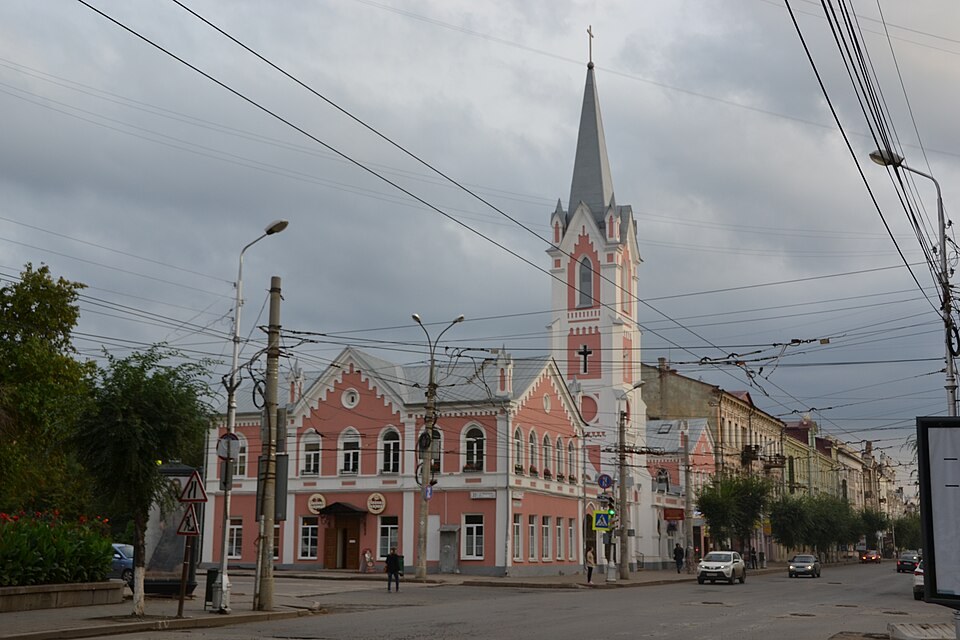
Study the building from the street. Its tall profile distinguishes it from its neighbours, but it is also worth considering the different events it has witnessed. In the twentieth century it was closed and put to other uses. Later the congregation returned and worship resumed. Each stage changed the way people related to the place.
The church remains active. That gives this stop a particular value: it is not a museum reconstruction of a vanished way of life. People still come here with their traditions, questions, and hopes.
Pause and look around the street. In a Samara neighbourhood, different languages, trades, and religious customs could exist side by side. St George’s helps us imagine that many-voiced city. Its architecture catches the eye; its history asks us to listen to the people who lived, and still live, around it.
Before reading a plaque, look at the church as part of the street. Neighbouring buildings may pull your attention away, which makes its own rhythm more rewarding to notice: the entrance, the windows, and the lines leading the eye upwards. The architecture marks a place intended for people to gather, yet it remains connected to the ordinary city around it.
The Lutheran community's history is a reminder that Samara has never had only one voice. Residents with different backgrounds built houses, worked, worshipped, and met on the same streets. The church preserves a memory of that proximity. Rather than treating it as an alien accent in the streetscape, see it as one of the natural parts of the city's history.
The congregation is active today. If the door is open, follow the current rules and be attentive to what is taking place inside. Music, a community meeting, or a service can affect the atmosphere more strongly than any architectural label. From outside, take a moment to look from the church towards the rest of the block. Religious life did not unfold separately from trade and street life, but alongside them. The city grows richer when we recognise those connections between places and people.
Learn more
Samara's Lutheran congregation states that the church was built and consecrated in 1865. The date is useful, but it cannot explain the whole place. The building has seen its urban surroundings change and continues to serve as a meeting place. The community's story did not end in the nineteenth century.
Notice the difference between a general label such as 'Lutheran church' and the particular building in front of you. The label names a tradition; this structure has its own materials, character, and position on the street. Choose three details that you will remember from here alone. The exercise keeps different religious landmarks from blending into one generic image.