LISTEN TO THE PLACE
A story worth knowing
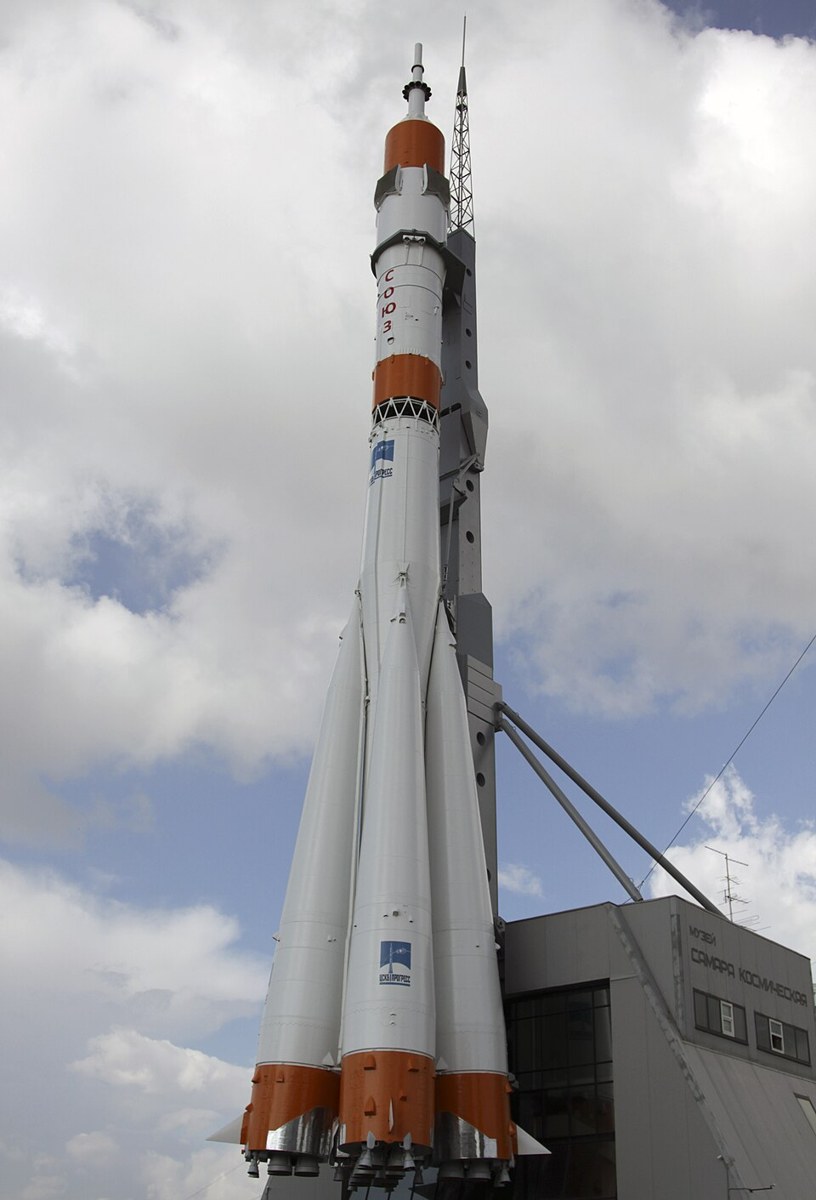
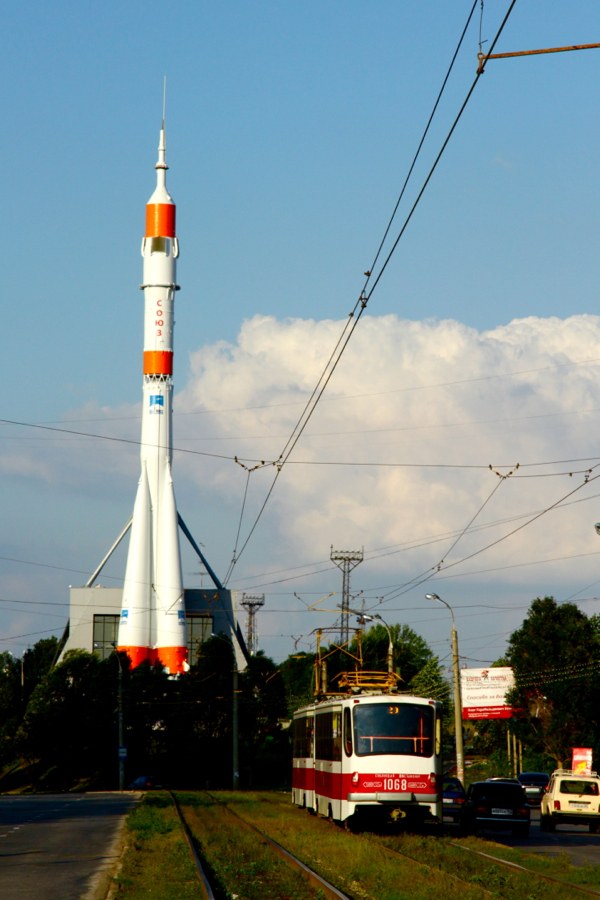
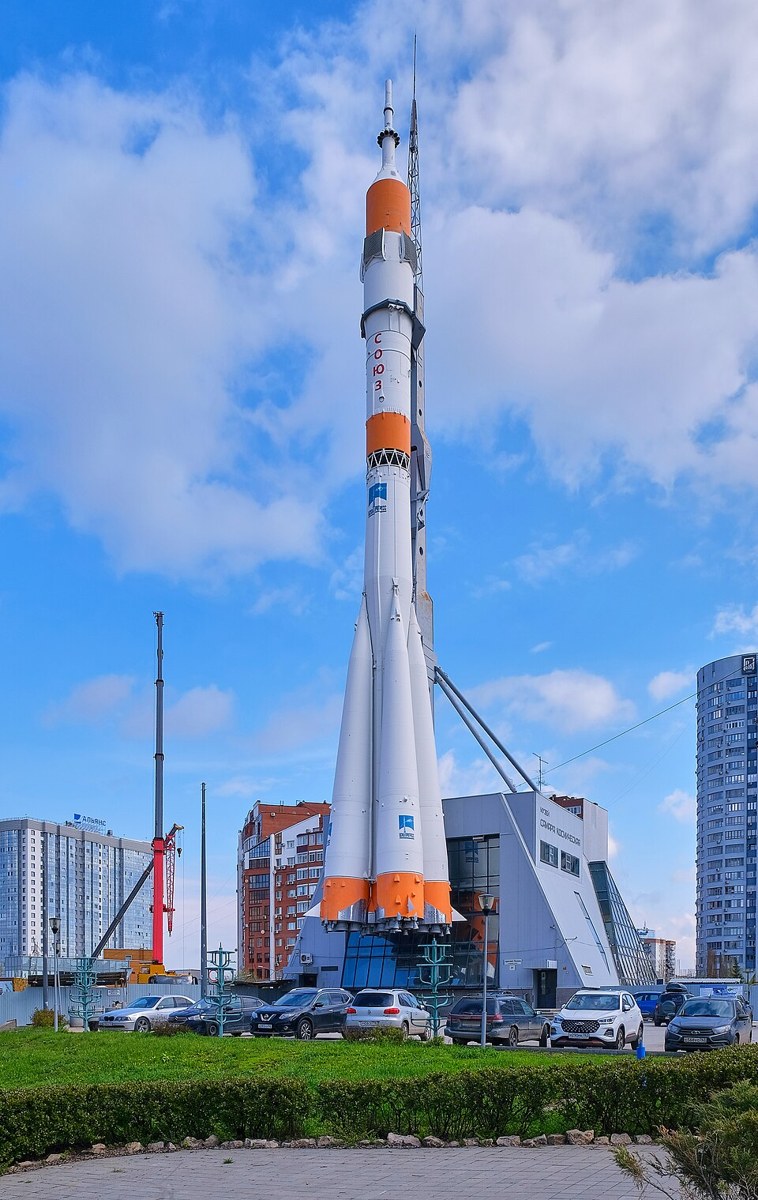
This museum has an unusual signpost: a rocket visible from far away. Standing beside the building, it makes clear that Samara’s space history is not an abstract subject from a textbook.
Before you move closer, compare the rocket’s proportions with a person beside it. A launch on a screen lasts only minutes. Here you can begin to grasp the physical scale of the machinery on which engineers, designers, and factory teams worked. Samara has long been connected with the production of rockets and space technology. Behind the word “space” lies a chain of thoroughly earthly tasks: designing a part, making it, testing it, correcting it, and assembling a reliable system.
The museum explores that work through objects and personal histories. Yet part of the visit begins outside, beneath the rocket itself. Try to picture it as a collection of components. Where might the engines be? Why does the structure have this shape? You do not need technical answers to appreciate the difficulty of the challenge.
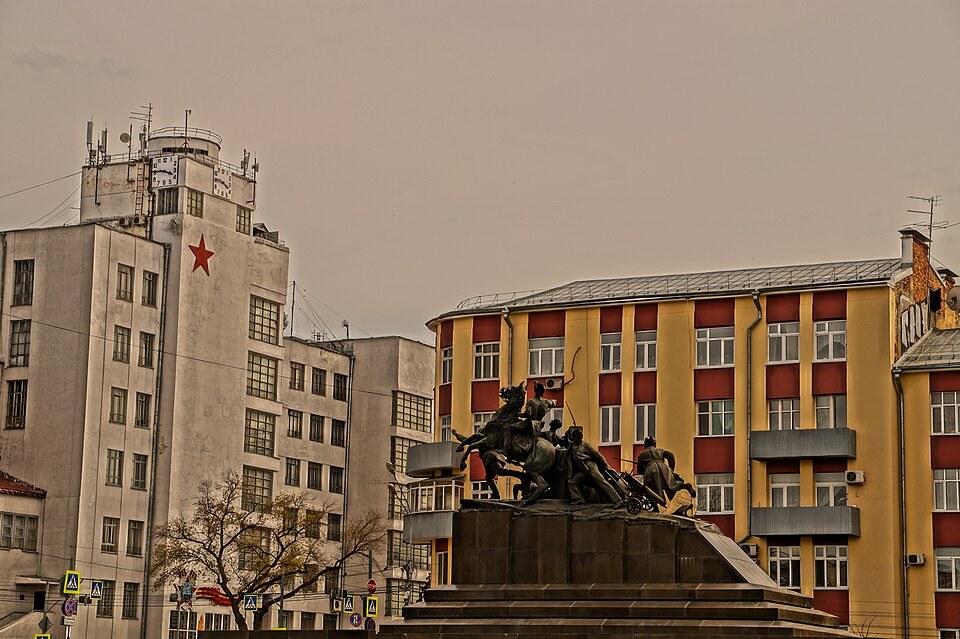
Samara’s space story continues its aviation and industrial history. The Monument of Glory speaks about the labour of an earlier generation; the rocket gives another generation’s engineering effort a visible form. Decades separate them, but both point to the work of many people behind one powerful image.
If you plan to go inside, check the current opening arrangements first. For now, stay by the rocket a little longer. Perhaps the most astonishing thing about its upward ambition is the amount of work done here on Earth to make it possible.
A rocket is easy to read as a symbol of a sudden launch. Its history, however, is also a story of slow, exact work done by many people. Try breaking the outline before you into separate tasks in your mind: design, making components, checking them, assembling the whole, and testing it. Each stage calls for its own skills. No single expert does everything. Thinking in this way can make the size of the rocket even more impressive.
Move to a point where you can see the entire structure, then come closer to its base. From a distance it is a clear line against the sky. Up close, that line becomes a collection of parts and materials. The shift from whole to detail resembles the work a museum can do. A vast subject such as space technology becomes easier to grasp through a particular object and the people connected with it.
When we imagine space exploration, we often picture only the moment of flight. Samara draws attention to the years of preparation before that moment, and to the industrial city that helped make it possible. If you enter the museum, do not try to memorise every technical term at once. Choose one exhibit and ask a simple question: what problem was it made to solve? A question like that can make complex engineering feel connected to human choices rather than distant and impersonal.
Learn more
Try looking at the rocket as a vertical landmark in the city. On an ordinary street your eye tends to travel along building facades. Here it suddenly moves upwards. That is more than a striking photograph. The change in scale helps explain why a piece of engineering has become such a visible symbol of Samara.
If you are with a child, or with someone who does not usually enjoy technical museums, begin without specialist names. Compare the rocket's height with nearby buildings and people. Then think of three questions together: what needs to be especially strong, what needs to be especially precise, and how might the completed structure be checked? You can look for answers inside. The exhibition then becomes a sequence of discoveries rather than a list of unfamiliar mechanisms.