LISTEN TO THE PLACE
A story worth knowing
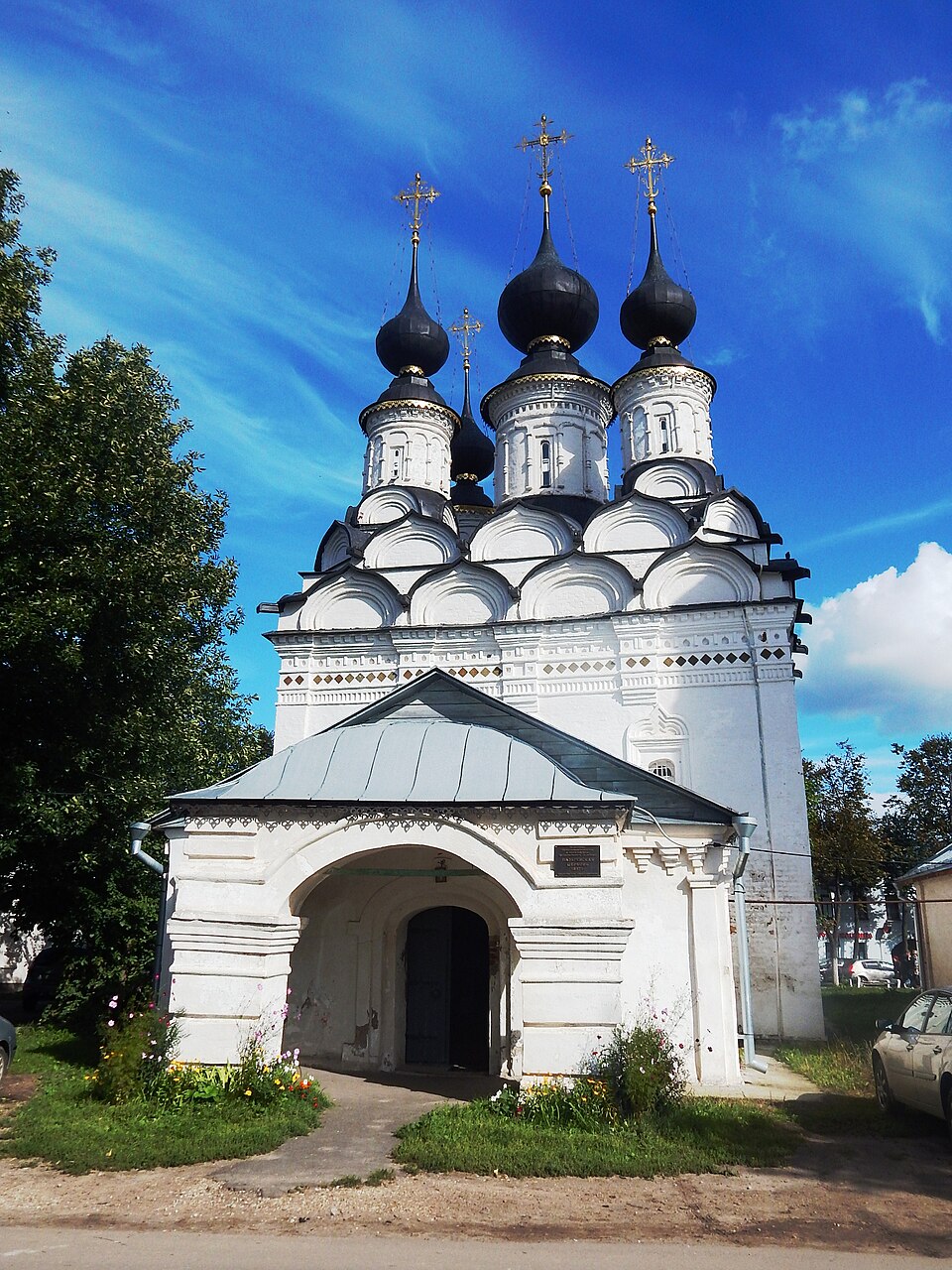
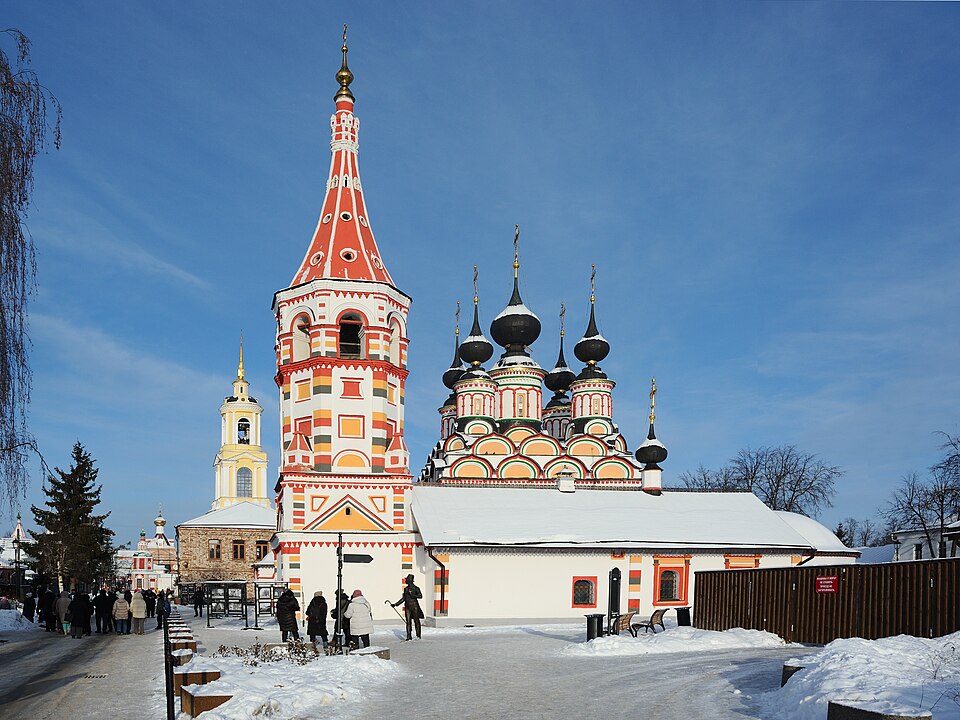
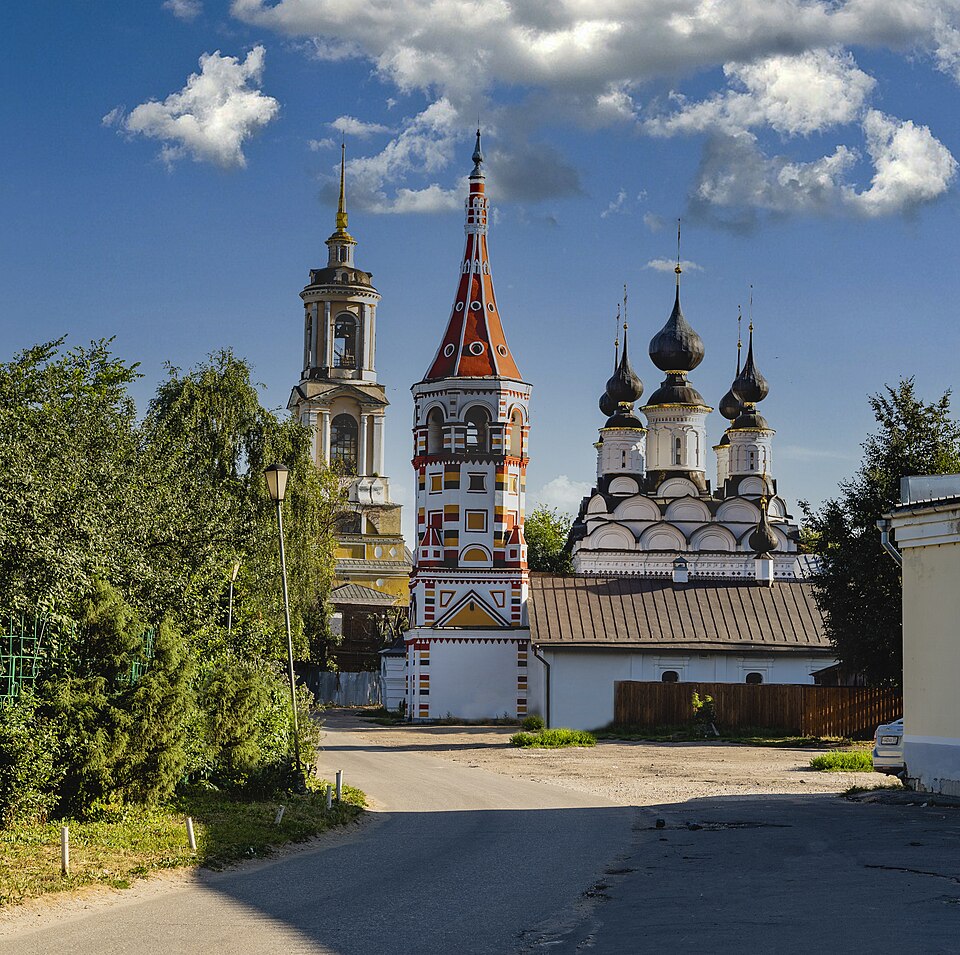
At Saint Antipius Church, your eyes usually go first to the decorated bell tower. It can seem more important than the small church itself. The arrangement becomes clearer when you look at neighbouring Lazarus Church: the two buildings form a pair.
Saint Antipius was built in 1745 as the heated winter church. The larger Lazarus Church served the warmer months. In Suzdal's climate, this was practical: a modest interior was easier to heat than a large one.
Notice the contrast between the restrained church and its expressive tower. Decoration is distributed unevenly, giving the silhouette energy. The horizontal body and upward-moving tower bring two different visual movements into one composition.
The present colours and appearance also reflect twentieth-century restoration. Closure and secular use interrupted the building's religious life before repairs and recovery. What we see today should not automatically be treated as an unchanged eighteenth-century surface.
It is easy to overlook a small winter church beside a more prominent neighbour. Try reversing that habit: understand its practical role first, then examine the ornament above.
The stop reveals something characteristic of Suzdal. Architectural beauty often grew out of ordinary needs: cold winters, a shared parish and the wish to make a familiar place distinctive. Beneath the festive silhouette lies a very practical concern for everyday use.
Learn more
Paired churches are worth viewing together even when an audio guide gives them separate entries. One story explains an individual building; the relationship between them reveals the parish's seasonal routine. Compare their windows, height and overall volume. Those observations can clarify their different functions without requiring specialist architectural vocabulary.