LISTEN TO THE PLACE
A story worth knowing
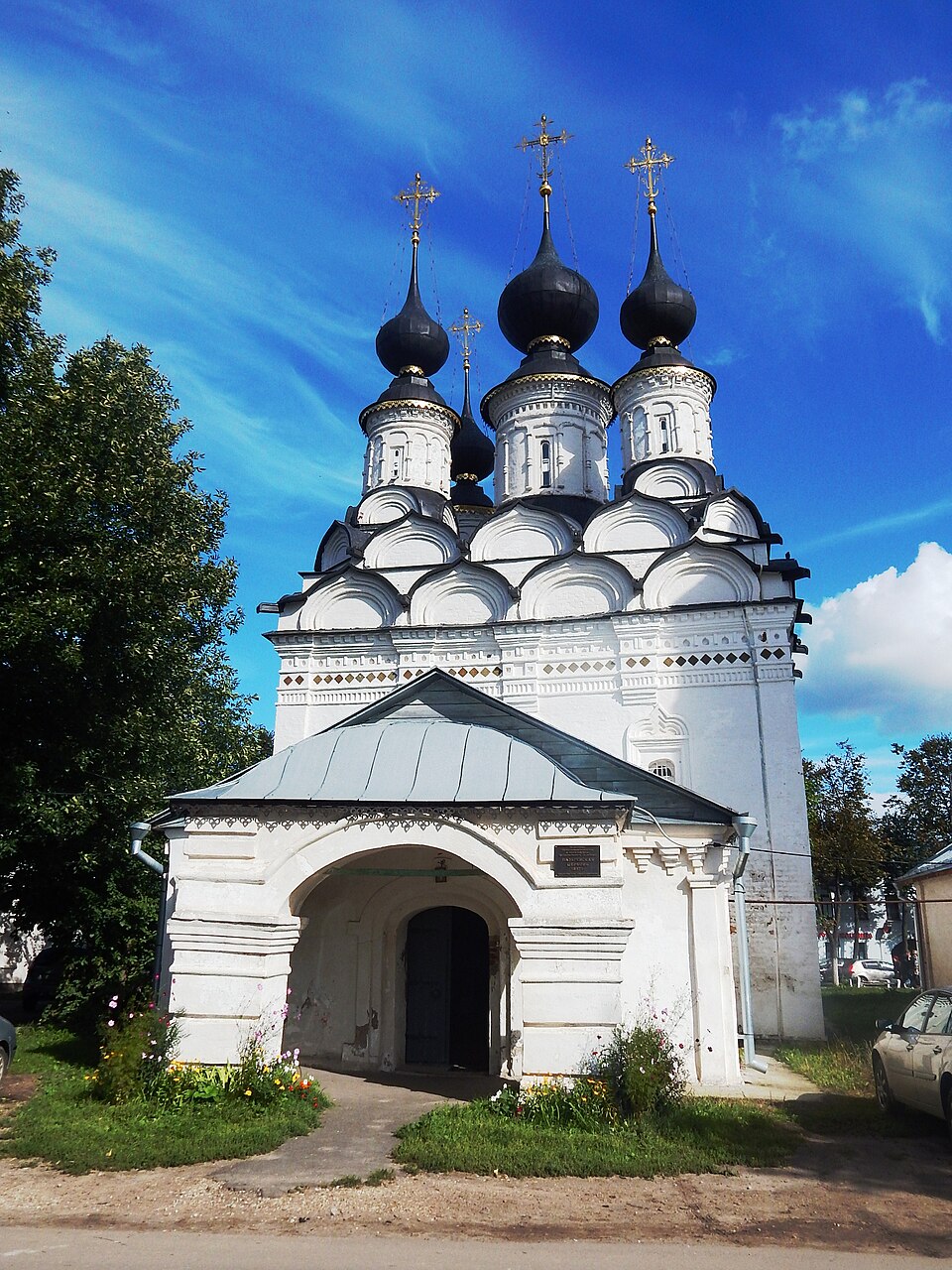
Lazarus Church takes us beyond Suzdal's Kremlin and its major monasteries. It is a church of the urban settlement, connected with an ordinary parish and the streets around it.
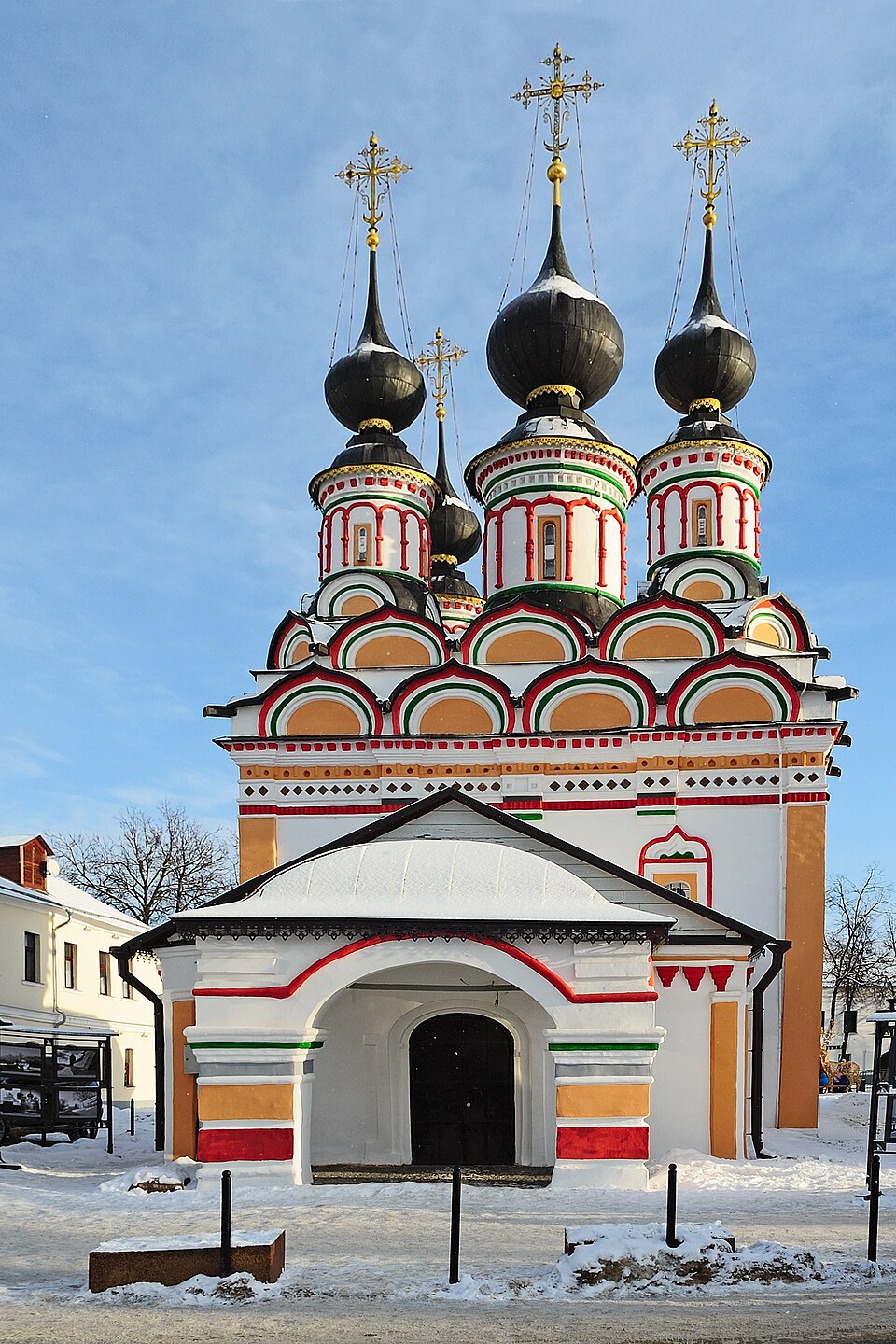
The stone building dates from 1667. Its five-domed composition marked an important stage in local church architecture. The religious site itself was older, so the history of the parish and the age of the surviving walls should be distinguished.
Look at the arrangement of the domes above the main volume, then lower your gaze to the façade. The vertical silhouette and horizontal decorative bands reinforce one another. The church works both as a distant street landmark and as something to examine close up.
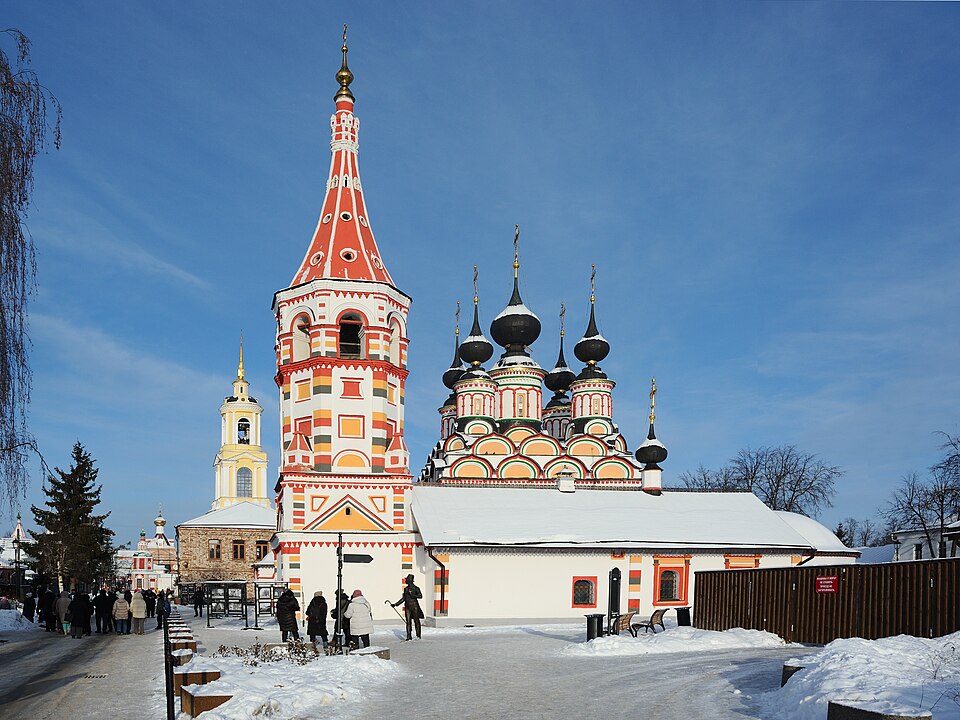
Saint Antipius Church was added nearby for winter services, while Lazarus served the warmer season. This explains why two churches stand so close together yet differ in scale. They formed a practical system rather than duplicating each other.
Twentieth-century closure brought losses to the interior. The present building reflects a complicated history of use and restoration, not uninterrupted preservation.
Try viewing the stop as a small piece of town rather than one isolated church. Where does the street lead? From which direction do the domes appear? How does the winter church change the composition? These questions reconnect the monument with everyday surroundings and help explain why Suzdal rewards exploration on foot.
Learn more
Five domes may look like a timeless formula for a Russian church, but the form developed differently in different towns. Lazarus Church is significant as an early local example. Comparing it with later buildings reveals how a successful architectural idea becomes familiar enough to seem as though it had always existed.