LISTEN TO THE PLACE
A story worth knowing
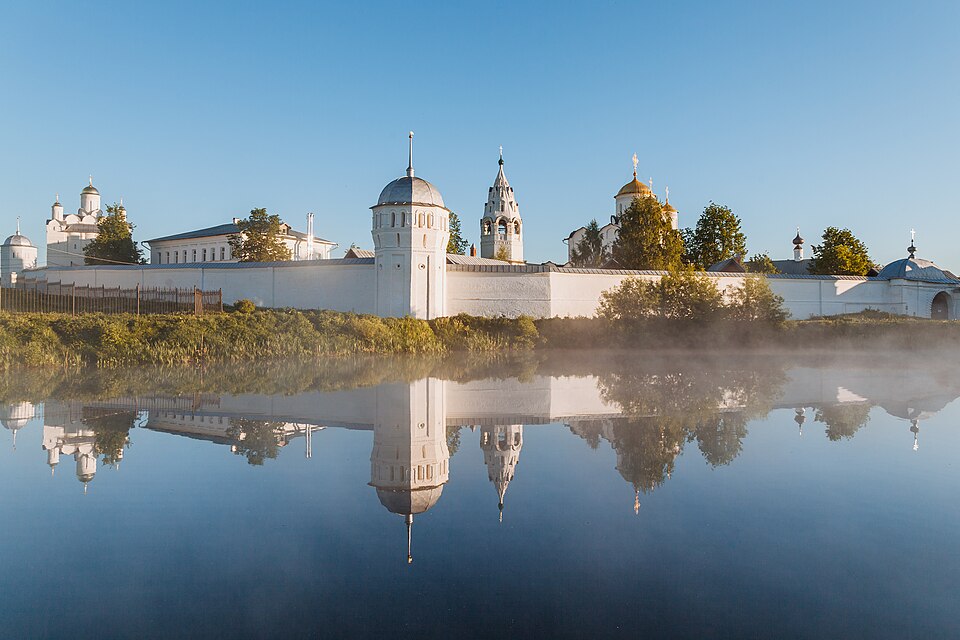
The high walls of the Monastery of Saint Euthymius make an almost fortress-like impression. They introduce a boundary before revealing the world inside. Against Suzdal's open meadows and low buildings, the contrast is striking: a substantial, self-contained ensemble developed here over several centuries.
The monastery's foundation is traditionally dated to 1352. Its first abbot was Euthymius, whose name became part of the institution's identity. The surviving stone complex is much later, however. We should not mentally place every present wall and tower in the fourteenth century. They belong to subsequent stages of growth and rebuilding.
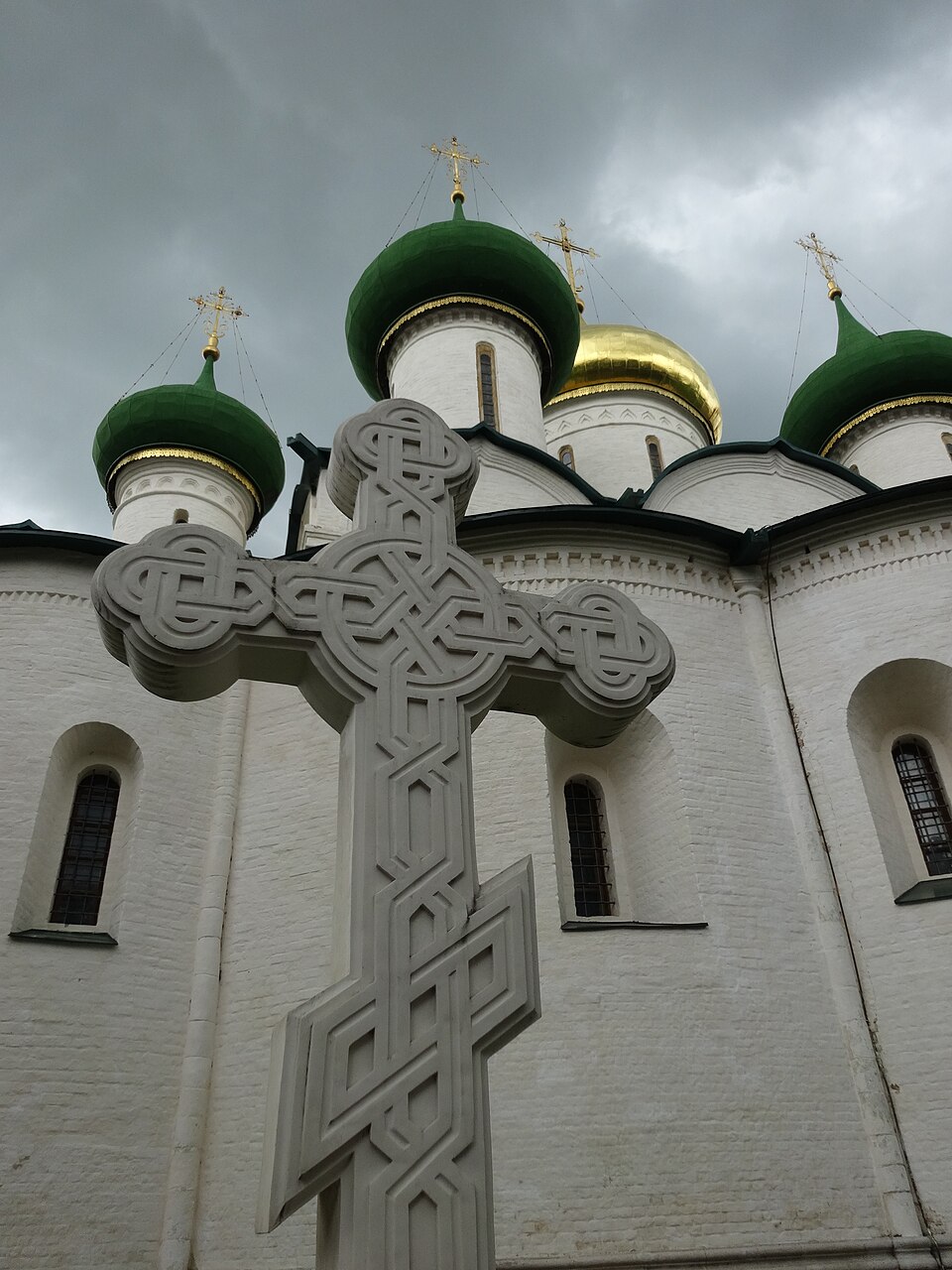
The principal church, the Transfiguration Cathedral, took shape in the sixteenth century. Its large, restrained forms and decorative band of small arches connect it with earlier architectural traditions. After the exterior's relative severity, the interior paintings create a powerful contrast. A team of Kostroma painters led by Gury Nikitin worked here in 1689.
The monastery is also connected with Prince Dmitry Pozharsky, one of the leaders of the militia of 1612. His family supported the institution, and he was buried here in 1642. Donations, burials and the commemoration of patrons linked monastic life with family histories and political events beyond the walls.
Those walls contain a darker theme too. A monastic prison operated here from 1766, and the grounds were used for detention in later periods as well. An enclosed space could mean chosen seclusion for some people and an inability to leave for others. Both experiences belong to the site's history.
During your visit, distinguish the buildings by their original roles. Cathedral, refectory, bell tower, living quarters and service spaces supported different aspects of the community. Their attractive outlines can distract us from that practical organisation. Ask each building a simple question: what would people have done here on an ordinary day?
There is no need to turn the visit into a race through every exhibition. Choose one thread: architecture, painting, Pozharsky's history or the memory of imprisonment. The large ensemble becomes easier to understand that way. Its significance lies partly in resisting a single mood. Art, faith, authority and individual lives meet within the same imposing enclosure, making this one of Suzdal's most layered historical places.
Learn more
Documents concerning the cathedral's murals reveal seventeenth-century painters as working professionals with competing demands on their time. Gury Nikitin and his colleagues were expected at Moscow's Novospassky Monastery while they were painting in Suzdal. The patrons appealed to the authorities, each arguing for the importance of completing their own church.
This was not simply a group of free travellers choosing a pleasant assignment. Their work depended on commissions, obligations and relationships between influential institutions. Yet the dispute makes their professional situation recognisable: several important jobs, a limited number of skilled people and disagreement about where those people should be working.
When you see the murals, or museum photographs of them, remember this practical side of art. An extensive painted programme required a coordinated team, materials and organisation, as well as talent. Time mattered to the patrons just as it does to people commissioning work today.