LISTEN TO THE PLACE
A story worth knowing
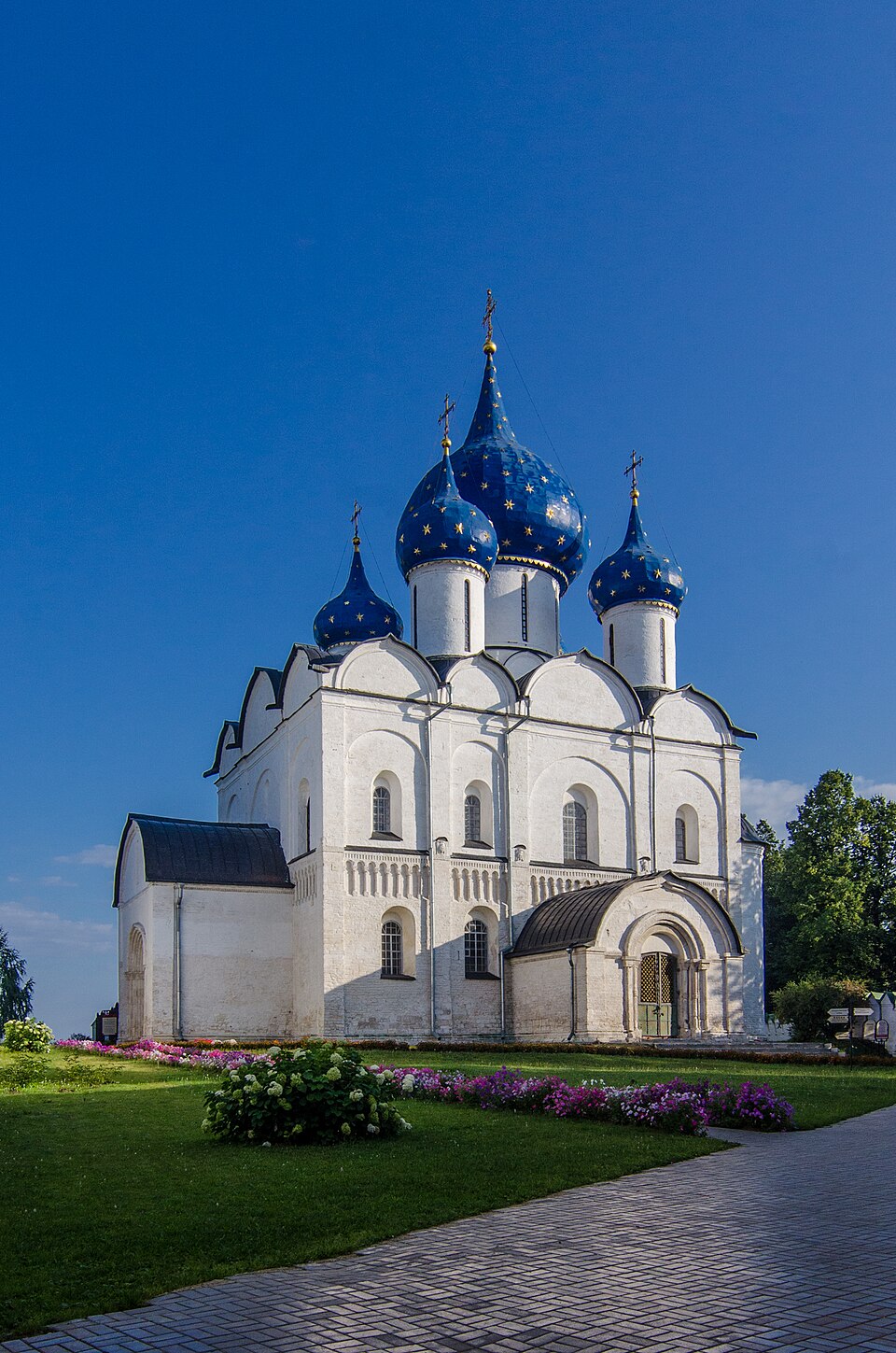
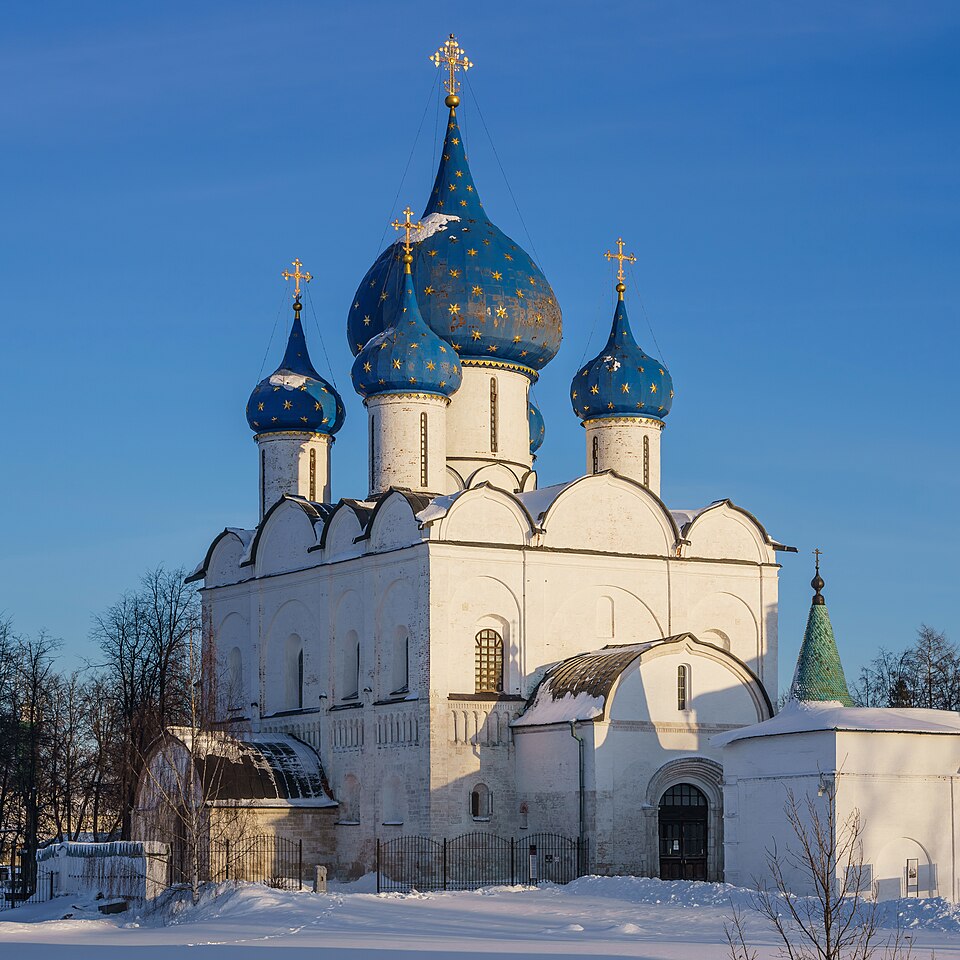
The blue domes of the Nativity Cathedral easily become the defining image of Suzdal. Look lower down the walls, though, and a more complex story emerges. Several centuries of architecture coexist within one building.
The white-stone cathedral was begun in 1222 under Prince Yuri Vsevolodovich. Its surviving lower sections belong to that pre-Mongol period. The upper part was rebuilt in brick in the sixteenth century, so the familiar silhouette cannot simply be projected back into the thirteenth.
Look for carved details and decorative bands. Stone was more than a durable wall material: it allowed craftsmen to create images, patterns and rhythms. Such work made the church a visible expression of the town's and its rulers' importance.
Among the cathedral's treasures are its ancient doors with golden imagery. Their technique and scenes reward close attention inside when visiting is possible. An outdoor walking stop and a museum visit offer complementary experiences rather than the same information.
Although the cathedral belongs to the Kremlin ensemble, it deserves a separate look. The Kremlin introduces the organisation of the town, while the church tells the story of one monument altered by fires, rebuilding and changing eras. These are different scales within the same historic setting.
Walk around the accessible exterior and compare its sides. Notice when the silhouette commands attention and when the wall surface becomes more interesting. Suzdal's cathedral shows that antiquity need not look uniform: it can consist of several periods joined by the continuing life of one place.
Learn more
The name Golden Gates refers to the imagery and decorative technique, not to doors made from solid gold. Contrast between background and design, the sequence of scenes and the effect of light all mattered to the craftsmen. Objects like these reveal the sophistication of medieval Suzdal's artistic workshops.