LISTEN TO THE PLACE
A story worth knowing
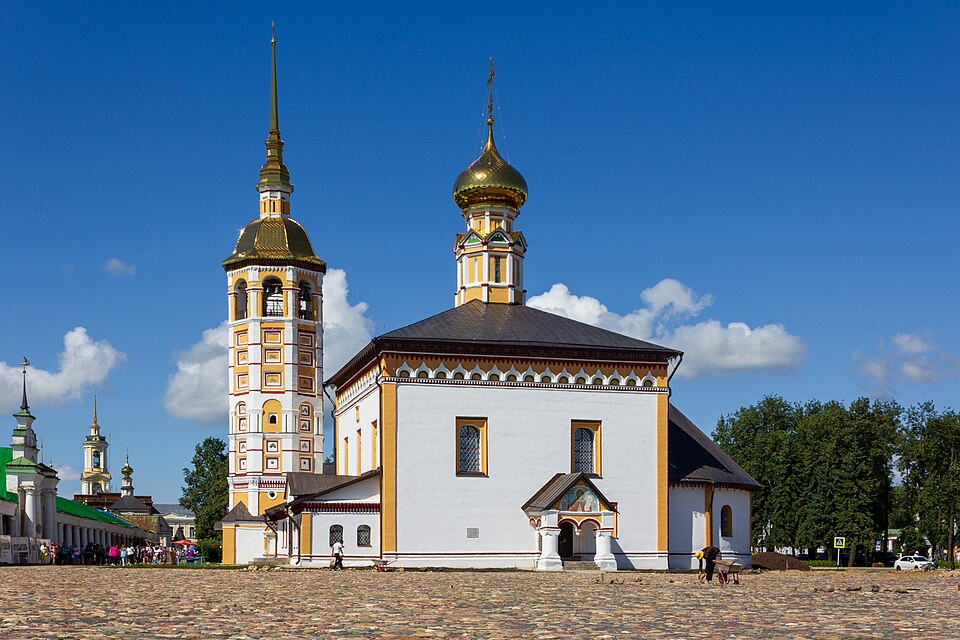
Resurrection Church stands where Suzdal's religious and commercial lives met. The trading rows, square and church form one urban centre. For earlier residents, markets, festivals and worship were not separate sightseeing categories but parts of the same daily world.
The stone church was built in 1720 after a fire destroyed its wooden predecessor. Nearby Kazan Church served as the winter church, while Resurrection was used in the warmer season. The pair answered practical needs across the year.
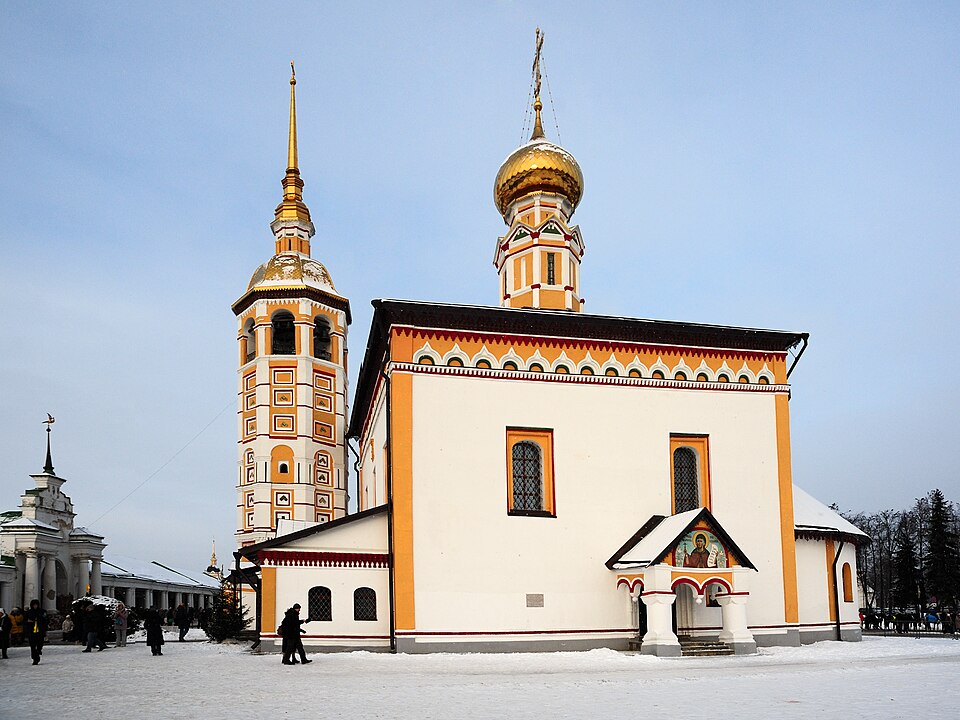
Notice the restrained main volume. Its effect relies on proportion, the upper edge of the walls and the entrance porch rather than continuous carved decoration. The bell tower is especially prominent and became an important landmark on the market square.
The tower changed over time. It was heightened, and traces of earlier openings reveal that history. Its spired upper form differs from the tent roofs familiar elsewhere in Suzdal. Even in a small historic town, architectural tradition was never one unchanging rule.
View the church first from the trading rows and then from another part of the square. At different distances it either joins the larger composition of the centre or stands out as an independent vertical marker. Architecture helped people navigate before modern signs and maps.
This stop is therefore about everyday urban life as much as a construction date. The church marked a meeting place, a seasonal rhythm and a soundscape shared by people arriving on many different errands.
Learn more
A bell tower was more than decoration. Its sound announced services and helped organise the experience of the town. Imagine the historic square with voices, footsteps, trade and bells rather than as a silent picture. A photograph can preserve the façades while losing almost all of that acoustic world.