LISTEN TO THE PLACE
A story worth knowing
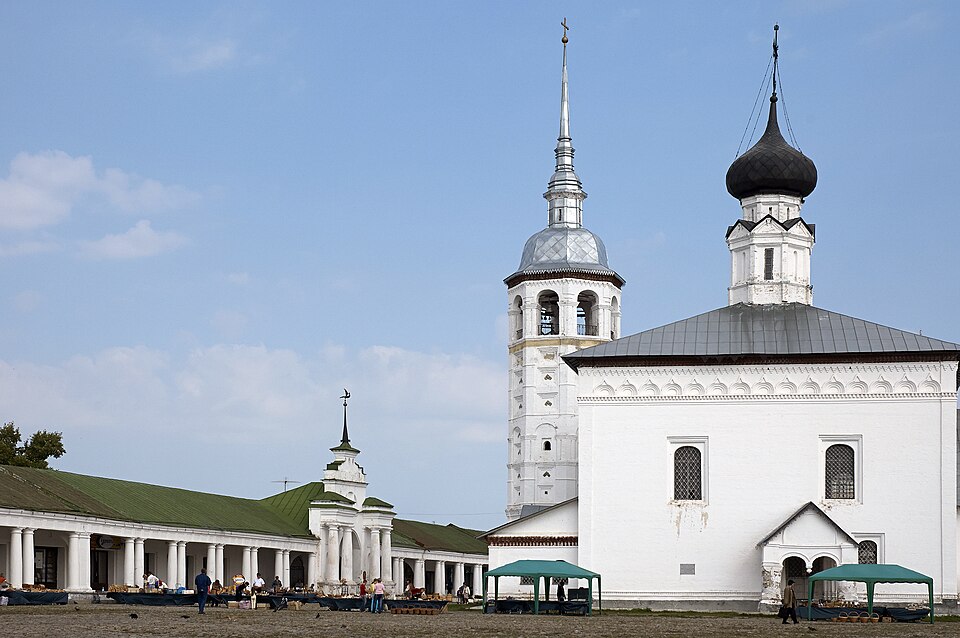
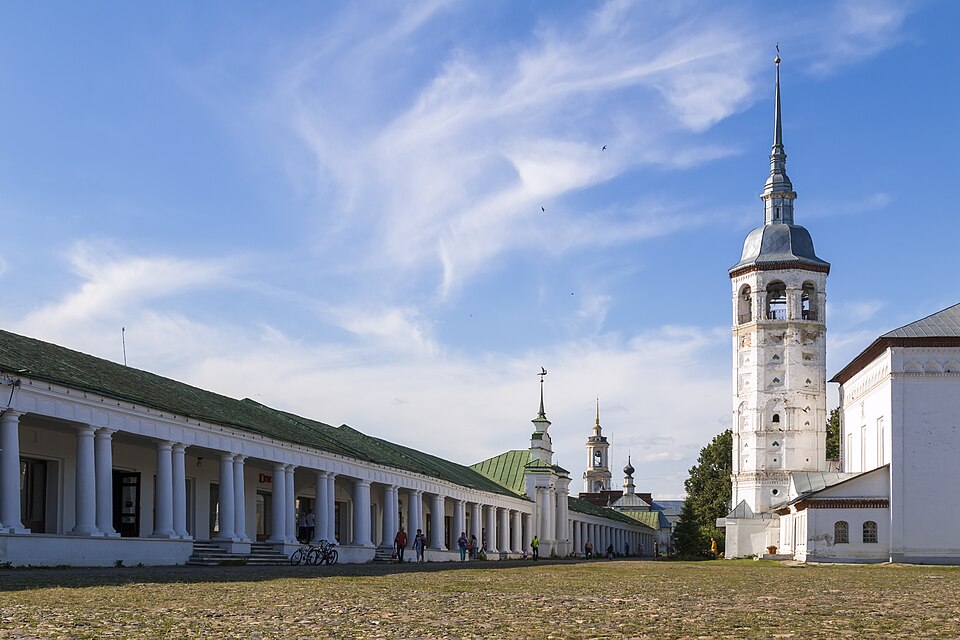
Suzdal's domes can make it easy to forget that the city lived through more than its monasteries. The Trading Rows bring another part of its history into view. This long gallery of repeated arches and columns was created for small transactions, meetings and everyday purchases.
The stone complex was built between 1806 and 1811 to a design by provincial architect Alexey Vershinsky. It belongs to the early nineteenth century, despite standing among reminders of much earlier periods. Its orderly rhythm, strong horizontal line and emphasised central entrance give the square a clear architectural structure.
Follow the gallery with your eyes. The same motif repeats, while people's movements continually change the scene. It is a useful arrangement for commerce: a calm shared framework contains many separate activities. A customer recognises a single complex even when interested in only one particular shop.
The covered walkway also serves a practical purpose. It creates an intermediate space between the open square and the rooms behind the façade. People can pause, move along the frontage and consider different entrances. The design accommodates someone who has not yet decided where to go, as well as someone arriving with a specific purchase in mind.
The central gateway carries a spire topped by a falcon associated with Suzdal's coat of arms. This gives the commercial building a civic identity. Churches and administrative buildings were not the only structures able to represent a city: trade also had a prominent place in its public image.
The complex has experienced losses and restoration, so its tidy present appearance should not be mistaken for a completely untouched scene from 1811. Here, as elsewhere in Suzdal, the original design meets later efforts to preserve and recover it.
Look at the surrounding square as well as the building. Unlike an enclosed monastic setting, it was a place where people crossed paths for countless everyday reasons. Many visitors now arrive as tourists, but imagine an ordinary resident shopping for practical necessities. Suzdal becomes less like a frozen historical setting and more like a living town. It needed food, useful objects, news and conversation, together with somewhere convenient to find them. The Trading Rows put those ordinary requirements into an unusually graceful architectural form.
Learn more
The alternative name Gostiny Dvor can be misleading if translated simply as “guest courtyard.” In this historical context, the Russian word for guest also referred to a merchant. Such complexes were associated with shops, commerce and the storage of goods, rather than being merely hotels.
Suzdal's example shows how many independent traders could share one architectural address. Repeated units create order, while separate activities occupy the spaces behind them. A formal entrance turns the long frontage into a recognisable whole.
Compare it with a modern shopping centre. Products, signs and technology have changed, but some tasks remain familiar: make the entrance visible, lead customers past several offers and shelter part of their journey from the weather. The comparison reveals understandable human needs beneath the historical style, connecting the building with the ordinary actions of choosing, buying and selling.