LISTEN TO THE PLACE
A story worth knowing
This village never existed in precisely this form. Its houses, churches and working buildings came from different parts of the Vladimir region. They became neighbours through a museum project developed in the 1960s and 1970s. That does not make the structures unreal. It means distinguishing authentic buildings from the deliberately arranged relationships between them.
The site beside the Kamenka River has an earlier history too: the Dmitrievsky Monastery once stood here. The museum gave the ground a new purpose while keeping it a prominent feature in Suzdal's landscape. From the kremlin side, the tall wooden churches attract attention first. Once inside, however, it is worth looking beyond those landmarks.
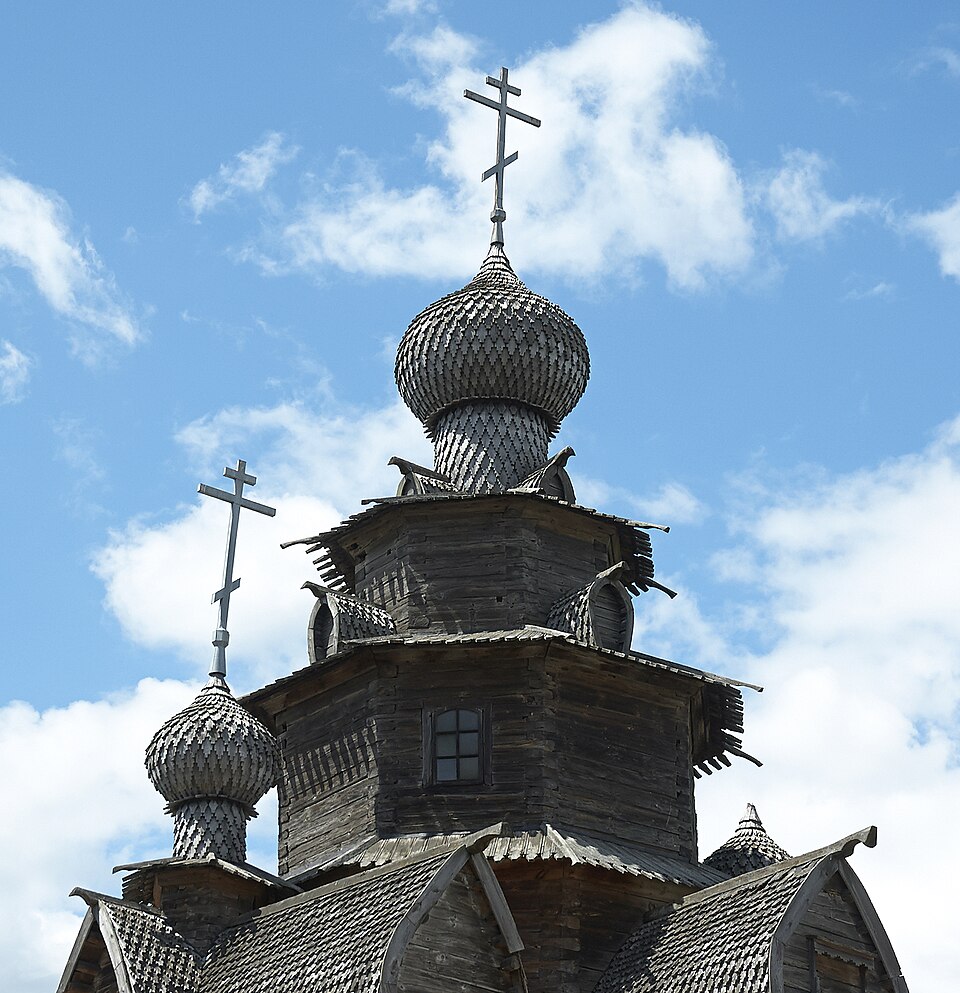
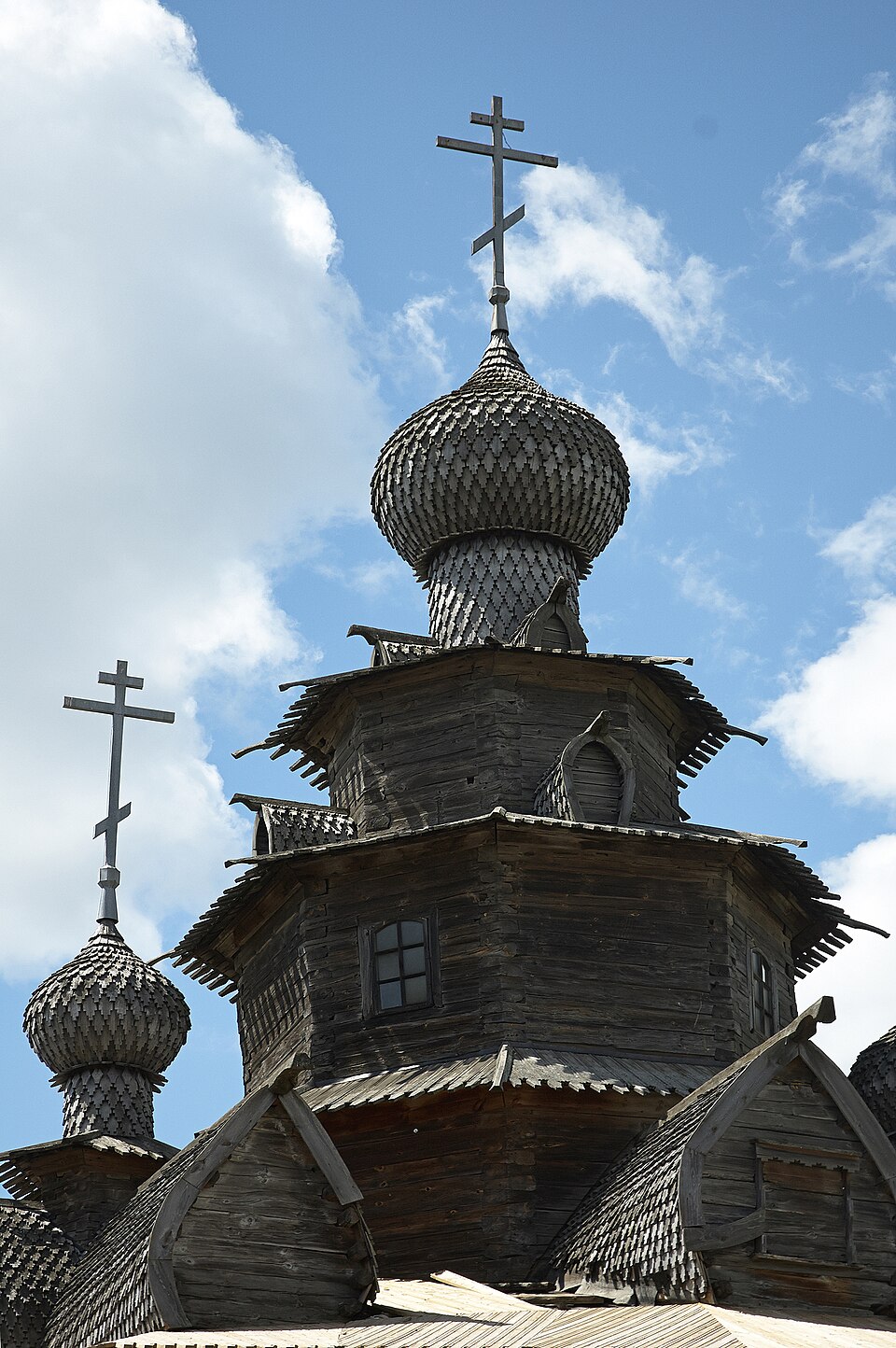
The Transfiguration Church from Kozlyatyevo rises through progressively smaller tiers. Its joined timber volumes create a surprisingly light silhouette against the sky. Compare it with the Resurrection Church from Patakino, organised differently. A shared material did not dictate a single design; timber allowed builders to produce distinct proportions and visual effects.
Domestic houses bring attention back down to everyday life. Size, room arrangements, entrances and yards reflect the resources of their owners. The museum includes homes associated with different levels of prosperity. The word peasant should therefore not suggest one uniform way of living. Important differences existed between households, and architecture preserves some of them.
A barn, a mill or a well can seem less spectacular than an ornamented facade, but such structures help explain how a settlement functioned. Where were supplies kept? How was water obtained? How was grain processed? With those questions in mind, a group of picturesque buildings becomes an account of practical tasks carried out without familiar modern conveniences.
Try following one theme through the grounds: the journey of grain from storage towards food, perhaps, or a person's movement from the cold outdoors into a dwelling. There is no need to invent details that the displays do not explain. Simply connect spaces with activities. The builders' skill then becomes easier to recognise. It lay in arranging daily life as well as decorating surfaces. Even a modest outbuilding had a necessary role in that larger system. The museum offers both the beauty of wooden architecture and evidence of practical ingenuity; after seeing the two together, an ordinary rural yard outside the museum may also deserve a longer look.
Learn more
Preserving a building differs from preserving a small object. A cup can be moved whole into a display case. A large timber structure requires investigation, dismantling, identification of its parts and careful reassembly and restoration. At Suzdal, the result can be seen on the scale of an entire ensemble.
The Resurrection Church from Patakino was transferred here in 1969 and 1970. Looking at the completed building, it is easy to overlook the work between village church and museum exhibit. Specialists had to assess surviving material, damaged elements and the connections holding the structure together.
Examine a corner of the log walls or the meeting of two volumes. This is more than a shape drawn on paper: it is a system of connected parts. The museum tells a story about the original builders and also about the later specialists who made it possible for their work to reach another generation.