LISTEN TO THE PLACE
A story worth knowing
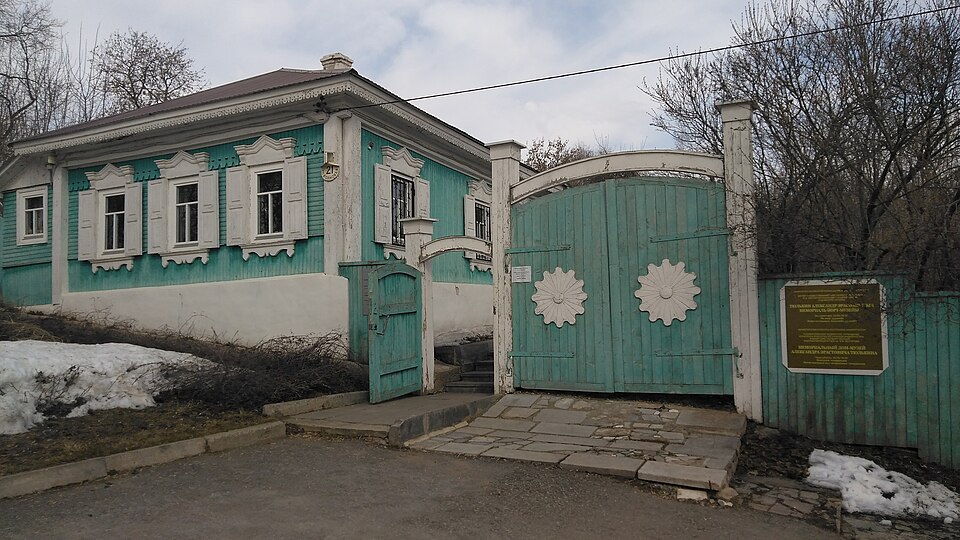
This house in Ufa is tied to Sergey Timofeyevich Aksakov not in a vague literary sense, but in a very early and domestic chapter of his life. According to the museum’s own information, the writer’s family lived here from 1795 to 1797. For a city walk, that matters: this is not just a place that talks about biography after the fact, but an address where biography was once ordinary daily life.
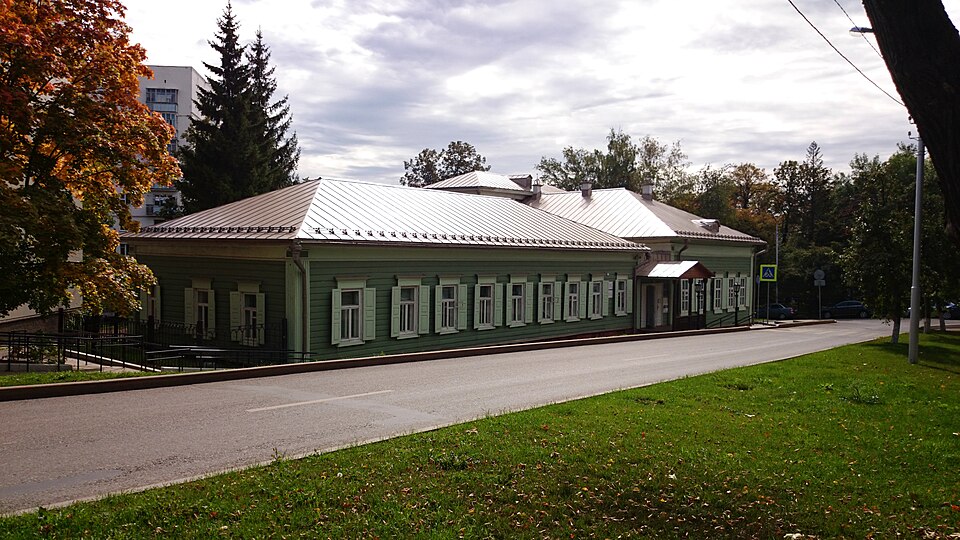
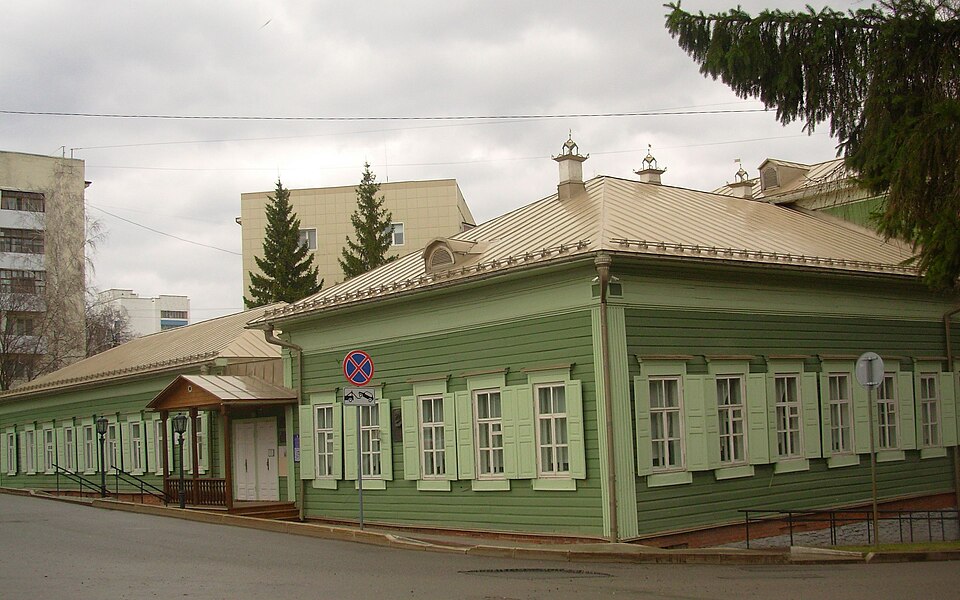
The building itself carries weight without needing embellishment. It is an 18th-century architectural monument built of Ural larch. That fact is strong enough on its own. In a city where many layers of time have been rebuilt, renamed, or simply overwritten, a wooden house with such a long recorded history changes the scale of your attention. It asks you to think about Ufa not only through grand events, but through what has physically endured.
The museum opened in 1991 to mark the 200th anniversary of Aksakov’s birth. That introduces a second timeline: not the writer’s own era, but the moment when the city chose to frame his memory through a specific place. So what matters here is not only the author familiar from works such as The Scarlet Flower and Family Chronicle, but the way his legacy is presented. The house does not need to become a stage set. Its force comes from being a real address first and a memorial space second.
According to the description of the display, the exhibition is divided into two parts. One recreates the interior of an 18th-century noble home. The other is devoted to Aksakov’s writing and the people around him. That gives you a useful way to read the museum: in one direction, you follow the habits and material setting of private life; in the other, you see how observation, family memory, and lived experience can be turned into literature.
One more detail helps place the house on the city’s cultural map: the museum functions as a branch of the National Museum of the Republic of Bashkortostan. In other words, it belongs not only to Aksakov’s story, but to a wider museum network across the region.
Stay here for a moment, and the house begins to work on a human scale. Not as a solemn literary shrine, but as a reminder that major writing can begin with something very small and concrete: a family, a house, and an address that outlived them all.
Learn more
There is a useful way to look at this museum beyond the name of the writer. It tells a story not only about Aksakov, but about how a place becomes memorialized. The house is linked to his family’s stay here in 1795–1797, yet it became a museum much later, in 1991, on the 200th anniversary of his birth.
That long gap matters. First, the house was part of everyday Ufa. Only later was it turned into a place where the city reads its literary past. The result is more interesting than a simple period interior: you are standing in a space where memory was organized, interpreted, and given a public form.
The available description says the exhibition follows two lines. One is memorial, recreating an 18th-century noble household. The other is literary, focused on Aksakov’s work and his circle. Together they avoid a neat separation between life and writing. The rooms suggest that books do not emerge from nowhere; they grow out of domestic experience, observation, and remembered voices.