LISTEN TO THE PLACE
A story worth knowing
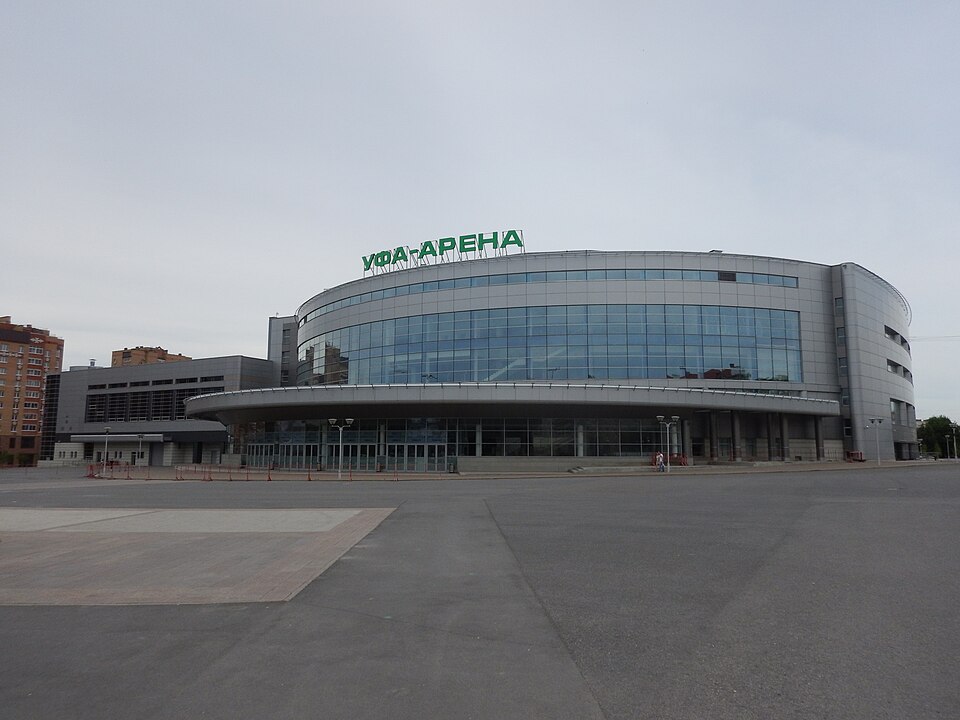
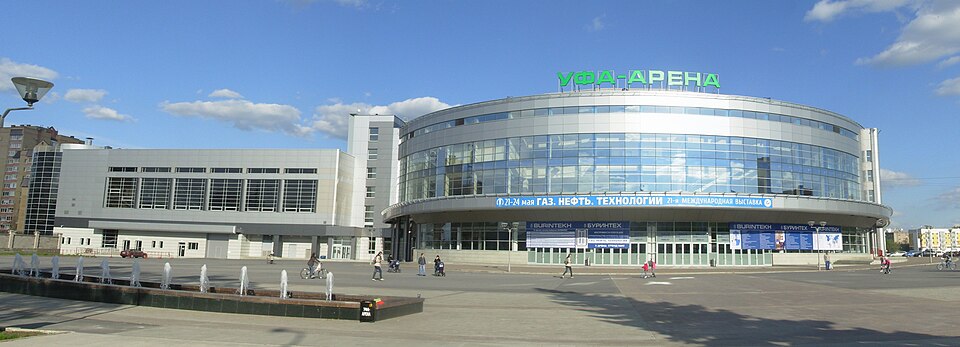
Ahead of you is Ufa-Arena at 114 Lenina Street, a place where everyday city noise can quickly turn into the sound of a hockey game, a concert, or an ice show. This is not an old sports palace wrapped in nostalgia. It is a relatively recent addition to Ufa’s map: the arena opened on August 27, 2007. Since then, it has served as the home venue of the Salavat Yulaev hockey club, and that role still shapes how many residents read this address.
There is also an older layer beneath the modern complex. According to the cited city sources, Ufa-Arena was built on the site of Trud Stadium. That is where the Salavat Yulaev team began playing in 1961. So the story here is not just about a new building replacing an old one. It is about a sports site that kept its function while changing its scale and form. In urban terms, that kind of continuity matters: the address stayed connected to hockey even as the city around it changed.
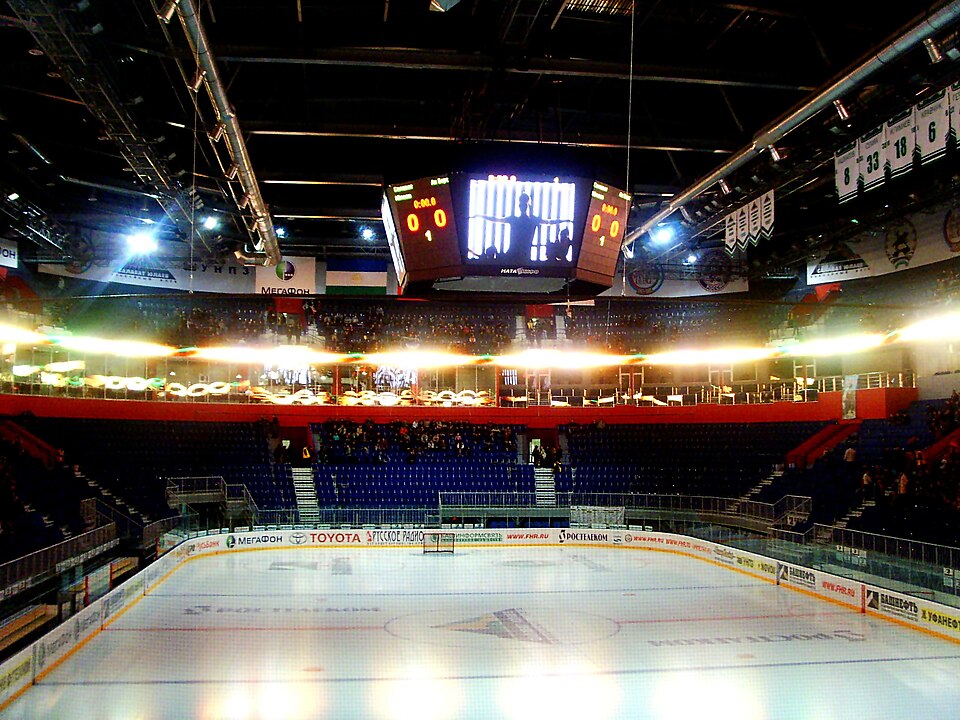
Inside, the logic of the place is practical rather than ceremonial. The main arena seats 8,522 spectators, while the smaller arena holds 640. Those figures are useful because they explain how the complex works. It can handle the volume and tension of a major match, but it also supports a more compact rhythm for training sessions or smaller events. The building is designed for more than one tempo.
The sources also describe Ufa-Arena as a multi-purpose venue. Besides hockey games, it hosts ice shows, concerts, exhibitions, and public skating sessions. That gives the building a broader urban life. One evening it draws devoted fans in club colors; another day it brings in families, concertgoers, or people who simply came for the rink. A place like this becomes legible through repetition: different crowds, different expectations, the same address.
Seen this way, Ufa-Arena is less a monument than a working piece of city infrastructure. It stands where routine and event overlap. People come here for a scheduled match, for a performance, or just because this is one of those places where Ufa gathers in public. That offers a useful introduction to the place: you are not looking at a symbolic abstraction, but at a site where sport, spectacle, and urban habit have learned to share the same space.
Learn more
If the main image of Ufa-Arena is the noise of the stands, the second angle is what happens behind the scenes. The cited sources mention rest rooms for athletes and coaching staff, a referees’ box, a sauna, a massage room, a skate-sharpening area, a medical and doping-control room, and even a garage for the ice resurfacing machines.
These details rarely shape a visitor’s first impression, yet they explain how the arena actually functions. Spectators notice the ice, the lighting, and the crowd; the venue itself depends on a chain of technical and service spaces that keep events possible. In that sense, the word “multi-purpose” is not just promotional language. It means the building has to support preparation, recovery, maintenance, and constant changeover.
So Ufa-Arena is interesting not only for what appears on the schedule. It also shows how a contemporary city venue works from the inside: not as a backdrop, but as an organized system built for movement, timing, and repeated use.