LISTEN TO THE PLACE
A story worth knowing
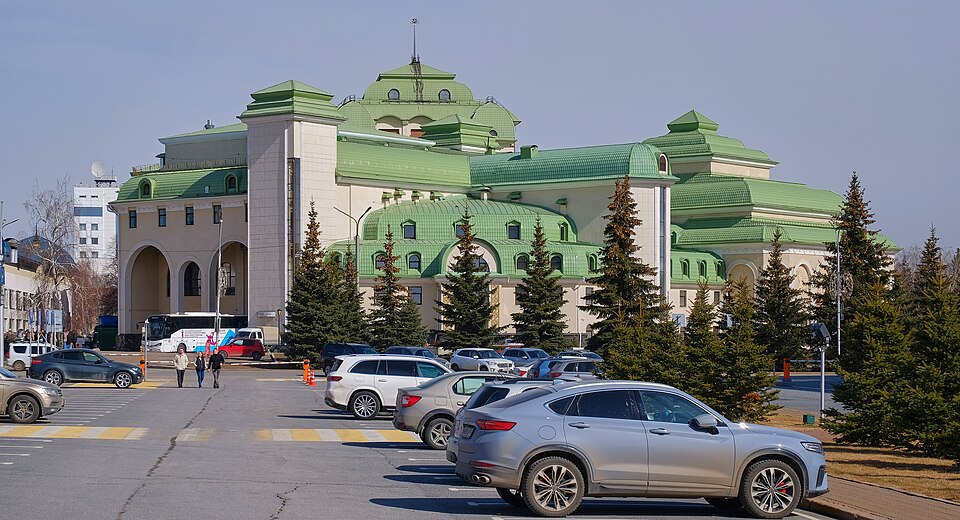
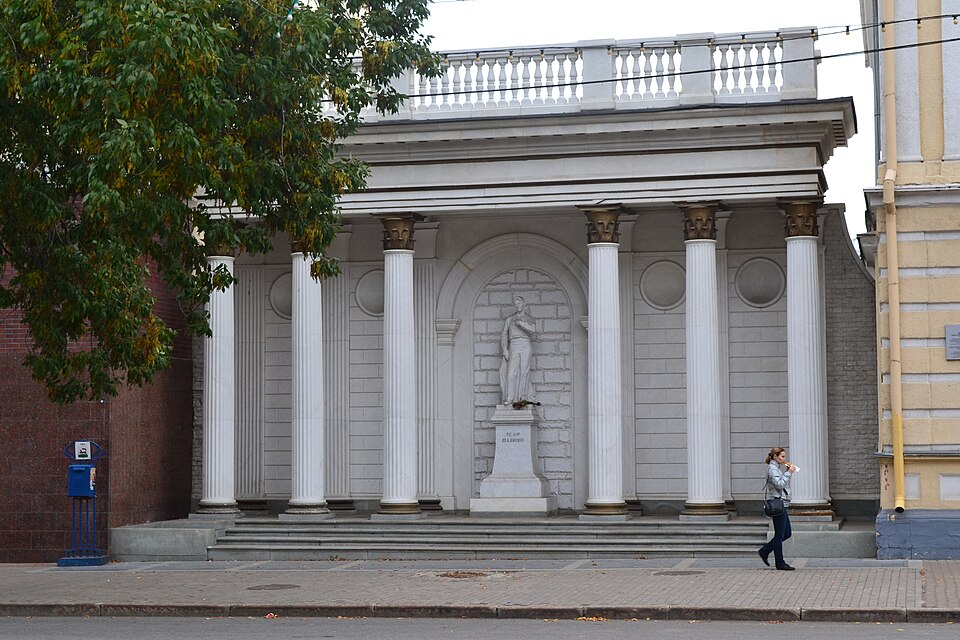
On Lenin Street, this monument feels less like a distant civic statement and more like a pause in the middle of a real walk through Ufa. It stands at 16 Lenin Street, between the former Noble Assembly building and the Agidel Hotel. Nearby is the Ufa State Academy of Arts named after Zagir Ismagilov, and across the street is the Bashkir Opera and Ballet Theatre. Ufa is associated with Chaliapin’s first professional performances in 1890. The monument recalls that early stage of his career: a young performer who had not yet become a world-famous singer.
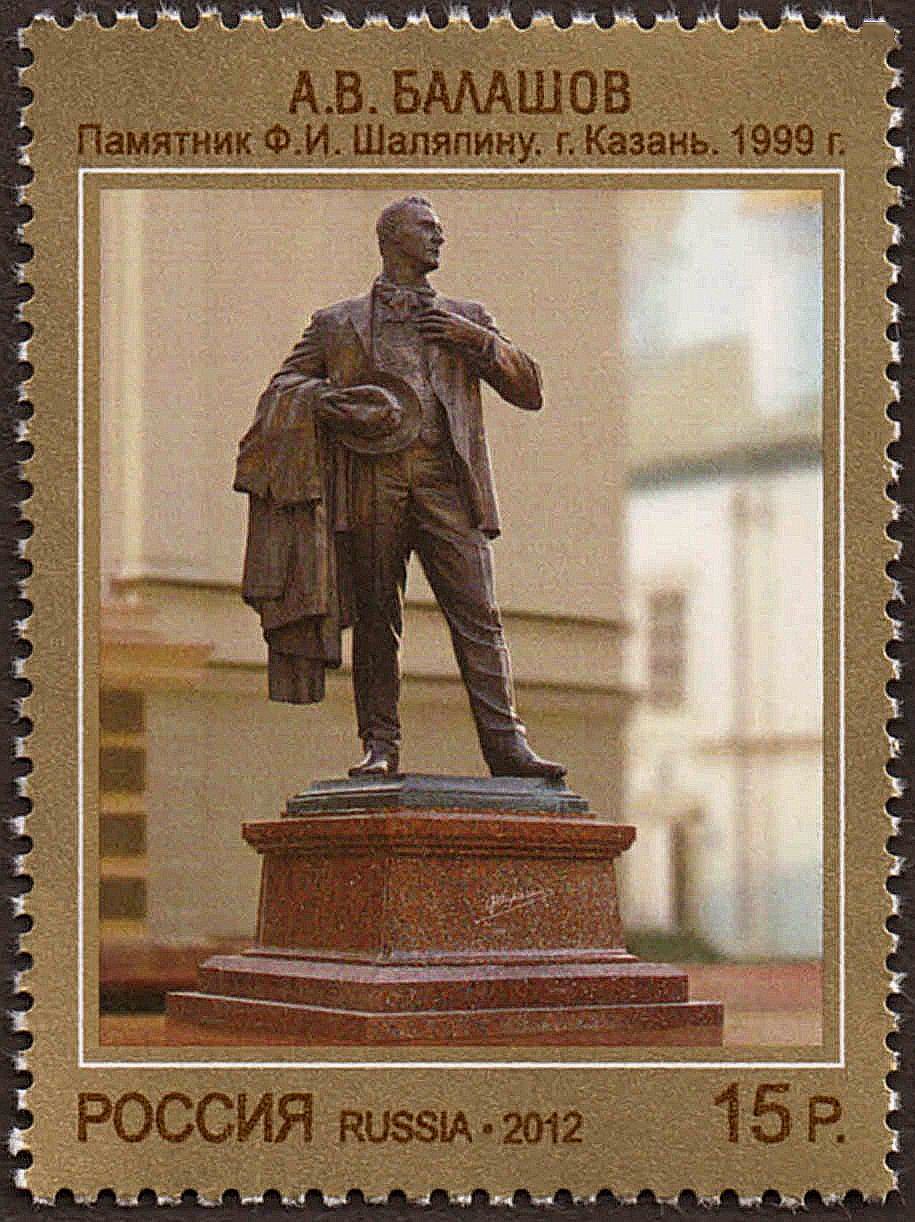
The monument was installed on 12 June 2007. Its authors are sculptor Rustem Khasanov and architect K. Donguzov. The sculpture is made of marble, and that choice shapes the mood. The material gives the figure a restrained, cool presence rather than heroic weight. One source adds a crucial detail: Chaliapin is shown as a young man waiting for the audience’s reaction. That is an unusual angle. Public monuments often settle on fame after the fact; this one lingers on the second after a performance, when applause has not yet arrived and the future is still unknown.
There is another reason the site makes sense. This spot is linked with the history of theatre posters. That small fact opens up the whole street. Theatre does not begin only at the curtain line; it also begins outside, in announcements, expectations, and the flow of people heading toward a performance. Set in that environment, the monument stays connected to daily life. It is not isolated in ceremonial silence. It stands among footsteps, traffic, conversation, and the ordinary business of the city.
The initiative for the monument came from the Ufa branch of the interregional Chaliapin Center. That matters too, because it frames the monument as a deliberate act of memory focused on one precise episode: the young Chaliapin in Ufa. Read that way, the statue is not a summary of a finished career. It is a brief scene before everything opens up. The city is not presenting triumph as a final answer. It is showing the more human moment before certainty, when someone has stepped forward and must wait to hear what comes back.
Learn more
If the main story is about Chaliapin’s biography, this one is better read as a piece of urban staging. The address sounds straightforward—16 Lenin Street—but the surroundings build a theatrical frame: the former Noble Assembly, the Agidel Hotel, the academy of arts nearby, and the opera and ballet theatre across the street. Even without a poster board, the place still feels like an antechamber to performance.
The sculpture supports that mood. One source describes it as a young Chaliapin waiting for the audience’s response. Not a curtain call, not mature celebrity, but a pause. For a street monument, that is surprisingly intimate. Marble helps keep the tone quiet. Rather than turning him into a loud civic emblem, it holds the figure in a more concentrated register.
This location is also associated with the history of theatre posters. It is a small detail, but it shifts the perspective: music and theatre in a city live not only inside buildings, but also along the approach to them. In that sense, the monument stands on a threshold between stage and street—the place where performance has just happened, or is about to begin.