LISTEN TO THE PLACE
A story worth knowing
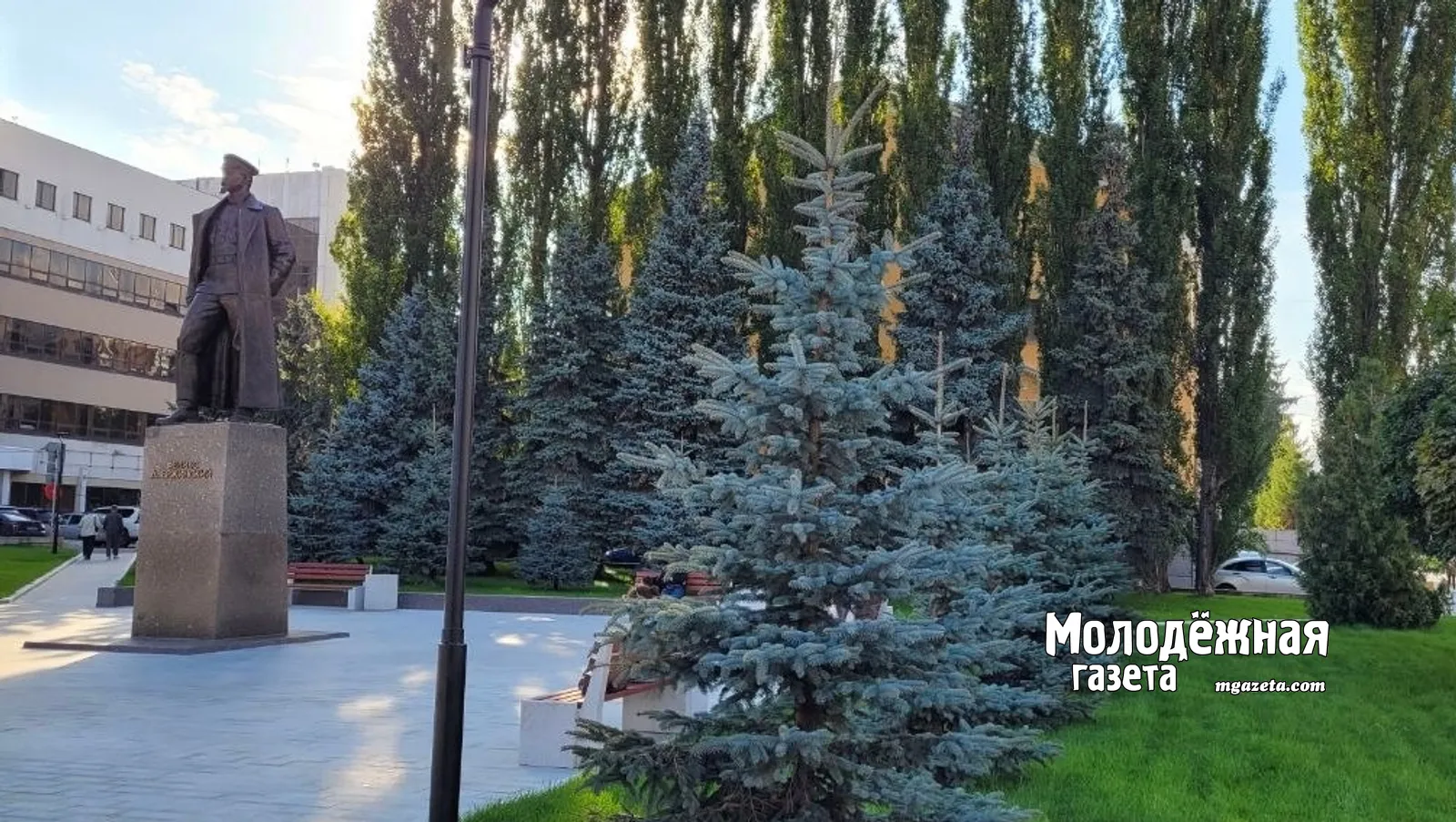
Walk around Rodina Cinema, and the city suddenly drops its volume. Behind the building, at the corner of Krupskaya and Chernyshevsky streets, is Dzerzhinsky Square. In municipal documents that is its actual name, and even its size is precisely recorded: 0.46 hectares. It is not a park for a long wandering route. It is a compact urban pause, the kind of place you cross in a few minutes and still remember.
At first glance, it can seem like part of the cinema grounds. Officially, though, the square exists as a separate public space. That is clear in city documents and in urban map services. The distinction matters. People come here not only before a screening and not only from Lenin Street. The square has its own everyday function: a meeting point, a shortcut through the center, a place to step aside from traffic and let a conversation continue at a lower volume.
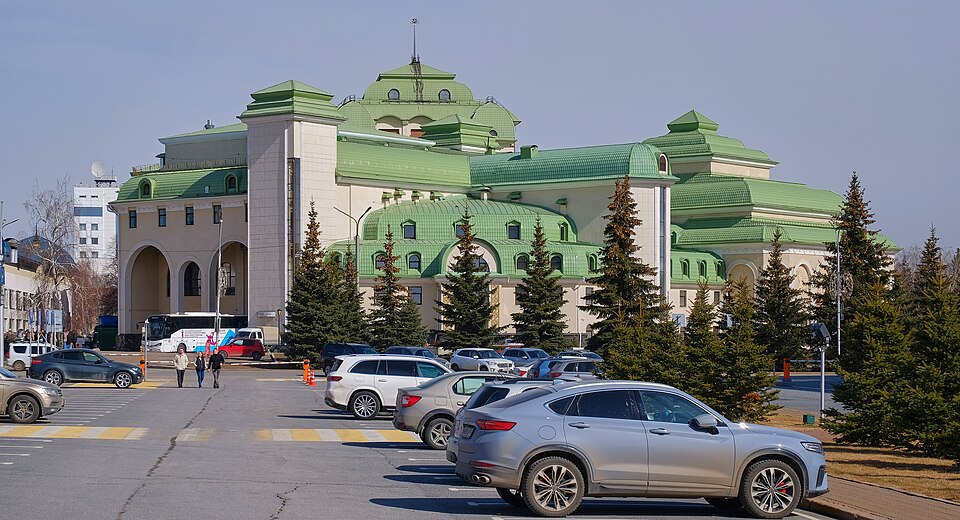
Rodina Cinema still sets the scene. It opened in 1953, and that date helps anchor the whole site. The square sits behind it rather than in front of a ceremonial facade, which gives the place a different character. This is less about display and more about routine city life: paths, benches, light, water, and the simple habit of using a small green space because it is there.
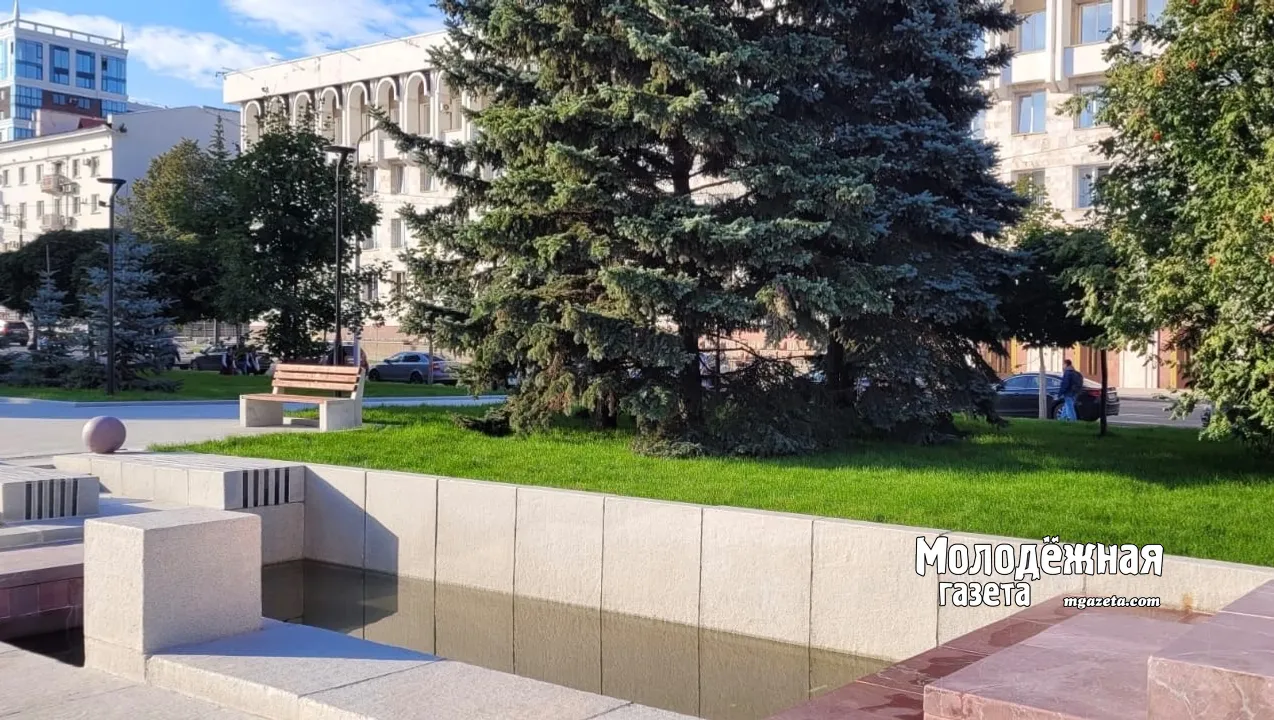
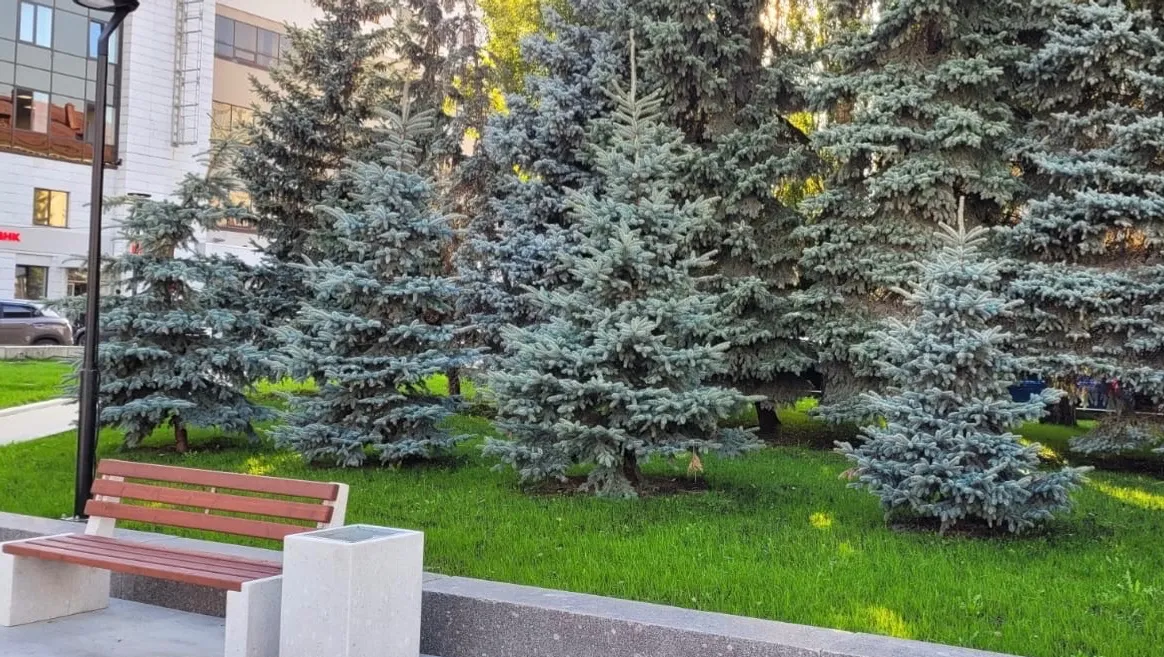
In 2026, the square went through major improvement works. According to city administration reports from early September, the site received new granite paving, renewed curbstones, exterior lighting, drainage, and an automatic irrigation system. Shrubs and trees were planted, and the fountain was repaired. In a space this small, a fountain is never just an object in the background. It changes how people stop, where they look, and how long they stay.
A small square offers an advantage for close observation: it is easier to see how individual details shape the whole walk. A path suggests a direction, a bench invites a pause, and a fountain changes the sound around you. Notice what caught your attention first. That detail may become your own point of orientation on a future visit to the city centre.
Today, the square makes most sense not as a stand-alone attraction but as a working fragment of central Ufa. It stands behind a well-known cinema without disappearing into its shadow. Places like this show how a city is built not only from landmarks, but from smaller spaces that quietly shape daily movement and memory.
Learn more
This square has an interesting double identity. In some official records it is Dzerzhinsky Square; in others, it appears simply as the square next to Rodina Cinema. On a walk, that may sound like paperwork. In city life, it changes how the place is read: as a named site of its own, and at the same time as part of a larger urban setting.
That is why the square works on two scales. On the larger one, it belongs to the area around Rodina, a cinema opened in 1953. On the everyday one, it functions independently. City map services mark it as a separate public space, and people use it whether or not they are going to a film.
The 2026 renovation sharpened that feeling. Once the paving, lighting, irrigation, planting, and fountain were renewed, the square no longer felt like leftover space behind a cultural building. It began to read more clearly as a short but complete urban route. A good question to carry with you here is simple: are you just passing through, or has the square already slowed you down?