LISTEN TO THE PLACE
A story worth knowing
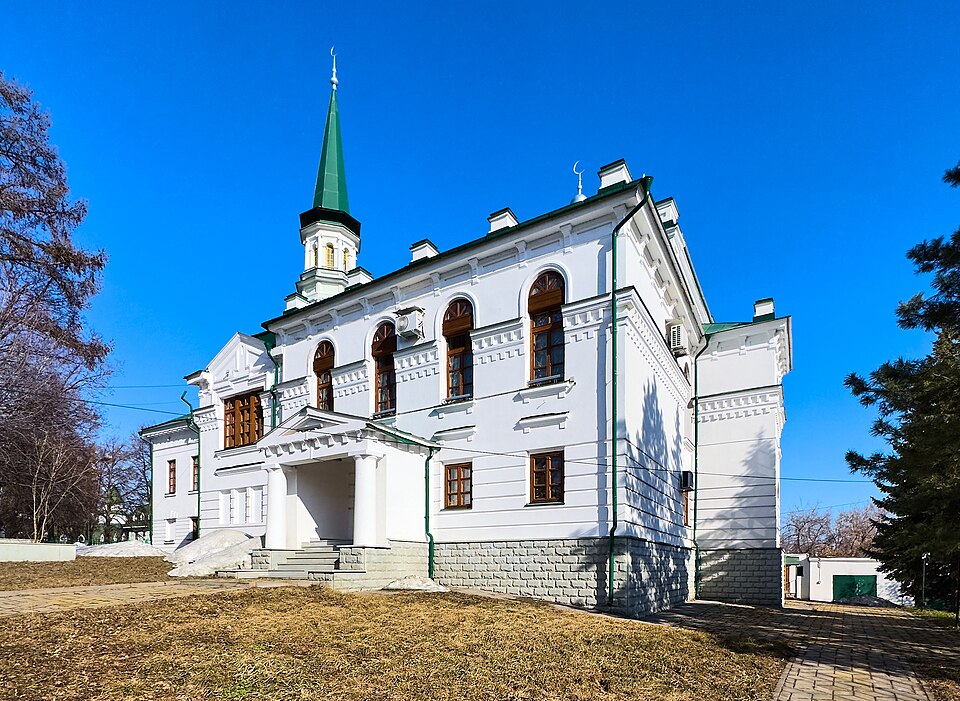
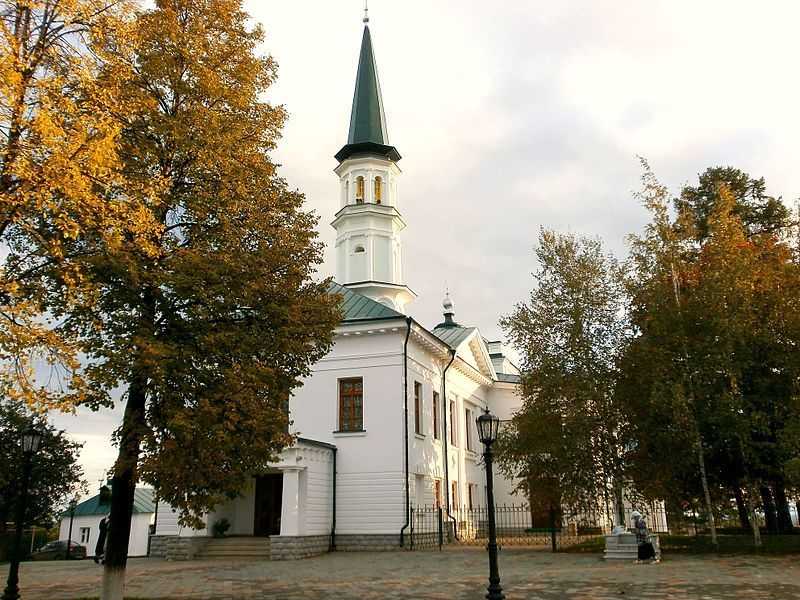
On Tukaeva Street, this is not a preserved backdrop from the past but a place that has continued to serve its original purpose for nearly two centuries. Ufa’s First Cathedral Mosque was built in 1830. The initiative came from Gabdessalam Gabdrakhimov, the Mufti of the Orenburg Muslim Religious Assembly, and construction was funded by the Ufa merchant Mukmin Khazyaseitov. In city terms, that combination matters: a religious initiative joined to private philanthropy, creating a space that was both spiritual and civic.
The building is described in the sources as an example of classicism. That helps explain why it feels so rooted in the cityscape. It was not designed apart from its time, but in conversation with the architectural language of the nineteenth century. In the 1890s, the mosque was reconstructed to a design by the architect I. Myalov, and the prayer hall was enlarged. Even that single alteration tells a story: the community was changing, and the building changed with it.
Its twentieth-century history is especially striking. The mosque remained open during the Soviet period, and from the 1960s into the early 1990s it was the only functioning mosque in Ufa. That turns this address into more than a point on a map. For local Muslims, it was a rare place of continuity, where prayer, gathering, and everyday religious practice could continue when many such spaces had disappeared from public life.
Sources also note that the Ghusmania madrasah operated here. That shifts the perspective again. This was not only a place of worship, but also a place connected with teaching and the transmission of knowledge. On a city walk, sites like this are often the most revealing, because they show how history is carried not only by monuments and official events, but by repeated daily use.
One city source also mentions a relic brought here in the late nineteenth century: several hairs from the beard of the Prophet Muhammad. Even without turning that detail into legend, it suggests that Ufa’s Muslim community saw itself as part of a wider religious world.
Today the mosque is listed as a regional cultural heritage site. But that formal status is only part of the picture. More importantly, this remains a living urban place, where the past has not been sealed behind glass. It continues in prayer, memory, and the ordinary rhythm of people returning here.
Learn more
This mosque is especially interesting if you read it through use rather than appearance. It began in 1830 as a community project: initiated by Mufti Gabdessalam Gabdrakhimov and funded through the donation of the merchant Mukmin Khazyaseitov. Later, in the 1890s, it was reconstructed to a design by I. Myalov, with the prayer hall enlarged. In other words, its history is visible in how the space was adapted to the needs of the congregation.
Another key layer is the Soviet period. According to the cited sources, from the 1960s into the early 1990s this was the only functioning mosque in Ufa. That fact changes the tone of a visit. You are not looking at an old religious building in isolation, but at a place on which much of the city’s Muslim religious life depended.
The sources also mention the Ghusmania madrasah at the mosque, and one local description records a relic brought here in the late nineteenth century. Together, those details frame the mosque as a place of prayer, learning, and memory at once.