LISTEN TO THE PLACE
A story worth knowing
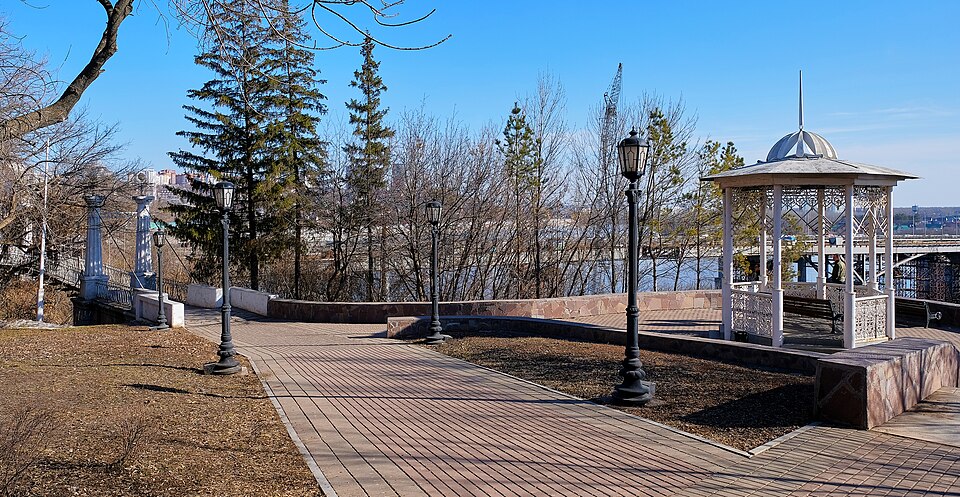
This garden makes the most sense if you read it as a hillside landscape rather than a formal park. It occupies Sluchyevskaya Hill, and that setting still shapes the experience: paths, trees, drops in elevation, and a few points where the city suddenly feels farther away. The place is historical, but it does not behave like a monument. Over time it changed names several times, and in 2004 the name Salavat Yulaev was restored. That sequence matters because the garden reflects not one frozen era, but a city repeatedly rewriting how it remembers itself.
The site is modest in size—2.83 hectares—yet it holds more than one way of moving through it. You can cross it quickly, almost absentmindedly, or slow down and notice that the walk unfolds in short scenes. One verified milestone comes from 1900, when the garden was improved with alleys, gazebos, and paved paths. In other words, strolling here has been part of the place for well over a century.
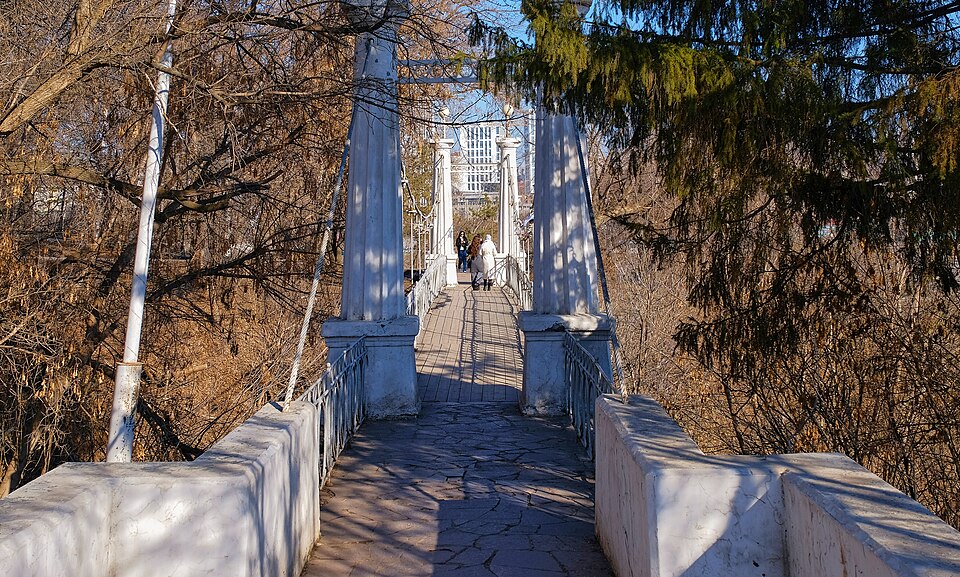
The most distinctive feature is the suspension bridge. It was built in the 1950s to a design by architects Zinaida Gudkova and Viktor Kondrashkov, spanning a ravine inside the park. On one level, it simply connects two sections. On another, it changes your sense of the landscape. There is a slight sway underfoot, a bit more air around you, and for a moment the walk becomes less about getting somewhere and more about feeling the ground give way to view.
There is also a quieter point of attention: the monument to Rashit Nigmaty. it is a granite memorial at the writer’s grave, located within the garden. That shifts the tone of the place. What looks like a casual city park also turns out to be a site of remembrance, where literature enters everyday urban space without much ceremony.
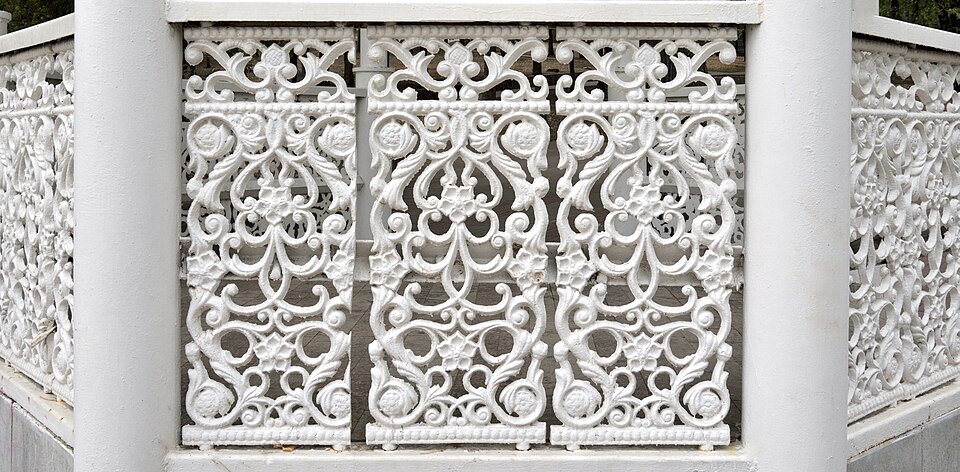
The sources also mention two fountains: one three-tiered, the other designed with rings and hearts. Whether you stop there or just pass by, they show how the garden accumulated features from different periods and tastes. Then, in 2014–2015, the park underwent a reconstruction that updated paving, benches, lighting, and some small architectural elements.
Walk here without hurrying, and the garden begins to work less like a checklist of landmarks and more like a way of seeing Ufa from a slight remove—not above it, not in the middle of it, but just off to the side, where a city often looks most like itself.
Learn more
This garden has an unusually revealing naming history. It began simply as the garden on Sluchyevskaya Hill. Later, its name changed more than once, following the language of different eras, and in 2004 the name Salavat Yulaev was restored. That is useful to keep in mind while walking: this is not just generic greenery, but a place where the city’s public memory was revised several times.
There is another timeline visible in the layout itself. In 1900, the garden was improved with alleys, gazebos, and paved paths. Much later came the suspension bridge across the ravine, built in the 1950s. It turns an ordinary route into something more eventful: the walk gains a brief moment of movement, balance, and widened view.
Then there is the quieter stop—the monument to Rashit Nigmaty, a granite memorial at the writer’s grave inside the park. On a relatively small site, several urban functions meet at once: passage, viewpoint, remembrance, and rest. That may be why the garden stays in memory not because of one overwhelming sight, but because of the atmosphere created by all these layers together.