LISTEN TO THE PLACE
A story worth knowing
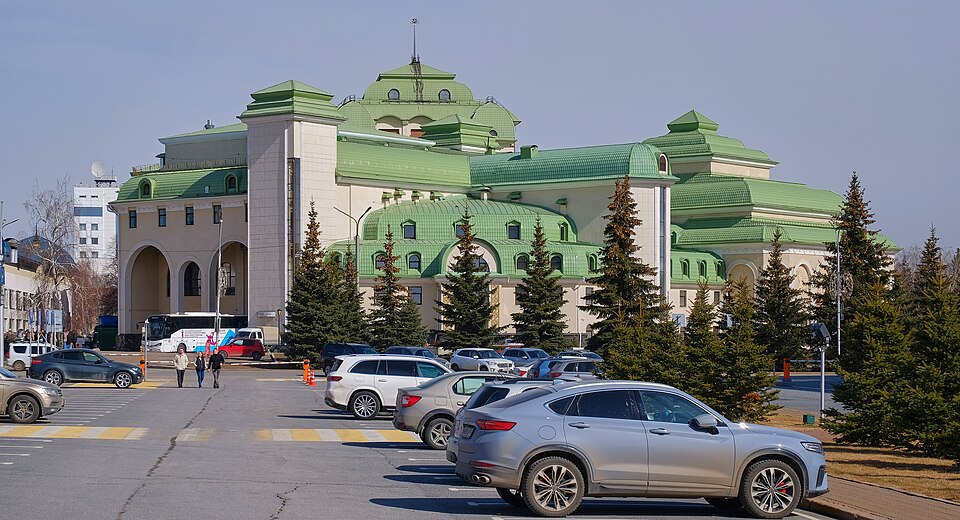
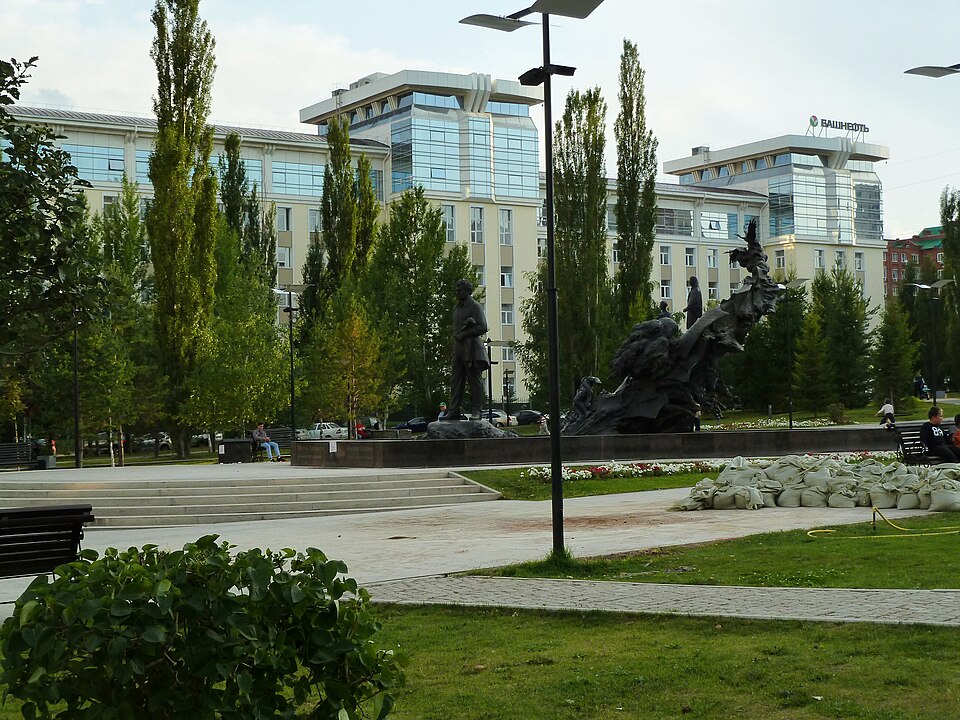
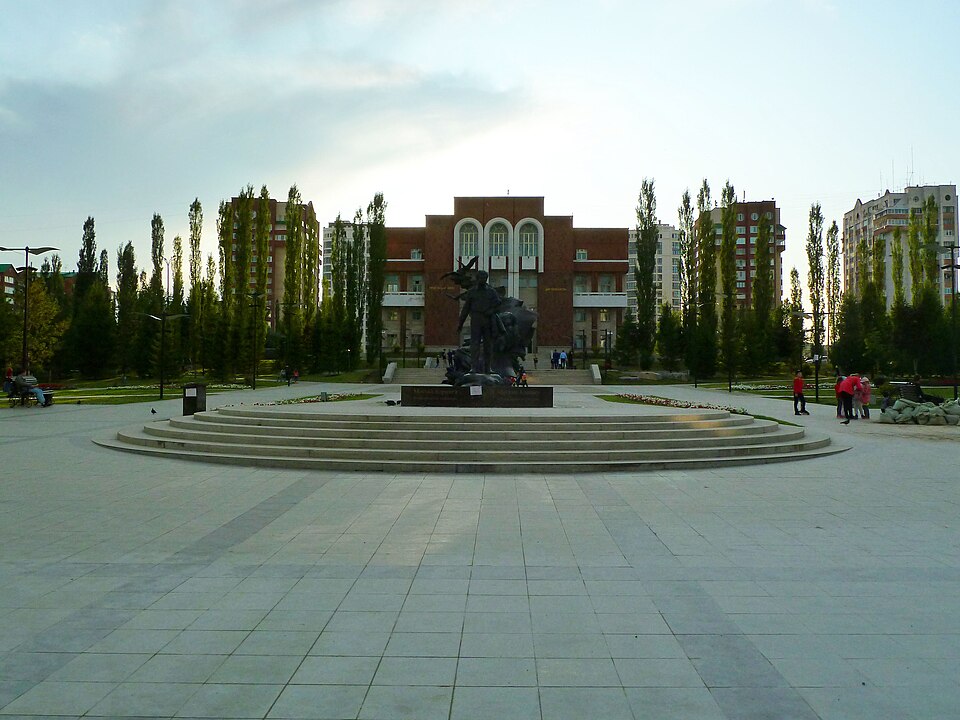
You are standing by the monument to Mustai Karim in the square in front of the Palace of Trade Unions, at the corner of Mustai Karim and Kirov streets. It works best if you read it slowly, piece by piece: first the figure itself, then the forms rising behind it, and then the space arranged around the monument.
The monument was unveiled on October 10, 2013. The sculptor is Andrey Kovalchuk. It is cast in bronze and stands about six meters high. But the striking thing here is not the scale. It is the sense of motion. Mustai Karim is shown walking forward rather than frozen in a ceremonial pose. For a public monument to a writer, that choice matters: this is not a study portrait or a static official likeness, but a figure that seems to share the street with passersby.
Look behind him and you will see stylized manuscript pages rising upward. Among them are characters from A Long, Long Childhood. The sources do not present this as an illustration of one specific episode, and that restraint is part of the monument’s logic. Literature is translated into sculpture indirectly, through movement, memory, and recognizable images rather than a scene-by-scene retelling.
Water is also part of the composition. The museum description says plainly that this element symbolizes the flow, or continuity, of life. That detail pulls the whole ensemble together: the writer, the written page, remembered characters, and time itself are treated as parts of a single current. It is also worth being careful about what you expect to see on any given day. The water features may look different depending on the season and the condition of the site.
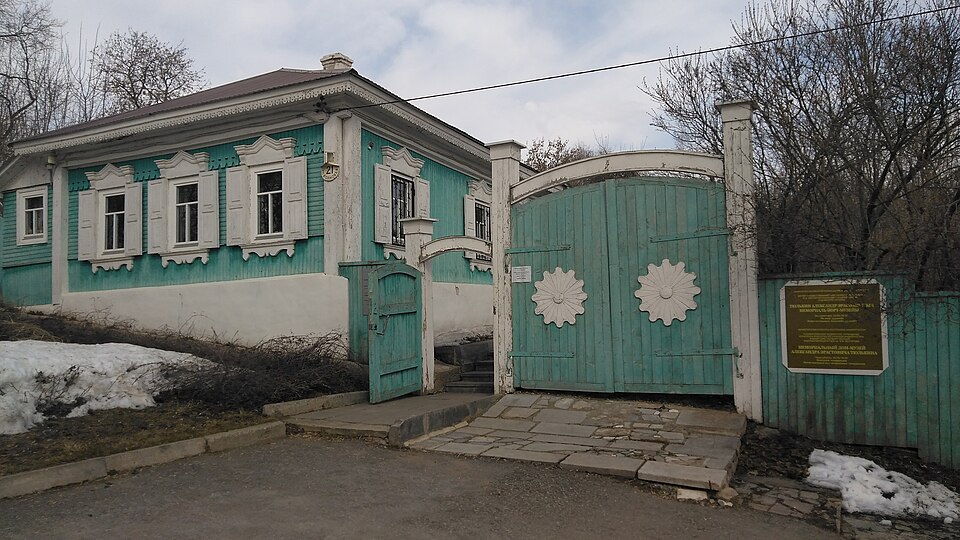
One more verified detail connects the monument to Karim’s biography. Nearby stands the house where his family lived for about forty years. So this is not just a convenient central location. It is a place that touches the writer’s real urban geography.
The square itself is dedicated to Mustai Karim as well. That makes this stop feel less like a lone statue and more like a route through memory. In a busy part of Ufa, the city briefly shifts register: bronze, manuscript pages, and water speak about literature without a quotation, and without the walls of a museum.
Learn more
This monument is worth seeing not only as a portrait of Mustai Karim, but as an experiment in turning literature into public space. Behind the poet, manuscript pages rise upward, and among them appear characters from A Long, Long Childhood. What matters is that the composition does not simply illustrate the book like a textbook image.
Instead, it shows a process: first the written word, then the imagined figure, and finally sculpture placed in the open city. That is why Karim is shown in motion, while the literary world seems to gather behind him. According to the source, the water element symbolizes the continuity of life, linking the monument’s human and literary layers.
Seen this way, the monument says something larger than biography alone. It suggests how a book keeps living outside its pages — in a square, along a walking route, and in the brief pause of an ordinary day in Ufa.