LISTEN TO THE PLACE
A story worth knowing
On Sovetskaya Street, this museum makes sense not as a single stop, but as a compact way to enter several layers of Bashkortostan at once. The institution was founded on April 23, 1864, under the Statistical Committee of the Orenburg Governorate. That detail matters. It suggests a museum shaped from the start by collecting and describing a region in a broad, methodical way: its nature, its past, and the material traces of everyday life.
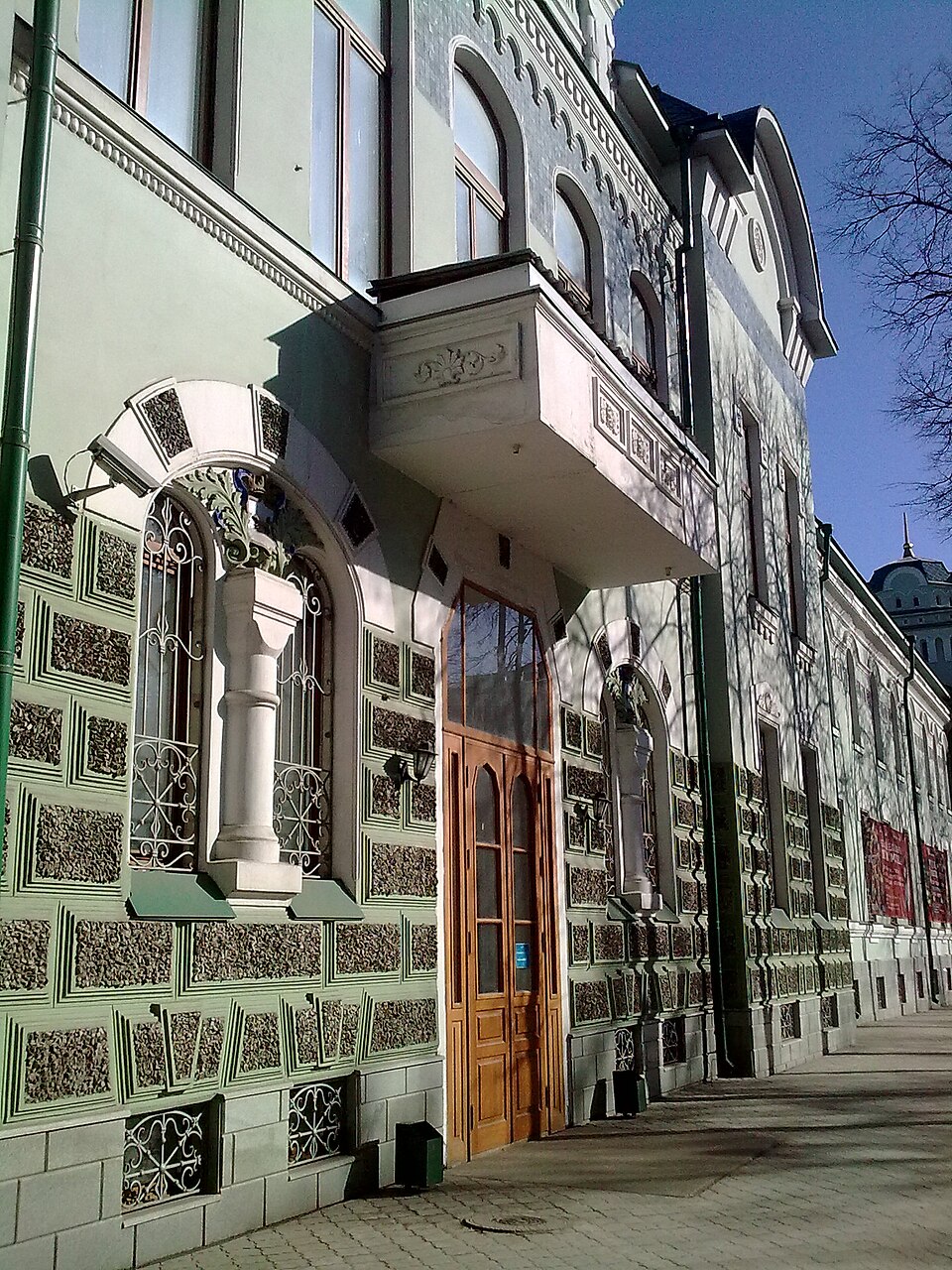
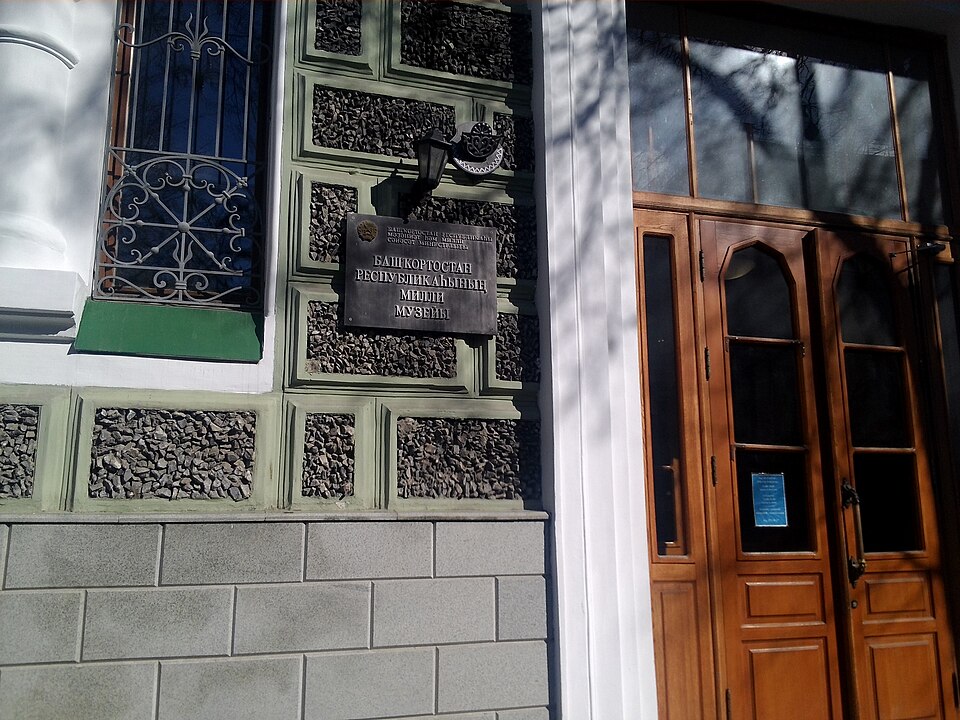
The museum has been at 14 Sovetskaya since December 1989. The building itself is older than its museum life: it was constructed in 1906–1908 for the former Peasant Land Bank. For an urban walker, that is one of the most interesting facts here. You are not looking at a purpose-built museum box. You are standing before a city building with an earlier role, one that was later reassigned to tell a much wider story about the republic.
The scope is deliberately broad: the nature of Bashkortostan, the region’s history from ancient times to the present, and the ethnography of the Bashkir people and other peoples of the republic. That mix changes the way you read the place. It is not only about isolated masterpieces or a single historical episode. Archaeological material, history displays, and objects tied to daily life are placed within one institutional frame, so the visitor keeps moving between different ways of understanding the same territory.
That is why this museum is easier to approach as a map of questions rather than a warehouse of facts. What does a region choose as the beginning of its story? How do ancient finds sit beside later objects and documents? Why are nature and ethnography placed so close to one another in the museum narrative? Even from outside, before entering, the address on Sovetskaya already points to something larger than one exhibition route. It suggests an attempt to gather a complex republic into a legible sequence of rooms.
The museum also has branches across Bashkortostan. For anyone exploring the city, that is a useful clue: the region’s memory is not locked into a single building in Ufa. The main site works more like a hub, where many local stories are assembled and then connected back to places beyond the capital. So this is not just a museum entrance. It is a starting point for seeing how Bashkortostan chooses to describe itself.
Learn more
One of the most interesting things about this museum is the building’s change of role. The house at 14 Sovetskaya was built in 1906–1908 for the former Peasant Land Bank, and since December 1989 it has been home to the National Museum of the Republic of Bashkortostan. The shift is striking: from a financial institution to a place where the republic’s nature, history, and ethnography are brought together under one roof.
That change also affects how the museum feels in the city. Founded much earlier, on April 23, 1864, the museum did not begin here. It arrived later, carrying a long institutional history into an already established urban building. As a result, a visit is never only about the displays. It is also about entering a site that has its own timeline within Ufa.
Another useful detail: the museum is not limited to this one address. It also has branches elsewhere in Bashkortostan, which means the story of the republic is distributed across several locations rather than concentrated entirely in the capital. For a traveler, that makes this stop feel less like an endpoint and more like the first chapter of a longer route.