LISTEN TO THE PLACE
A story worth knowing
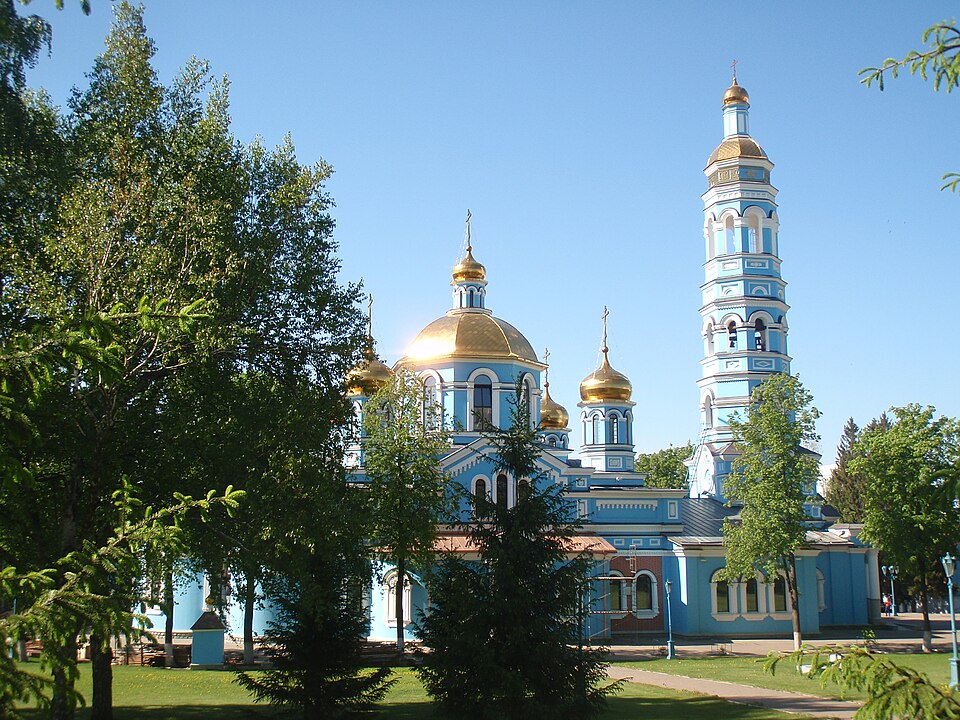
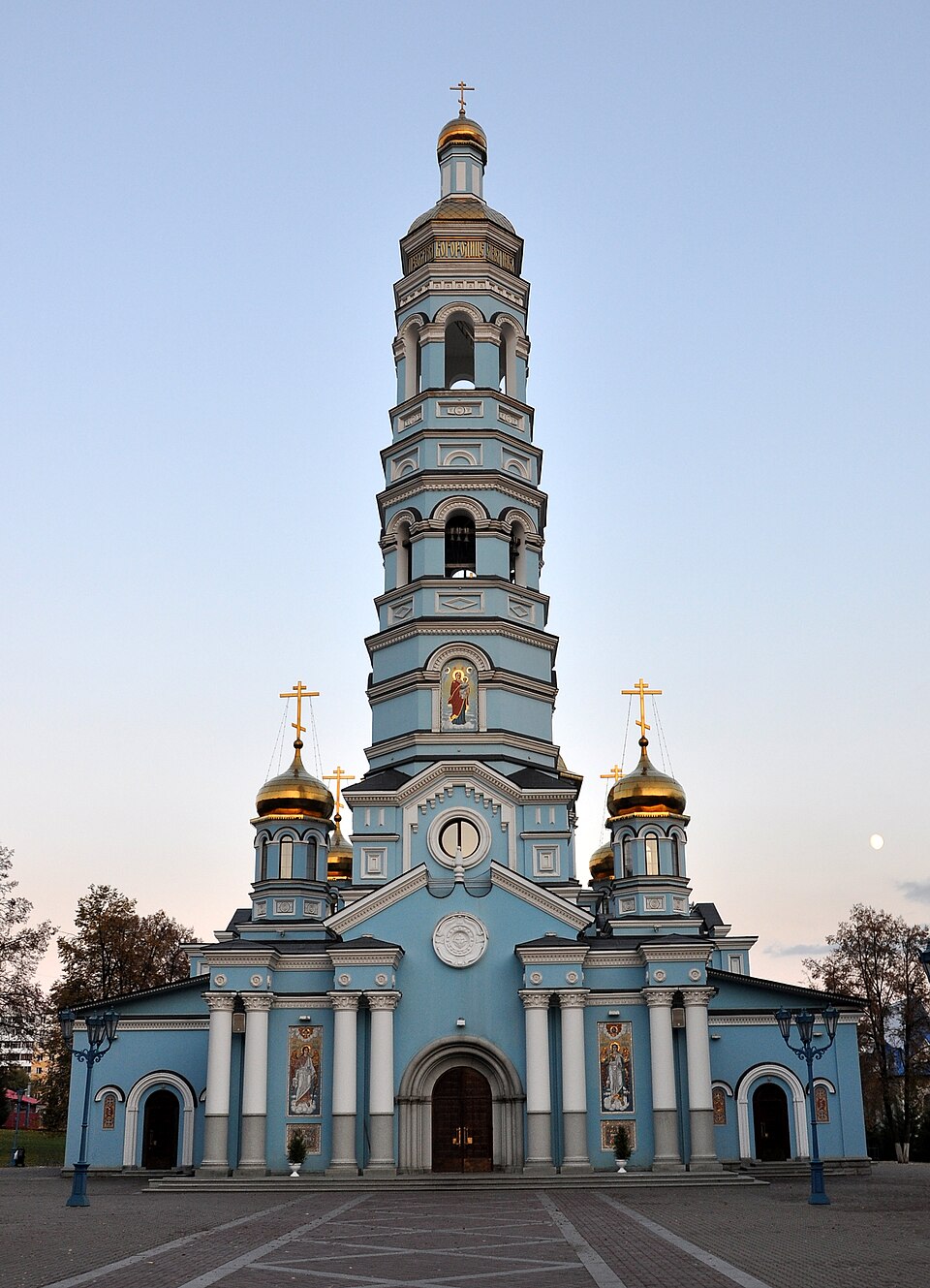
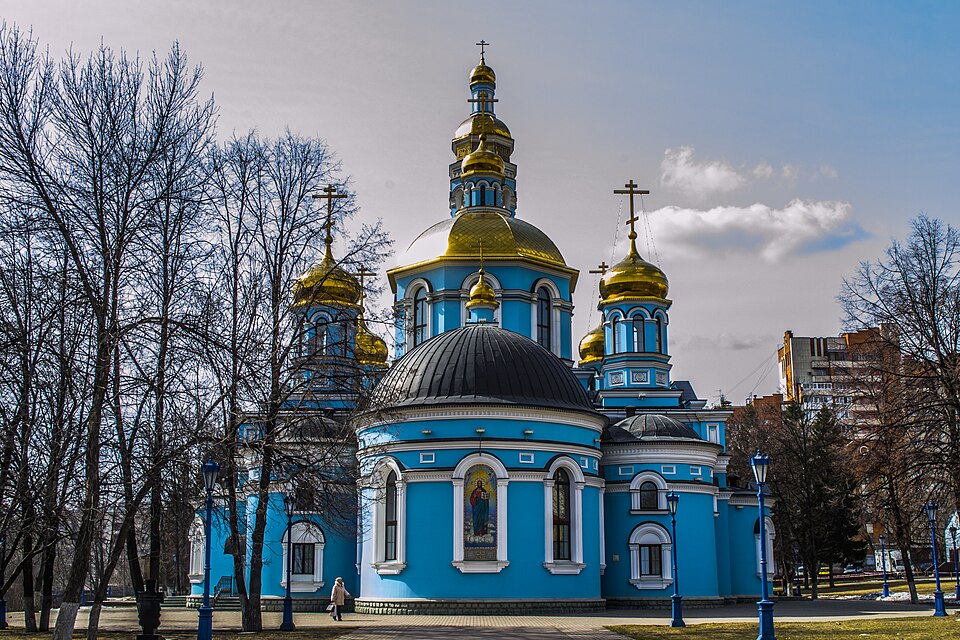
In Ufa, this is one of those buildings people recognize before they name it: sky-blue walls, gold domes, and a tall bell tower rising above the everyday traffic of Kirova Street. But the most interesting thing here is not simply the postcard view. The cathedral makes sense as a layered city place, where the pre-revolutionary era, the Soviet period, and the present all remain visible at once.
Its story begins in 1901. According to the cathedral’s official history, construction started with funding from the merchant Nikifor Mironovich Patokin. The church was consecrated on September 6, 1909. The architecture is described as Neo-Russian, and even without technical vocabulary you can read that in the overall silhouette: a deliberate echo of older church forms, translated into the scale of an early twentieth-century city.
From the street, the cathedral gathers the surrounding space and acts as a practical landmark in the human sense of the word: meet by the cathedral, turn at the cathedral, use it to orient yourself in the neighborhood.
Its twentieth-century history is much harder. During the Soviet years, the building was repurposed as a hospital, a cinema, and aviation workshops. Its domes were destroyed. That matters because this is not simply an old church that survived untouched. It is a building that went through severe alteration and still returned to its original role. Restoration began in 1991, and the cathedral resumed life as an active church.
Inside, the mood shifts from skyline to material. Sources mention marble in the interior, along with wall paintings and mosaics. The cathedral is also associated with revered icons, including an icon of the Life-Giving Trinity with a piece of the Oak of Mamre and an icon of the Last Supper with a fragment linked to the Cenacle.
So this is a good place to slow down. From afar, the cathedral looks complete and ceremonial. Up close, it reads as something more urban and more complicated: a story of building, loss, repurposing, and return, told not through explanation boards but through volume, color, and the memory carried by the site itself.
Learn more
Try looking at the cathedral less as a destination and more as a piece of city structure. Kirova Street has the usual central-city rhythm: traffic, errands, people moving with purpose. Against that background, the cathedral changes the tempo. Even before you go inside, it creates a pocket of visual pause. The color, the vertical lines, and the distance around it work differently from the neighboring blocks.
Its present appearance can seem reassuringly continuous, as if it had always stood here in the same form. The sources suggest otherwise. In the Soviet period, the building served at different times as a hospital, aviation workshops and a cinema; its domes were destroyed. That history makes today’s image more complex than it first appears. What looks stable is actually the result of interruption and recovery.
There is also an interesting lesson in scale here. Despite the tall bell tower, the cathedral does not overwhelm the street all at once. First you register the blue and gold, then the vertical pull, and only after that the historical weight of the place. It is a building that explains itself gradually, which makes it especially well suited to an audio stop.