LISTEN TO THE PLACE
A story worth knowing
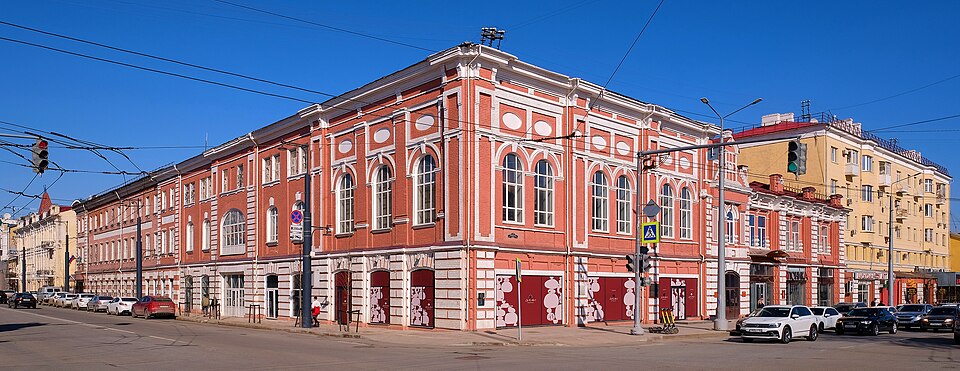
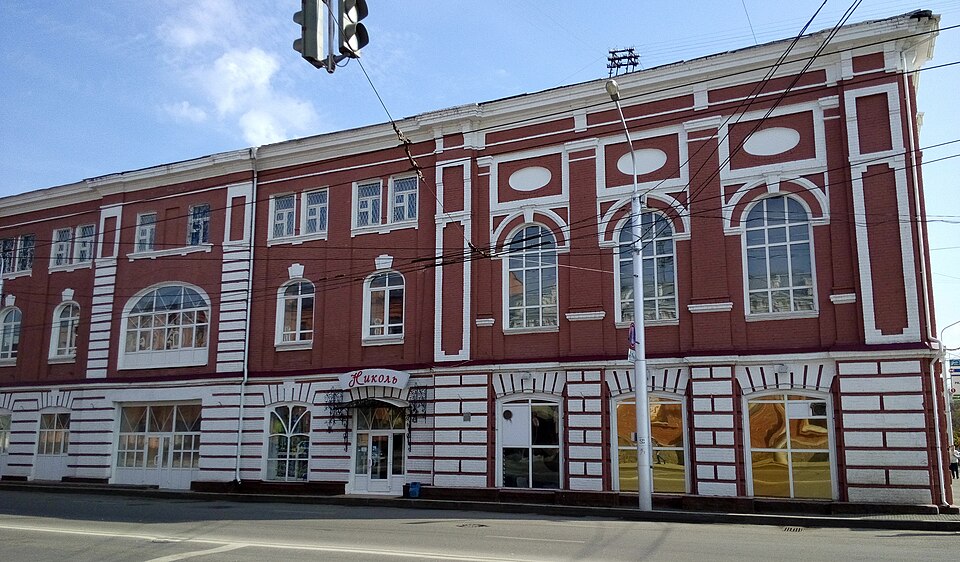
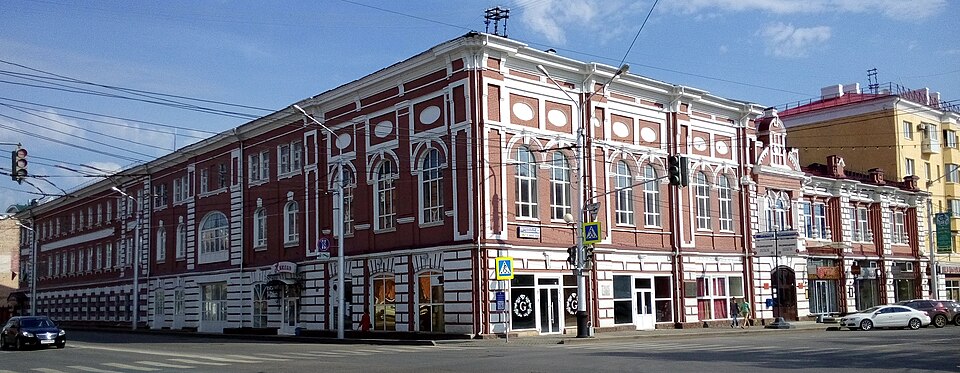
At 43 Kommunisticheskaya Street, this building can look, at first glance, like just another survivor from old Ufa. But its story is really about changing jobs. In 1904, merchant A.M. Parshin built it as a revenue house. It was known as the Big Siberian Hotel, or simply Parshin’s House. The ground floor was used for textile and manufactured-goods trade, while the second and third floors held hotel rooms. It was a practical urban formula: business below, overnight life above.
Then the city changed, and the building changed with it. From 1926, it was known as the House of the Red Army, and from 1939 it housed the House of Officers. That shift matters. A commercial address became part of the military and civic landscape of Soviet Ufa. The building did not turn into a frozen monument; it was reassigned, repurposed, folded into a different kind of everyday life.
Several specific episodes are linked to these walls. Sources say that writer Alexander Fadeev appeared here in 1932. During World War II, a women’s choral ensemble worked here under the direction of composer Hryhorii Veryovka. Much later, in 1996, a bust of Georgy Zhukov by sculptor B.D. Fuzeev was installed in the building. Put together, these details create an unusual sequence: literature, wartime cultural work, and then a later memorial gesture.
There is also a humbler layer of memory. Local recollections mention a Soviet-era canteen in the House of Officers. That may sound like a small detail beside official history, but it gives the place real scale. Buildings like this are remembered not only for ceremonies and speeches, but for lunch breaks, routine visits, and the feeling that a formal institution had somehow entered ordinary city life.
Our stop introduces the building from the street and does not include admission to its interior. Its changing roles reveal how one address became part of different aspects of city life. One point does remain solid: it is listed as a regional cultural heritage site. What stands before you is not just an old facade, but a record of Ufa adapting itself over time — from hotel and trade house to officers’ institution, from commerce to memory.
Learn more
One of the most revealing things about this building is not a decorative detail, but its career change. When A.M. Parshin built it in 1904, it worked as a revenue house: trade on the ground floor, hotel rooms above, under the name Big Siberian Hotel. It belonged to a very practical version of city life, where commerce and temporary lodging shared the same address.
After becoming known as the House of the Red Army in 1926, and especially after 1939, when it became the House of Officers, the building took on a more collective role. Sources connect it with Alexander Fadeev’s appearance here in 1932, and during the war years with a women’s choir led by Hryhorii Veryovka.
There is also a more domestic memory attached to the place: residents recall a Soviet canteen here. That small detail matters. It suggests the building was not only ceremonial, but woven into everyday routines. Sometimes the quickest way to understand a historic address is to ask not only who spoke here, but who came in simply to eat, meet, and pass part of an ordinary day.