LISTEN TO THE PLACE
A story worth knowing
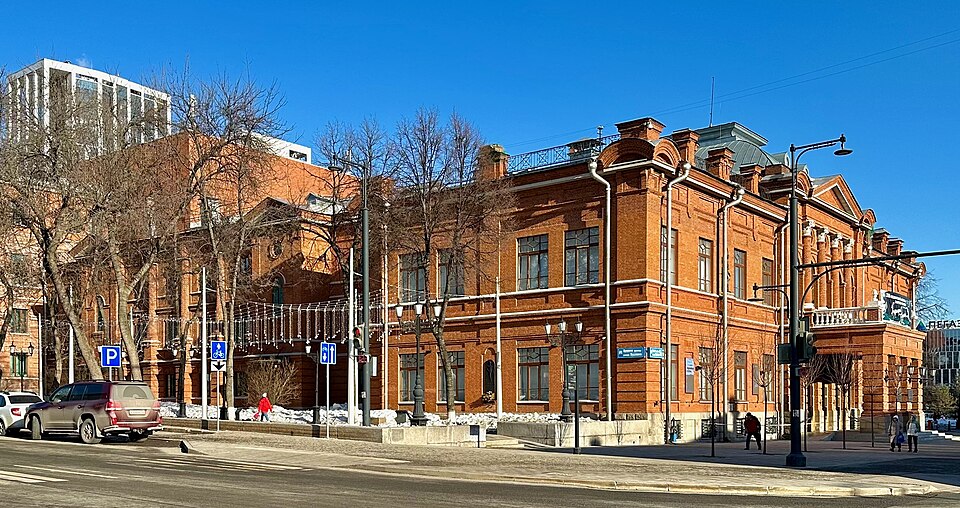
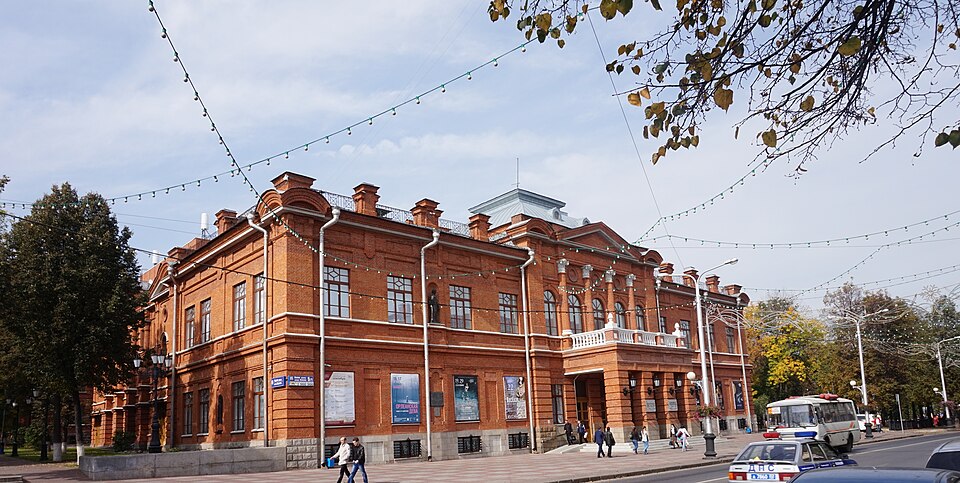
What stands before you is a theatre whose story began long before its first curtain call. The building was laid down in 1909 as the Aksakov People’s House, and only later did it become an opera stage. In 1938 it was handed over to the theatre, and on December 14 that same year it opened with Paisiello’s The Beautiful Miller’s Wife, performed in the Bashkir language. For Ufa, that was more than an opening night. It was the moment the city gained a permanent home for opera and ballet.
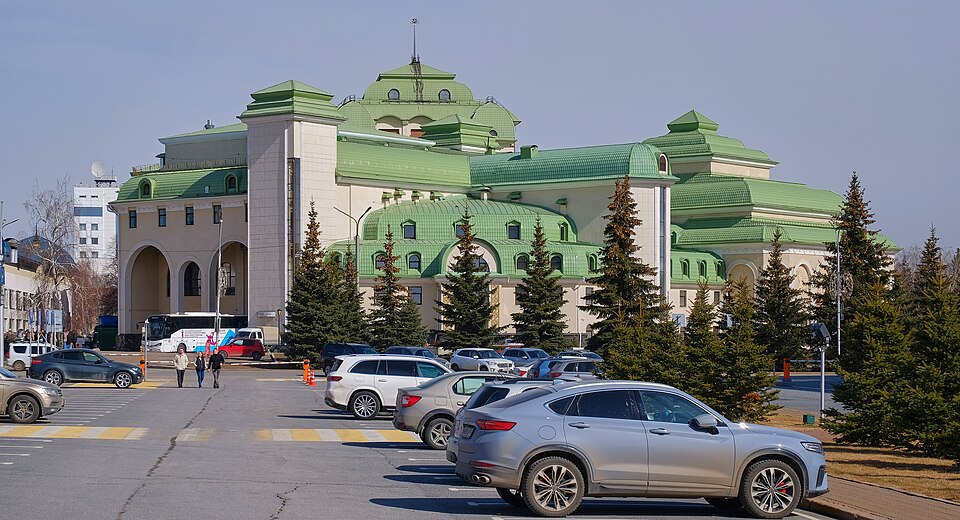
From the street, the building reads as formal and restrained. Notice the rhythm of the windows and the decorative details. The former People’s House acquired its appearance over time; reducing it to a single architectural style would miss that history. On the façade are two copper figures installed in 1993, Euterpe and Terpsichore, credited to Zilfat Basyrov. They do more than decorate the exterior. They quietly explain the purpose of the place: music, poetry and dance all meet here.
The life of the theatre is larger than the stage you can see from the audience. its creative structure includes opera and ballet companies, a symphony orchestra, a choir and a children’s studio. So this is not simply a hall where performances appear and disappear. It is a working artistic system, with established performers, young artists and future ones all developing under the same roof. The repertoire is broad as well: world classics, Russian classics, Bashkir classics and contemporary works.
Then there are the names that instantly widen the frame. One source links the theatre with the beginning of Rudolf Nureyev’s career. Since 1991, it has also hosted Shalyapin Evenings in Ufa, a festival devoted to opera. That gives the building a particular kind of continuity: not just tonight’s programme, but a chain of remembered voices, dancers, teachers and audiences.
Seen this way, the theatre is not just a landmark on Lenin Street. It is a layered urban space where a 1909 public project, a 1938 theatrical opening and present-day performance culture still overlap. That may be the most interesting thing about it: the building does not need to announce its importance too loudly. The fact that this stage has been working, adapting and gathering people for decades is persuasive enough.
Learn more
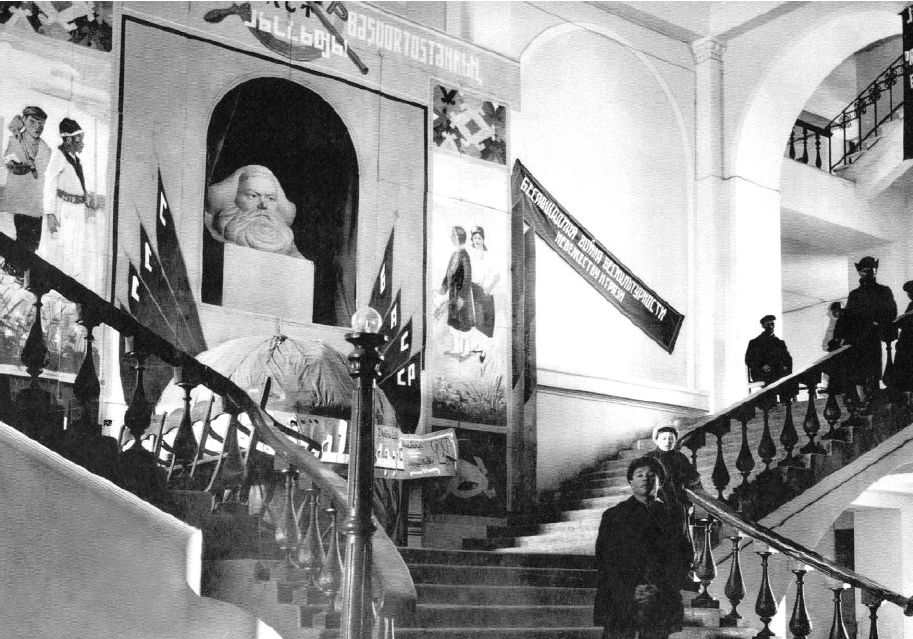
If the main story looked at the theatre as part of the city’s timeline, this one is about how the place is built for an audience. The main auditorium has several levels, with stalls, balconies and boxes. That matters because it tells you the theatre was conceived not as a small room for specialists, but as a public interior where the experience begins before the performance does: with stairways, tiers, sightlines and the shared pause before the lights go down.
Another detail in the sources points to the chandeliers made from sketches by Mikhail Nesterov. Even if you are only standing outside, it changes the way you imagine the interior. This was meant to be more than a functional venue; it was assembled as an artistic environment. The same idea continues on the façade with Euterpe and Terpsichore. So your view of the building can shift in stages: first as the former Aksakov People’s House, then as the theatre opened here in 1938, and finally as a place where several arts are built directly into the experience of arriving and watching.