LISTEN TO THE PLACE
A story worth knowing
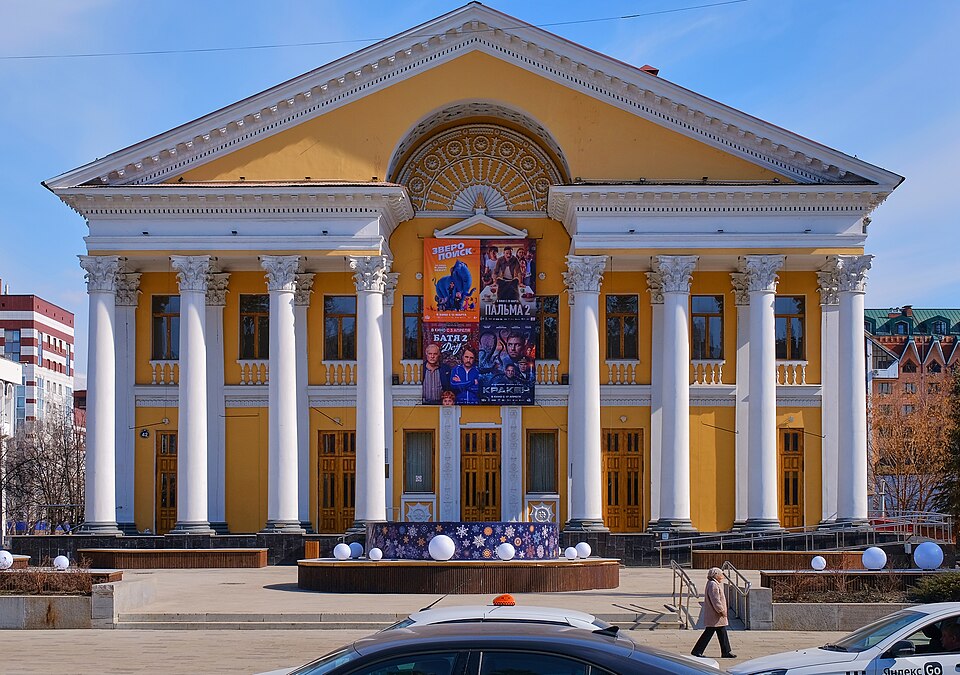
Walk along Lenina Street at an ordinary city pace, and number 42 might seem like just another familiar address. Then Rodina Cinema starts to work on you more slowly. It does not need a dramatic introduction. What matters is that this is a place where Ufa has been going to the movies since 1953. That single date already gives it weight: generations of viewers have stepped inside for very different reasons, yet all for the same simple ritual of sitting down in front of a large screen.
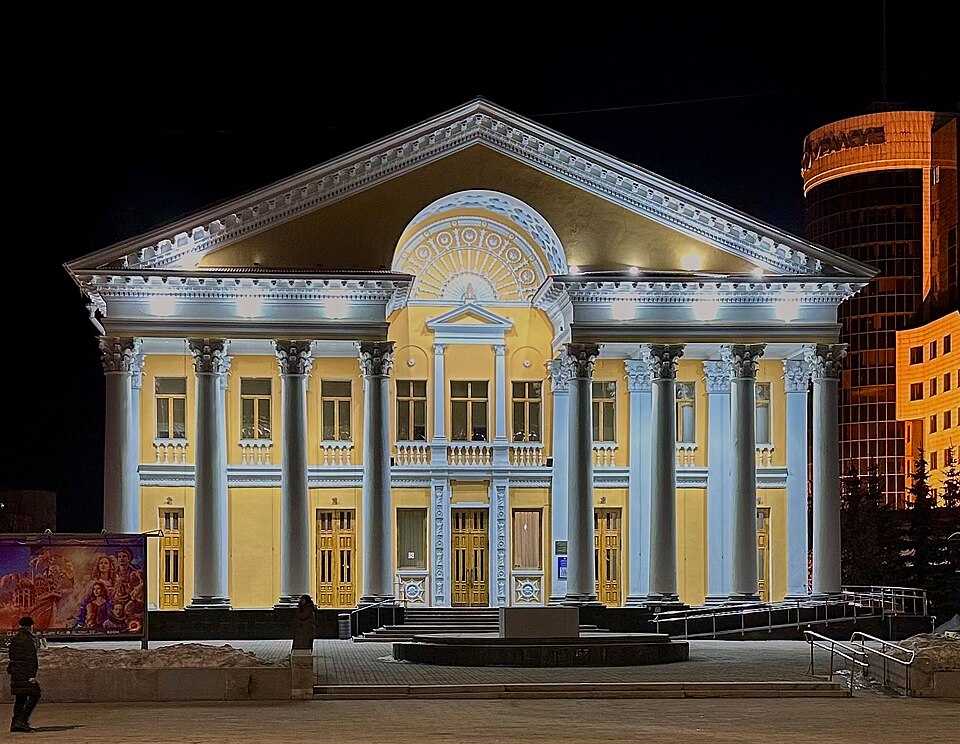
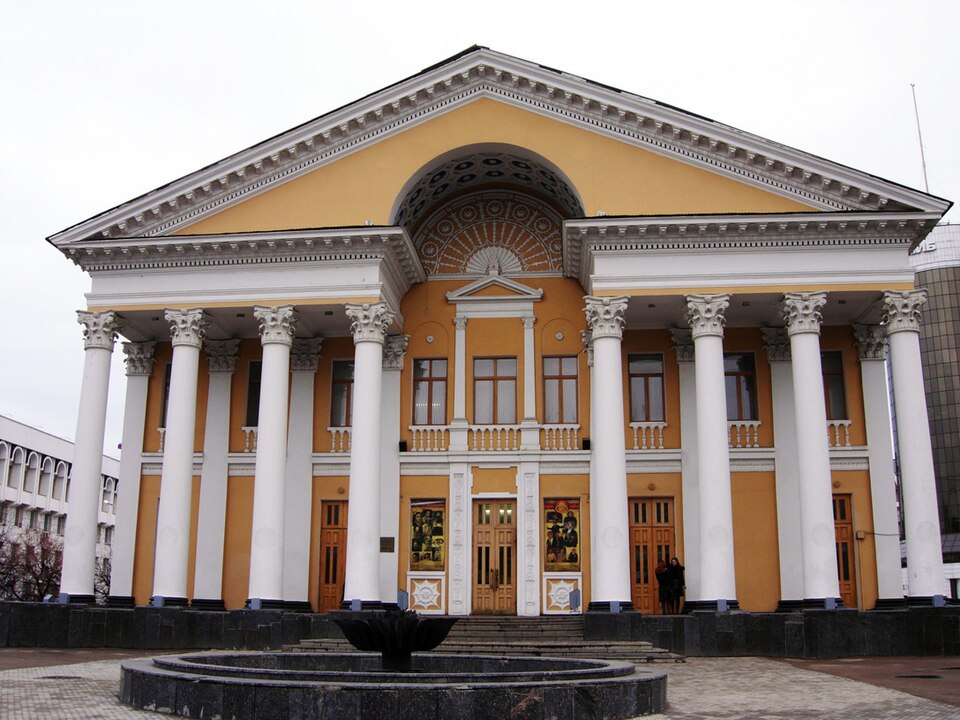
The building was designed by architect S. I. Yakshin. The same materials describe it as an architectural monument of the Soviet period. That places the building within the city’s postwar history. Rodina is not just a functioning cinema in the city center; it is also part of the postwar urban fabric, one of those public buildings meant to stay in everyday use rather than disappear into memory alone.
Its present-day layout is specific and easy to picture. The cinema has three auditoriums: two with 170 seats each, and a small hall with 37 seats. That difference in scale tells you a lot about the place. A single venue can host a larger shared audience and still leave room for a much more intimate screening. In a city, that matters. Not every film experience needs to feel the same, and not every evening out has to happen at maximum volume.
There is another detail here that is less historical and more practical, but just as important. According to culture.ru, the Blue and Green halls are equipped for visitors with limited mobility. In a story about a long-standing cinema, that is not a side note. It is one of the clearest signs that an older cultural site is still functioning in the present tense, not as a relic, but as a place people continue to use.
The same source notes that all halls are fitted for digital screenings and 3D. So Rodina is not carried by nostalgia alone. It is better understood as a layered urban place, where a Soviet-period building, current projection technology, and the ordinary habit of going to the movies meet in one address. Standing here, you are not only in front of a cinema. You are in front of a piece of the city’s routine life, the kind that rarely asks for attention and yet lasts for decades.
Learn more
Rodina is easiest to understand on foot, as part of the city rather than as a headline. The starting points are straightforward: it stands at 42 Lenina Street, and it opened in 1953. From there, the story becomes less about ceremony and more about use. This is a cinema built into everyday urban life.
Inside, there are three auditoriums: two with 170 seats each and a smaller hall with 37 seats. That mix changes the feel of the venue. One screening can be collective and full-scale; another can feel almost private. The sources also confirm that the Blue and Green halls are equipped for visitors with limited mobility, while all three halls support digital and 3D screenings.
Seen from this angle, Rodina is not interesting because it tries to compete with every new entertainment format. It is interesting because it keeps adapting while remaining recognizably itself: an older cinema building still working as part of the present-day city.