LISTEN TO THE PLACE
A story worth knowing
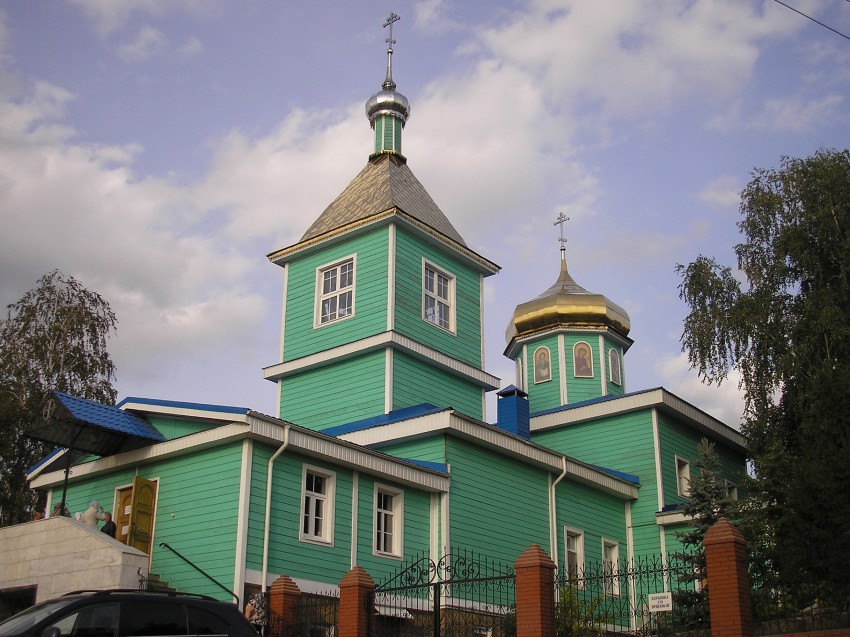
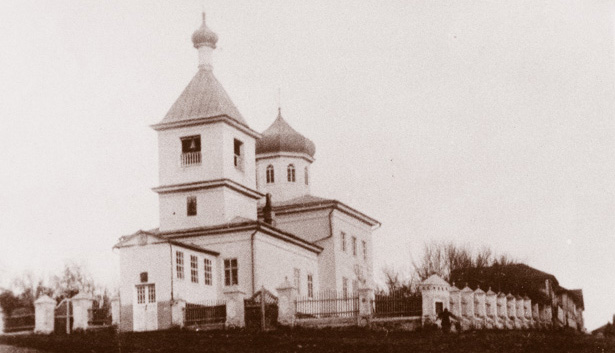
St. Sergius Cathedral is one of those places where Ufa’s history feels layered rather than distant. According to the city council’s account, one of the early churches of Ufa stood here as far back as the late sixteenth century. A second church occupied the site from 1777 into the 1860s. The wooden church on a stone foundation that stands here now was built in 1868. Few city addresses let you trace that kind of continuity so clearly: not one frozen moment, but several generations of rebuilding on the same ground.
The parish also preserves a tradition connecting Mikhail Nesterov with icons painted for this church. A tradition should be distinguished from the documented attribution of a particular work. Still, the connection offers another way to approach the site: religious life and artistic memory meet outside major museums too.
The church retained its religious role through the Soviet period, but worship was not entirely uninterrupted: services were not held in 1941–1942. That detail gives a more accurate picture of a community that experienced both disruption and renewal. A place can endure without having an unbroken history.
Another chapter concerns St. Moses of Ufa. His relics were brought here in 2002, then transferred permanently to the Nativity of the Virgin Cathedral in August 2022. For a visitor, that distinction matters: a historical connection does not mean a relic remains at the same address today.
And there is one more detail worth noticing in the grounds. The Sergius, or Michael the Archangel, Chapel stands here as well. In the source material it is described as the only chapel in Ufa to survive the Soviet era. Against the sweep of history that may sound modest, but such specifics often reveal a place better than any grand phrase. The cathedral does not feel like a stage set from the past. It feels like a part of Ufa where time never stopped; it simply kept accumulating.
Learn more
This stop brings together several kinds of memory. The present building dates from 1868. Earlier churches on the site belong to a longer history, while parish life connects the address with individual people who came here at different times.
Preserving a church does not mean everything inside stays in place. Even relics may move: those of St. Moses of Ufa were transferred from here to the Nativity of the Virgin Cathedral in 2022. Historical accounts and practical visiting information therefore need to complement one another.
Look at the church from the street, then at the surrounding buildings. Which features suggest an old city address, and which suggest an active place of worship? You do not need to enter to consider that question. Sometimes an attentive visit begins by noticing different rhythms of life alongside one another.