LISTEN TO THE PLACE
A story worth knowing
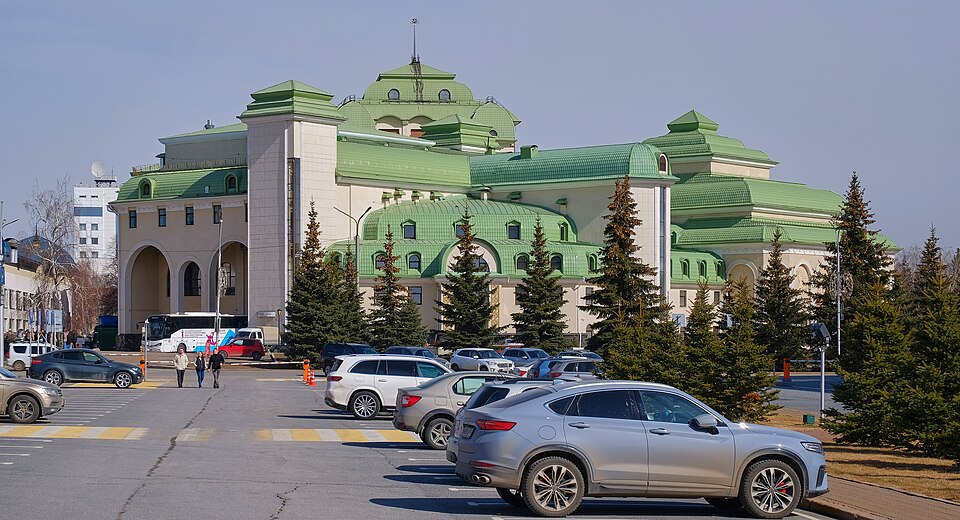
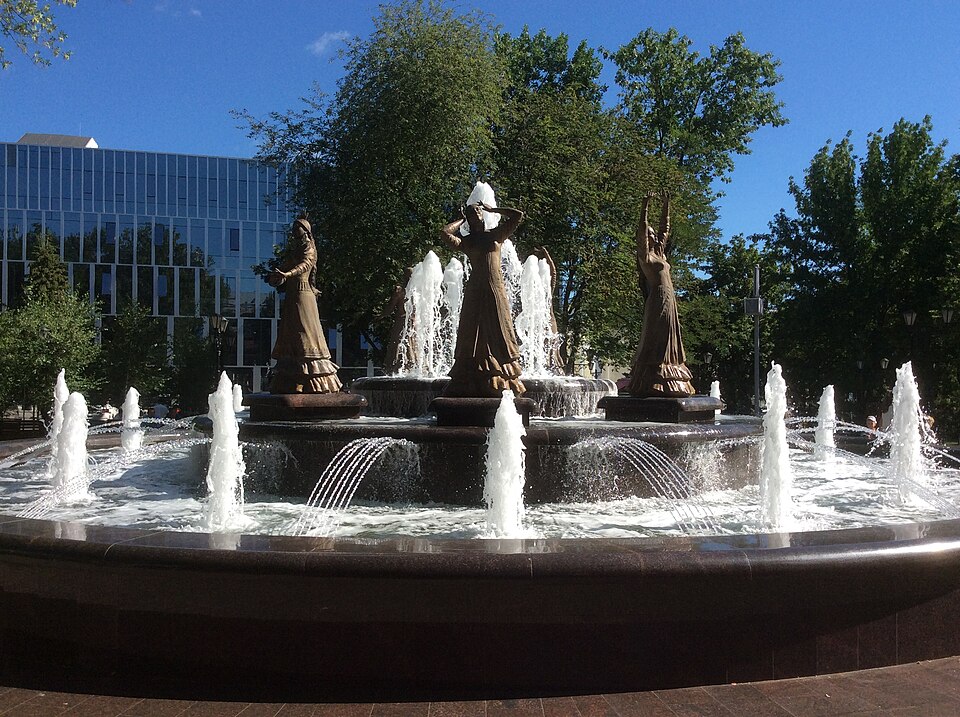
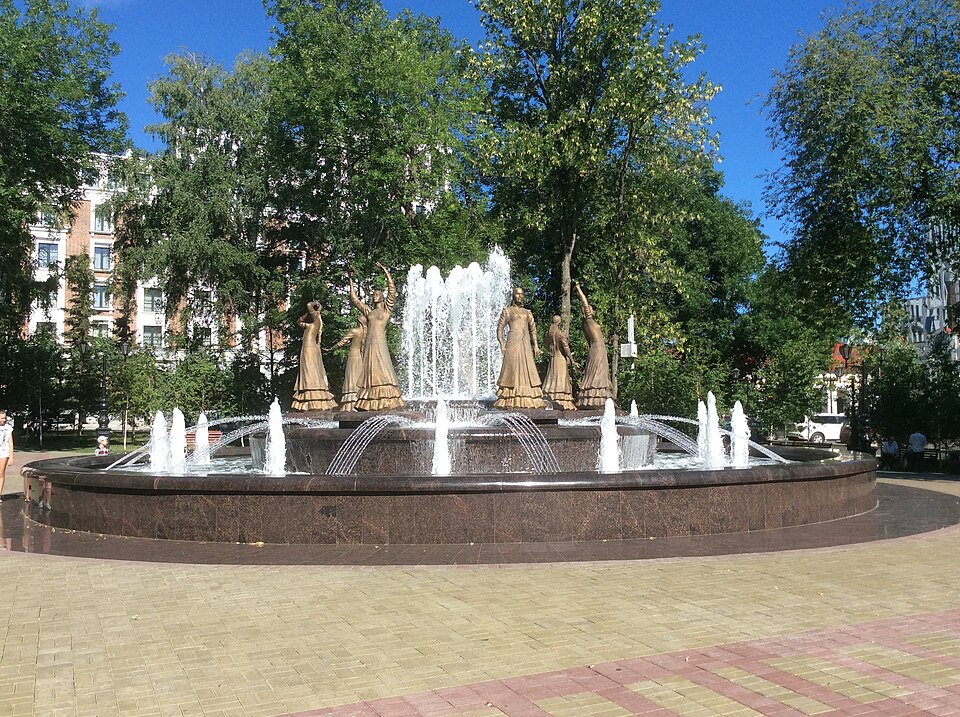
In front of you is the Seven Girls Fountain in Teatralny Square. This is one of those places where Ufa briefly slows down. On one side stands the Bashkir State Opera and Ballet Theatre, on the other Gostiny Dvor, and between them sits a circle of water, stone, and seven figures. The fountain opened on June 30, 2015. Since then, it has become a useful way to read the city itself: not through slogans or postcards, but through the way people gather here, lean on the rim, and look at the sculpture almost at eye level.
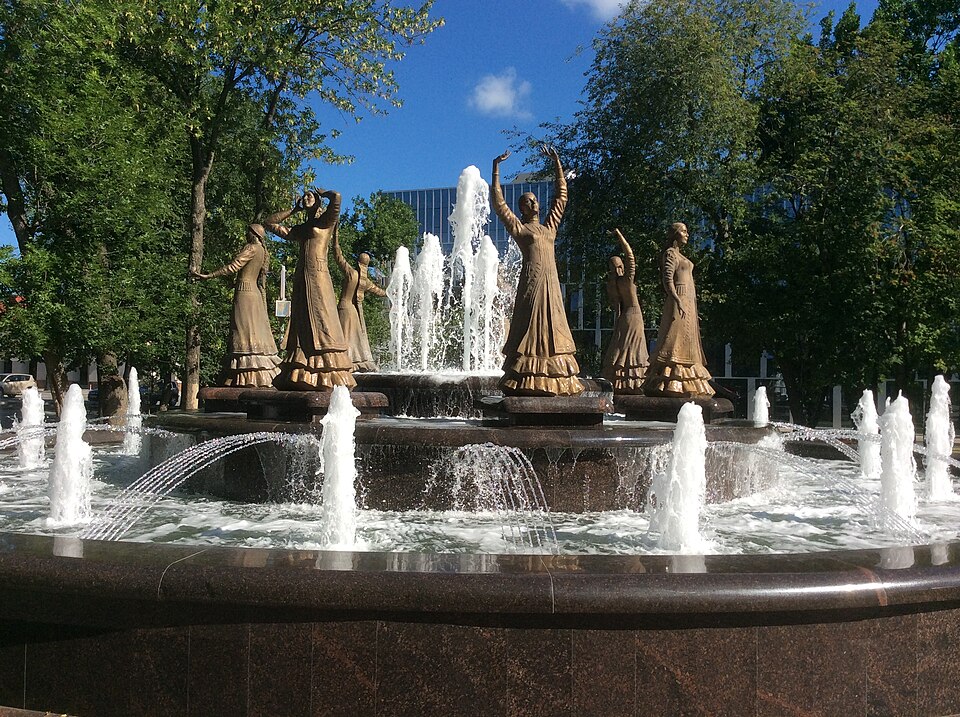
The composition is direct and carefully built. At the center are seven bronze girls, each 2.2 meters high. They are arranged not like a formal lineup and not like an illustration pinned to a wall, but like movement paused for a moment. The granite bowl, 18 meters across, works as more than a basin. It acts like a stage. Sometimes the water separates the figures from the square; sometimes it folds them back into the ordinary city noise. The author of the fountain is Khanif Khabibrakhmanov, an Honored Artist of Bashkortostan.
The subject comes from the Bashkir epic Seven Girls. Its central story is about seven girls who chose death over captivity. That matters here, because this is not just decorative folklore dropped into a plaza. It is a traditional story translated into a contemporary public space. Even if you do not know the full legend, the main feeling still comes through: solidarity, resolve, and a shared gesture rather than seven isolated portraits.
There is another detail that makes the sculpture feel less ceremonial and more alive. The poses were modeled by performers from the Miras ensemble. That helps explain why the figures do not read as generic statues. You can sense dance training in them: the turn of the torso, the line of the arms, the way balance is carried through the body. These are not anonymous forms. They are movements observed in real performers and recast in bronze.
Stay here for a minute and the fountain begins to work less as a single object and more as a piece of city choreography. Teatralny Square joins the tempo of theatre-goers, shoppers, and passersby, and the Seven Girls gathers those rhythms into one scene. In daylight, the square is louder. After dark, water and light take over. Either way, the place shows something important about Ufa: folklore is not sealed away behind glass here; it is placed right in the middle of everyday urban life.
Learn more
Try looking at the fountain as a dance held still. Choose one figure and follow the line from shoulder to hand, then notice the position of the head and the turn of the body. Compare it with the figure beside it. Separate gestures begin to form a shared composition, even though the bronze bodies remain motionless.
Performers from the Miras ensemble posed for the sculptor. Two arts meet here, each with a different relationship to time. A dancer’s gesture lasts a moment before becoming another movement. Sculpture lets you linger, change your viewpoint, and return to a detail. You can make a small experiment of your own: which movement catches your eye first, and what do you imagine might follow it?
You do not need to guess the artist’s exact intention. Compare what you notice with a companion. People can see quite different things in the same familiar landmark. When the fountain is running, water and lighting add another rhythm to the encounter.