LISTEN TO THE PLACE
A story worth knowing
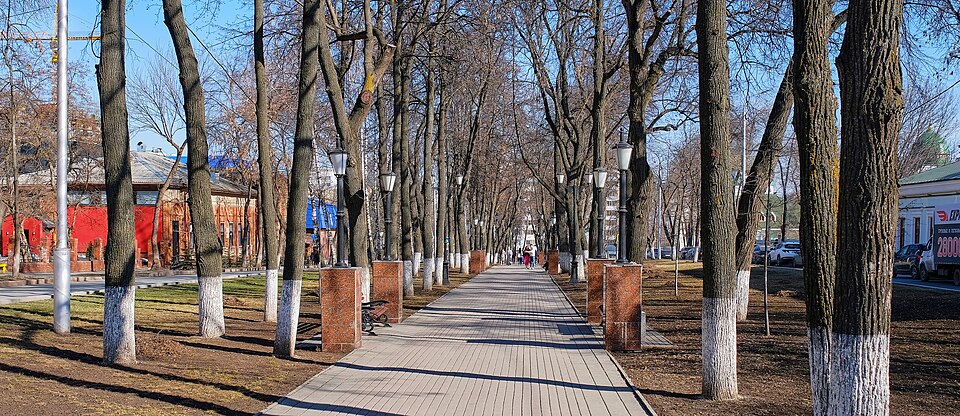
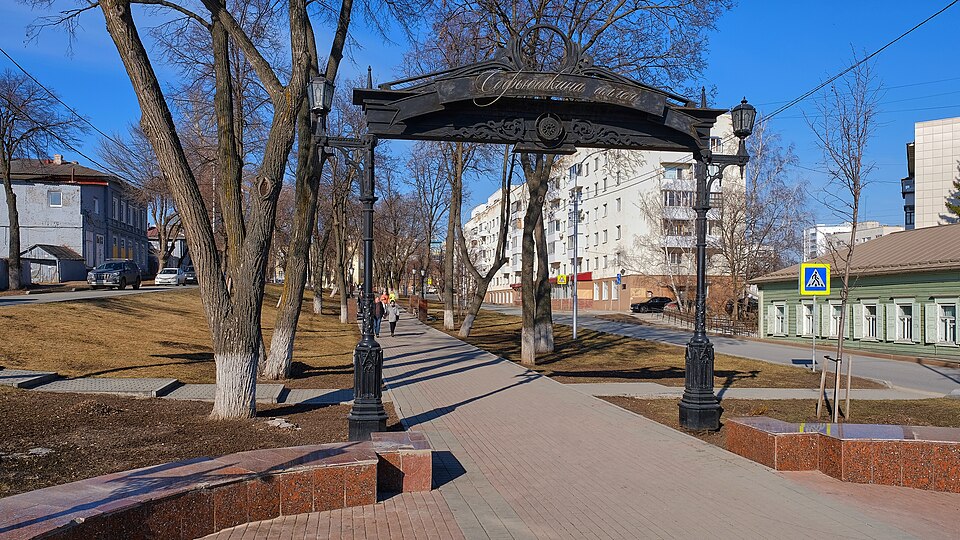
Sofyushkina Alley does not announce itself with a grand entrance. It reveals itself gradually: first as a calm passage through old Ufa, then as a route where the city starts speaking through connections rather than landmarks alone. the alley was laid out in the 1860s on the initiative of Sofia Alexandrovna Aksakova. That origin matters. This was not just a path that appeared by chance, but a deliberate promenade woven into the city’s fabric.
The route runs along Tukayeva and Zainulla Rasuleva streets, beginning at Sovetskaya Street and reaching Salavata Street. Its L-shaped line changes the walk itself. You turn a corner, and the district shifts with you: a different rhythm, a different view, a different sense of distance. The sources say the alley links Lenin Park, Zia Nureev Square, and the Salavat Yulaev Garden. Even without trying to “cover” everything, you can feel how the alley works as a seam between several public spaces.
There is also a very physical historical layer here. The original planting list includes linden, apple, pear, maple, birch, and rowan. That detail does more than decorate the story. It suggests how this place was meant to be experienced over time. Spring blossom, summer shade, autumn color—this is less a monument than a habit of walking, looking, and noticing.
The same sources note that the alley was once part of the Theatrical, or Sofiysky, Garden, laid out in 1860 and also known as Sofyushkin Garden. That helps explain why the place still feels more composed than accidental. What survives here is not merely a path, but a fragment of a larger urban design that changed over time without disappearing entirely.
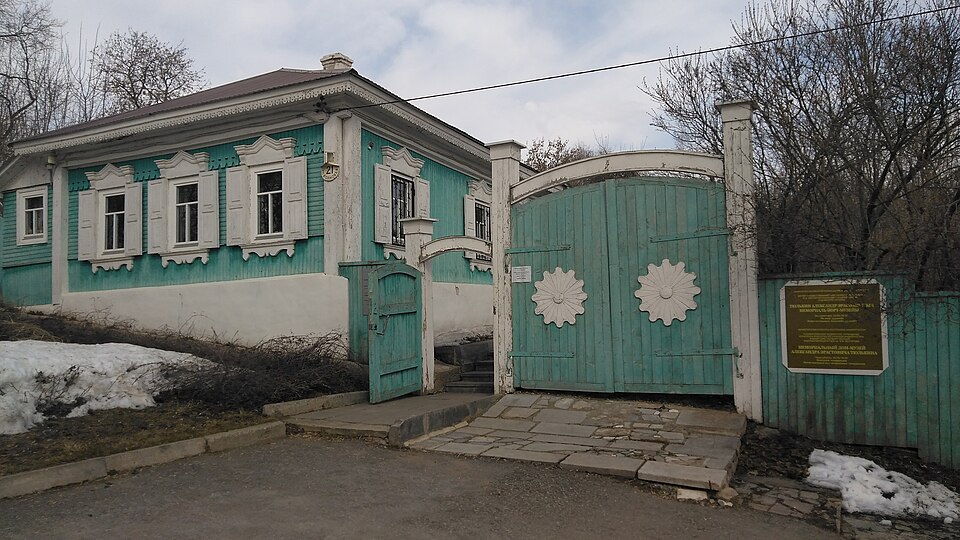
Several key sites stand nearby: the Governor’s House, Ufa’s First Cathedral Mosque, and the Sergey Aksakov House Museum. It is best to treat them not as a checklist, but as evidence of how densely old Ufa is layered in this part of town. A later chapter came in 2012, when the alley was renovated: paths were renewed, lamps installed, cast benches added, and informational signs placed along the route.
That is why Sofyushkina Alley is most interesting at the scale of a walk. Not as a slogan, and not as a frozen relic, but as a measured urban line where history is felt at ground level—in a turn of the route, in the proximity of gardens and streets, and in the continuing logic of a city made for strolling.
Learn more
There is another way to look at Sofyushkina Alley: not as a sightseeing stop, but as a piece of urban infrastructure with a long memory. It does more than lead you from one point to another. It gathers the district—streets, green spaces, historic buildings, and the simple habit of walking without rushing.
One useful angle is its earlier life within a bigger landscape. The alley was part of the Theatrical, or Sofiysky, Garden. So this is not an isolated surviving feature, but a remaining section of an older urban composition. That may be why the route still feels coherent even though the surrounding city has changed.
And then there is the planting list: linden, apple, pear, maple, birch, rowan. It reads almost like a seasonal script. Instead of imagining history as something ceremonial, you start to picture ordinary life here—someone taking a shortcut, someone pausing on a bench, someone noticing for the first time that old Ufa survives not only in buildings, but in the line of a walk.