LISTEN TO THE PLACE
A story worth knowing
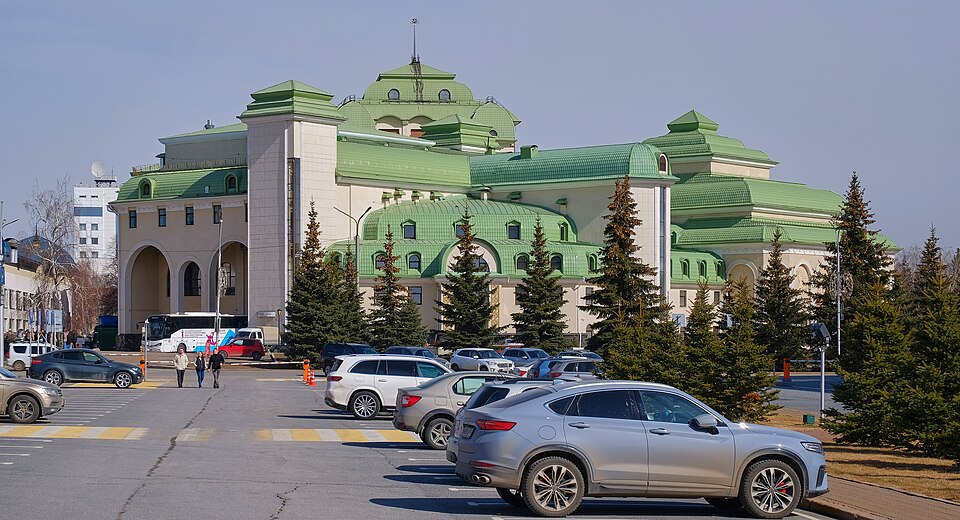
Outside the Nur Theatre, we meet Gabdulla Tukay. A statue and a theatre preserve literature in different ways: one holds a figure still, while the other gives words a new performance. This is a good place to pause between those two forms of memory. You do not need to know the poet’s work already to notice how the setting changes the way we encounter him.
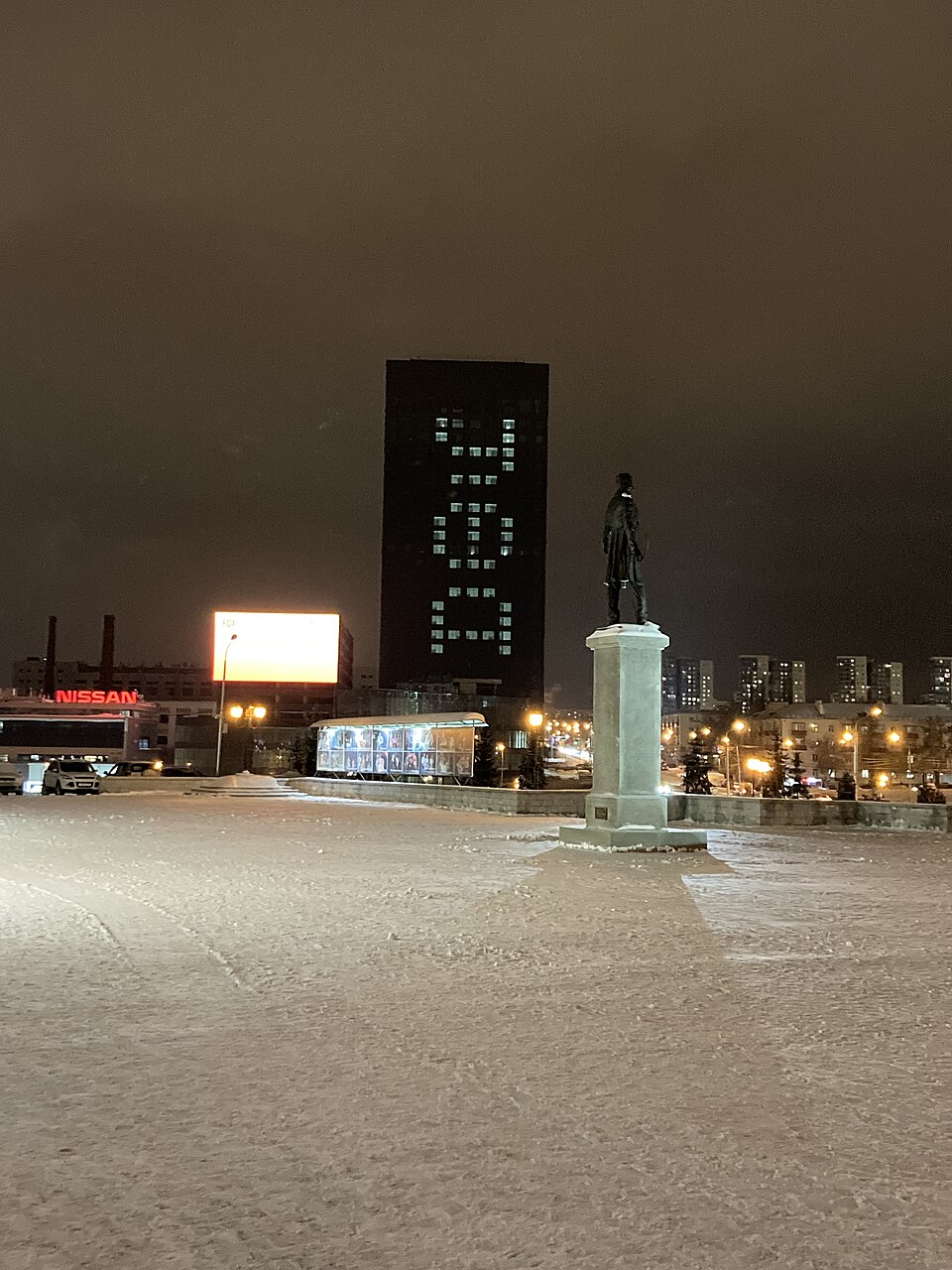
The monument was unveiled on April 18, 2019, in front of Ufa’s State Tatar Theatre, Nur. It honours the Tatar poet Gabdulla Tukay. The choice of setting places a writer beside an institution where language continues to be spoken on stage. Rather than starting with a list of achievements, consider a question: why can poetry become important enough to a community to earn a permanent place in its streets?
The sculptor was Vladimir Dvornik. The bronze figure was cast in Moscow before being brought to Ufa. Behind these brief facts lies the practical journey of a public sculpture: a design, a model, work with materials, transport and installation. We see the finished figure, but we can also think about the choices that made it. Look at the whole silhouette, then at a smaller detail. What seems to give this portrayal its character?
The setting also shows how an encounter with literature can begin outside a book. In a theatre, words are performed; in the square, a writer has a visible presence. These forms of introduction complement one another. You may first notice a name on a monument and only later open a poem. A stop here needs no ceremony or special occasion, only curiosity about someone the city chose to remember.
Before moving on, allow yourself an impression that is not borrowed from a formal description. Does the figure seem reflective, distant, or directed towards its audience? There is no single answer you must find. The theatre’s address is 36, 50 Let SSSR Street. Remember the pairing: the monument gives the poet a visible presence, and the theatre offers language in performance. Reading a poem later, in translation or in its original language, can turn this brief stop into the beginning of a longer encounter.
Learn more
Imagine replacing the monument with a simple commemorative plaque. The name would remain, but the encounter would change. An inscription is read in sequence, word by word. A sculpture is often noticed as a whole before we are close enough to read anything. That difference offers a small experiment for a visitor standing outside the Nur Theatre.
The neighbouring theatre adds sound to the comparison. You can see a representation of a writer, read his name, and hear literary language performed. None of these experiences replaces the others. For one person, an encounter with a poet begins at school; for another, it starts during a walk through an unfamiliar city.
Choose a detail that interests you, rather than simply the most impressive photograph. Later, compare your impression with a poem by Tukay. You need not find an exact connection: the difference between a sculptor’s portrayal and a reader’s imagined voice can be just as revealing.