LISTEN TO THE PLACE
A story worth knowing
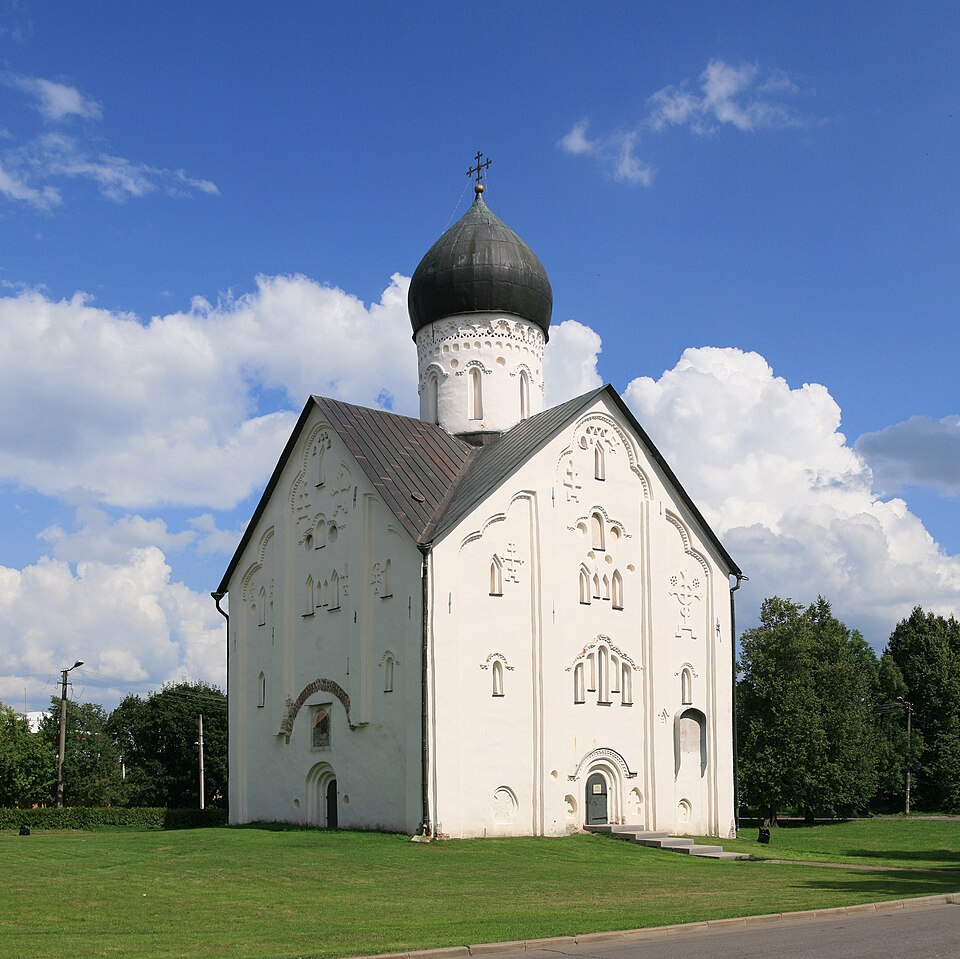
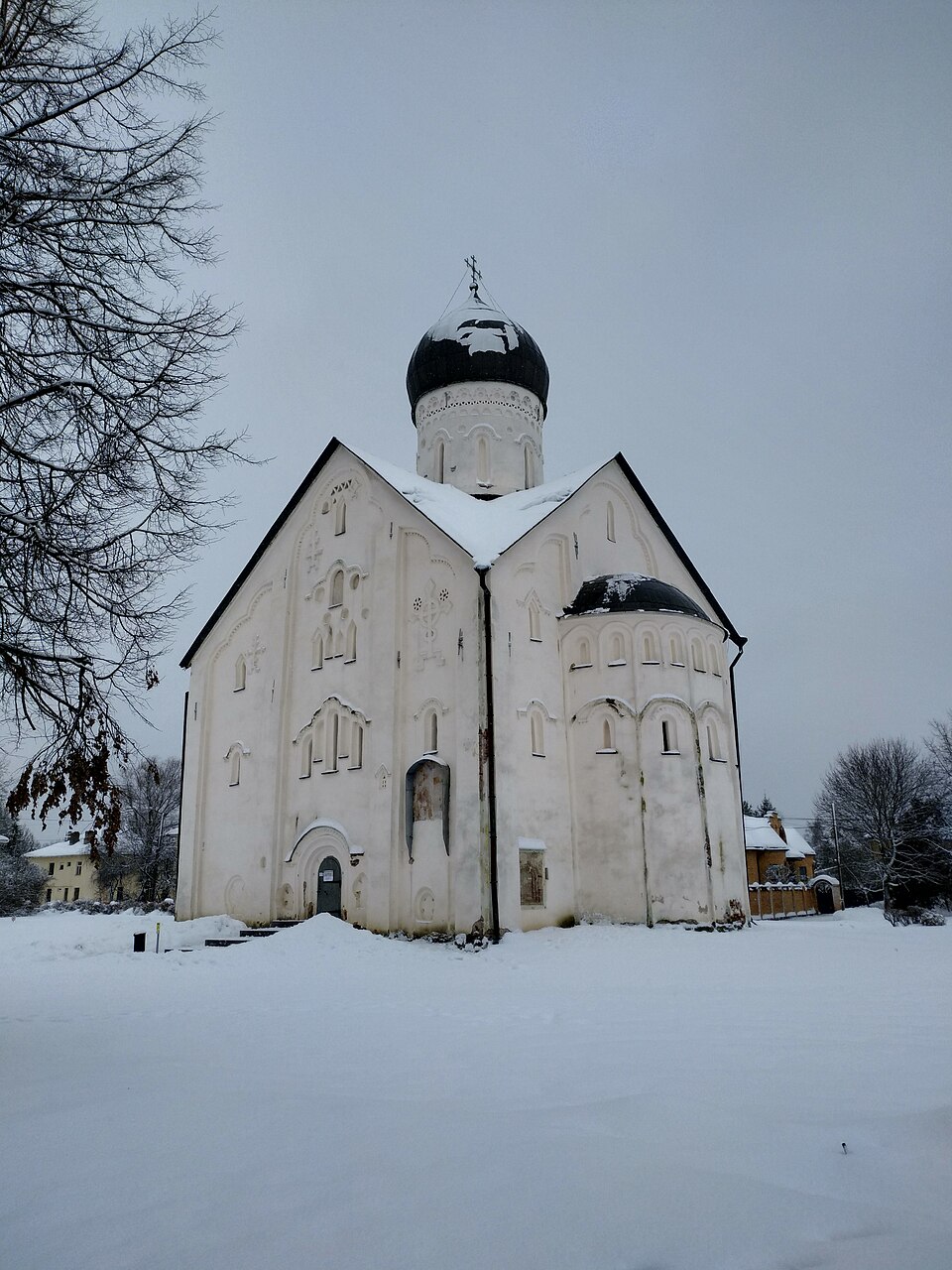
The Church of the Transfiguration on Ilyina Street is easy to underestimate if monuments are judged by size alone. Its compact interior contains one of the most important encounters with medieval art in Novgorod.
The stone church was built in 1374. Four years later it was painted by Theophanes the Greek, a name connecting Novgorod with the Byzantine artistic world. The surviving frescoes are particularly valuable as a documented work by an artist whose influence reached far beyond this city.
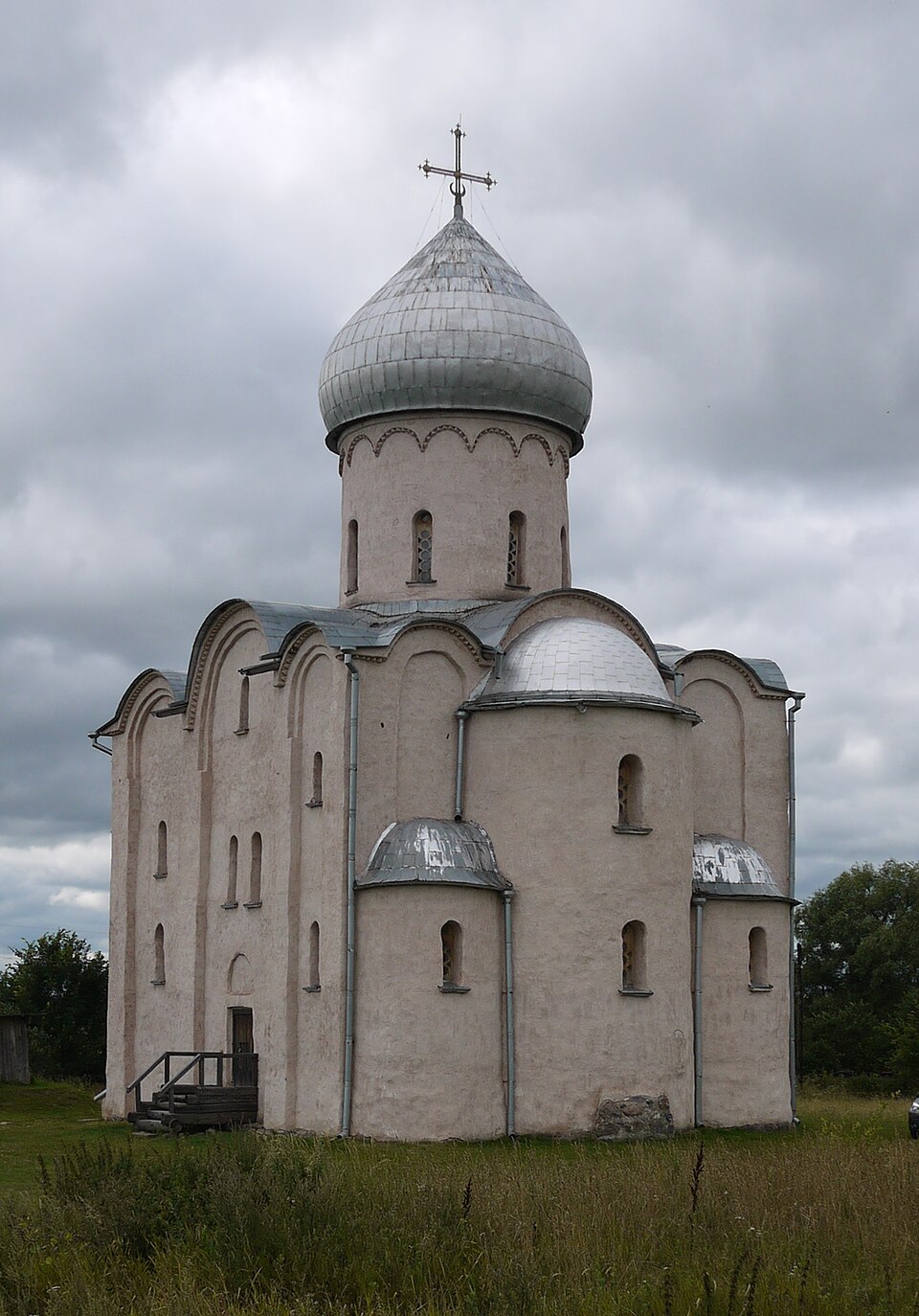
Begin outside. Wall divisions, narrow windows and decorative details establish a strong upward rhythm. The architecture is more than a protective shell for paintings: it prepares the eye to move vertically through the space.
The murals survive only in fragments. Do not expect every wall to look as it did in the fourteenth century. Within the remaining figures, notice forceful drawing, expressive faces and pale highlights that animate the surface. Give your eyes time rather than trying to take in everything at once.
The church stands on the Market Side, on a street preserving Novgorod's old urban geography. The nearby Cathedral of the Sign is a different monument, with its own history and visiting arrangements. Access to ancient paintings may depend on museum and environmental conditions. Even when the interior is closed, the exterior rewards attention: it shows how local builders combined compact scale, height and richly worked details.
Learn more
A fresco belongs to the wall more intimately than a framed painting. Changes in moisture and temperature can threaten its survival. Access restrictions may therefore be conservation measures. Keeping hands away from painted surfaces and following photography rules help protect the very material that makes this visit worthwhile.