LISTEN TO THE PLACE
A story worth knowing
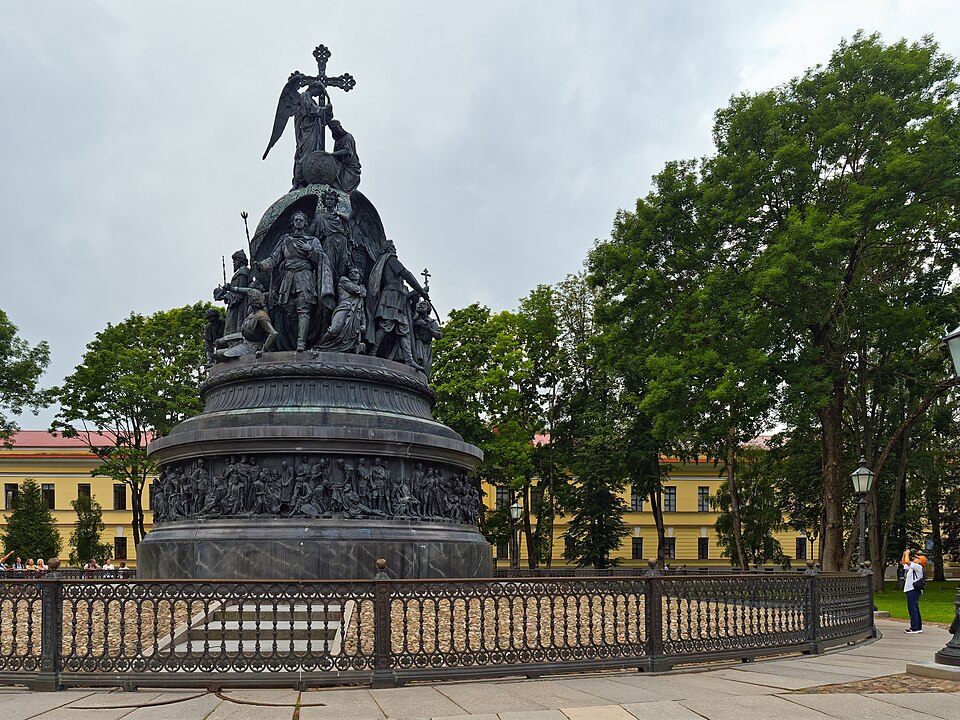
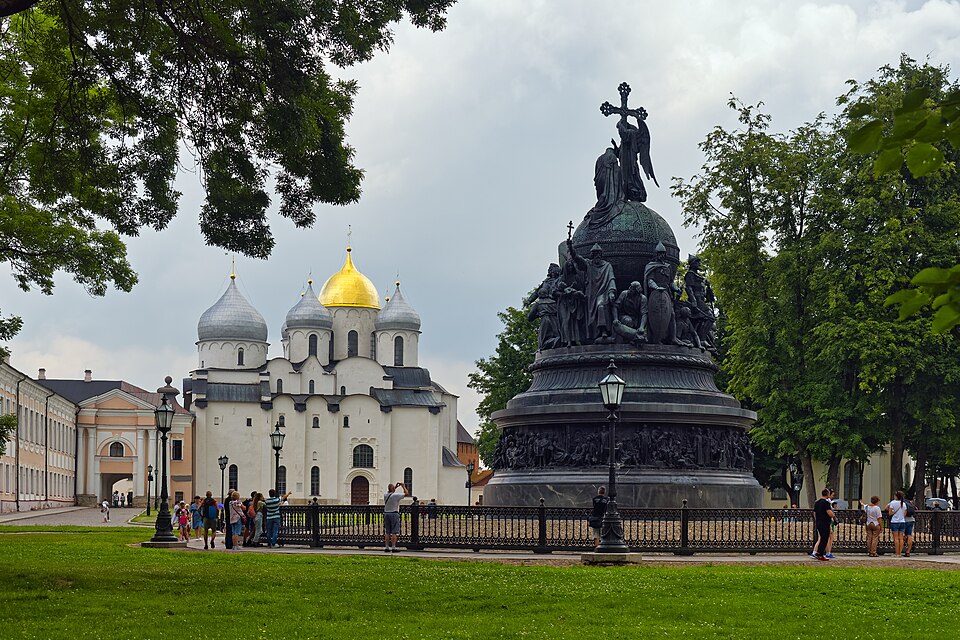
Most monuments have one principal figure who is easy to identify. Here, an entire historical cast stands before you. The composition contains 129 figures, so even a short circuit becomes a search for familiar names. Before identifying individuals, however, ask who brought them together, when, and according to what idea of the past.
The monument was unveiled in 1862 under Alexander the Second. Its millennium was calculated from the chronicle date of Rurik's invitation in 862. That chosen point of departure shaped a national anniversary. The sculpture therefore tells us about earlier history and about how the Russian Empire of the nineteenth century wished to represent that history.
Mikhail Mikeshin, Ivan Schroeder and the architect Viktor Hartmann were central to its creation. The large composition rewards several viewing distances. From far away, its outline resembles a bell. Closer in, groups separate from the whole; closer still, clothing, gestures and faces become legible. One fixed object offers different images depending on where the viewer stands.
At the summit are symbolic figures: an angel with a cross and a kneeling personification of Russia. Lower levels include historical scenes and people from different fields, among them rulers, military figures, educators, writers and artists. National history is presented as more than a succession of reigns. It remains a selection, however: no pedestal could accommodate everyone who influenced the past.
The monument itself later experienced a dramatic episode. During the Nazi occupation of Novgorod, it was dismantled for intended removal, leaving many sculptures on the ground. Following liberation, it was restored and reopened in November 1944. An object created to preserve historical memory became part of a history of threatened destruction and recovery.
Walk around it slowly and look for a writer or artist rather than beginning only with rulers. Notice who stands nearby and how those neighbours create associations. Memorising the entire cast is unnecessary. The more interesting task is to see how many separate lives are turned into a single grand narrative. Keep a little distance from that narrative too: this is not the whole of history made visible, but an interpretation created by particular people at a particular time. With that in mind, the bronze figures invite reflection as well as recognition.
Learn more
Ivan the Terrible is absent from the monument. His omission stands out because so many other historical figures appear. In Novgorod, his name is closely associated with the devastation of the city during the campaign of 1570. Local memory can therefore differ sharply from a general list of prominent rulers.
Rather than treating this as a puzzle about someone accidentally forgotten, consider how commemorative selections work. Inclusion and exclusion both express judgments. A monument is not a reference book aiming for an exhaustive list; it presents a particular account of the past.
Imagine choosing a small group of people to tell a city's history yourself. The result would depend on the question: political authority, culture, ordinary life or collective suffering. This monument had its own answer. Noticing the gaps alongside the represented figures helps reveal the intentions and historical setting of its creators.