LISTEN TO THE PLACE
A story worth knowing
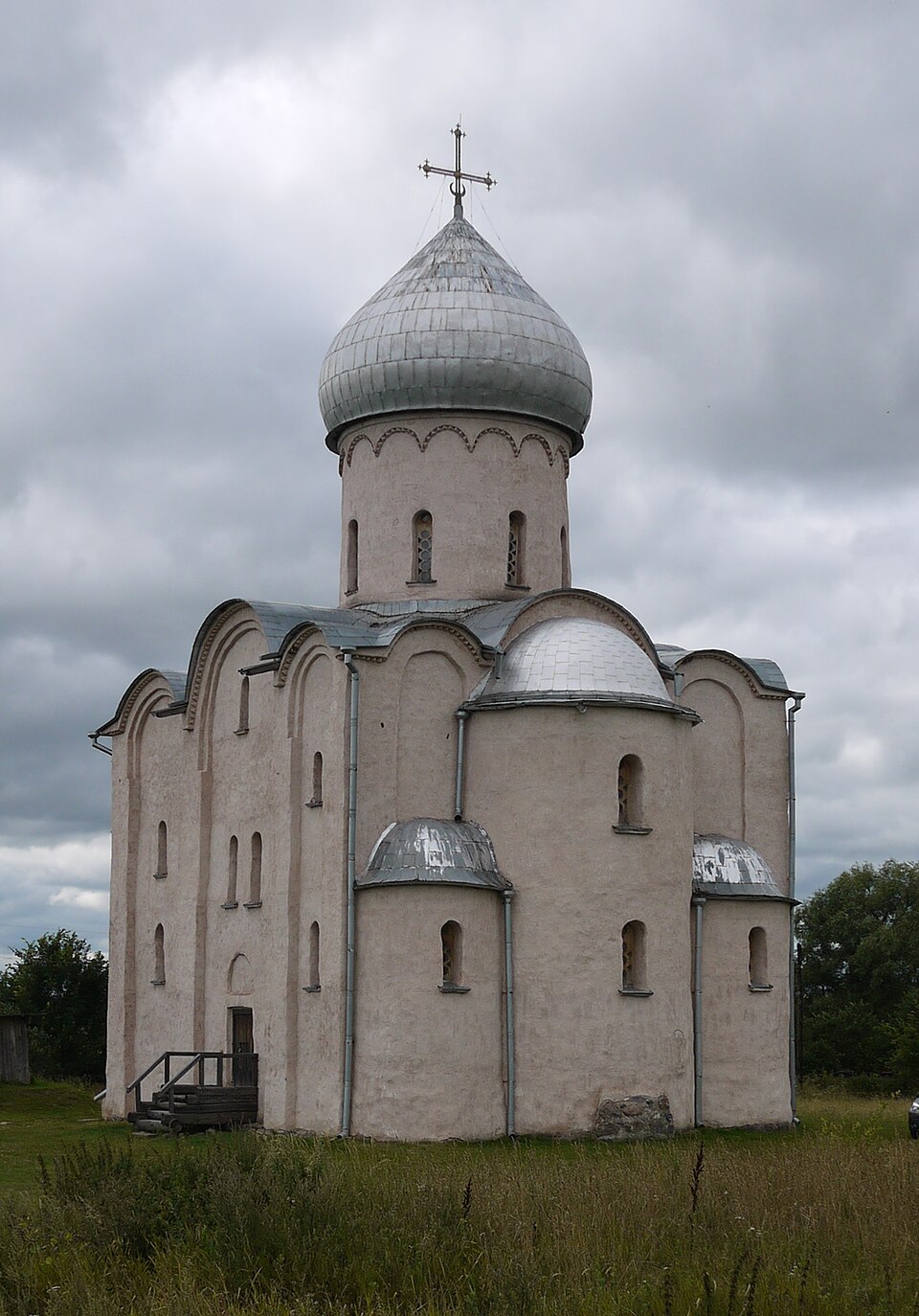
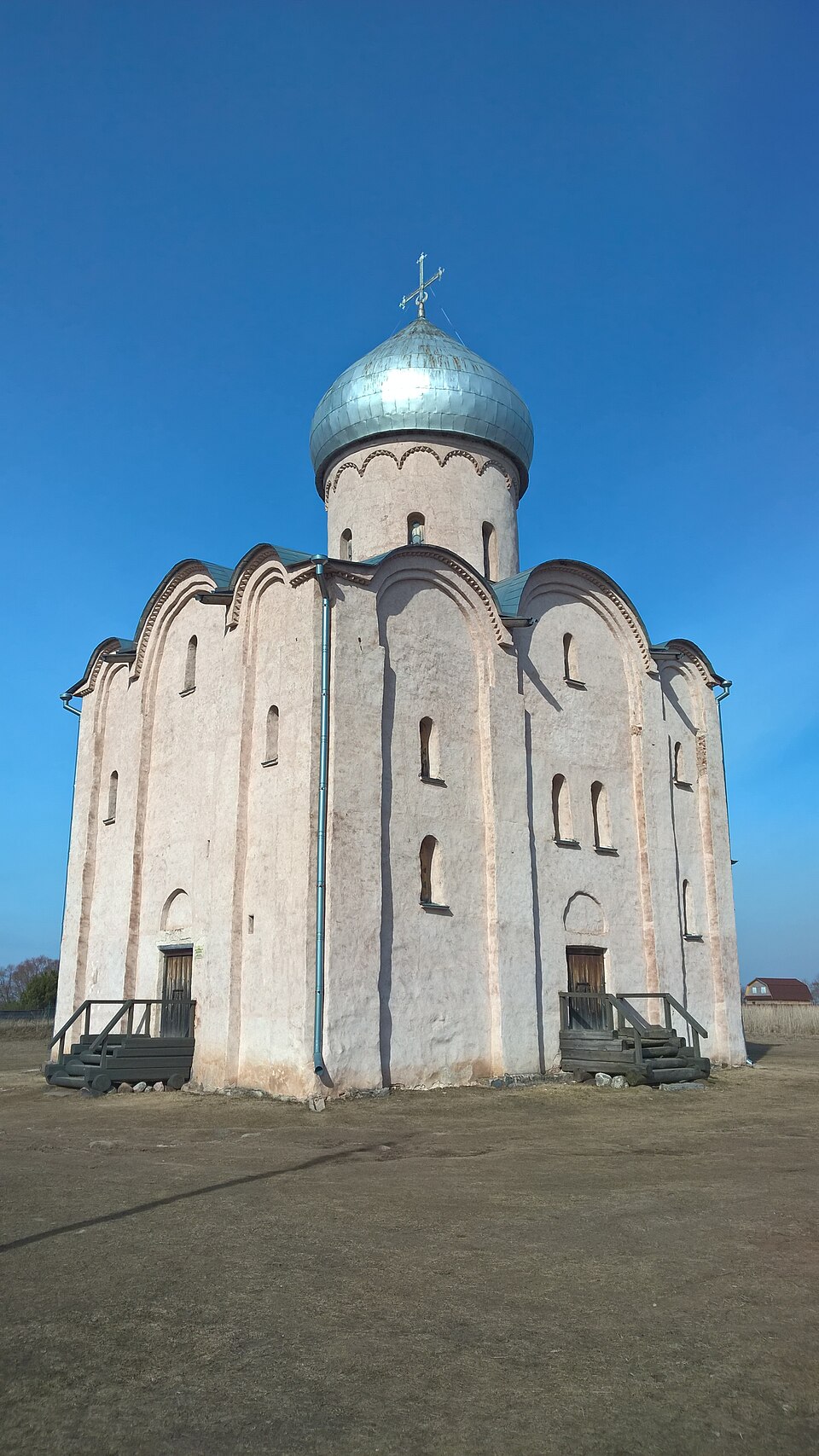
The Church of the Saviour at Nereditsa stands outside the historic centre in open countryside. With no neighbouring façades crowding it, this small building gains a remarkable presence from its simple forms and low horizon.
It was built in 1198 under Prince Yaroslav Vladimirovich and painted the following year. Those medieval frescoes made Nereditsa internationally important. They formed a complete world of images around the person standing inside, rather than a collection of separate decorations.
Today's church must not be described as an untouched twelfth-century survival. Destructive shelling in 1941 devastated the building and most of its celebrated paintings. Post-war restoration drew on surveys, research and pre-war records. Surviving fragments of the original frescoes are consequently especially precious.
Hold both histories in mind. This is evidence of early architecture and of the people who worked to recover it after catastrophe. A photograph of the old interior may show paintings that no longer exist on the walls. Museum explanations help distinguish surviving material from documentary evidence.
A visit requires separate planning because the church lies beyond a short walk around the Kremlin. Check access arrangements and local approaches. From permitted paths, take time to look across the surrounding landscape. The relationship between this modest building and the broad open setting remains powerful even when the interior is unavailable.
Learn more
Pre-war measurements, photographs and painted copies preserve evidence of the lost interior. They let researchers study compositions destroyed during the war. A copy and an original fragment nevertheless have different roles: one records an image, while the other preserves historical material. Look for that distinction in museum descriptions.