LISTEN TO THE PLACE
A story worth knowing
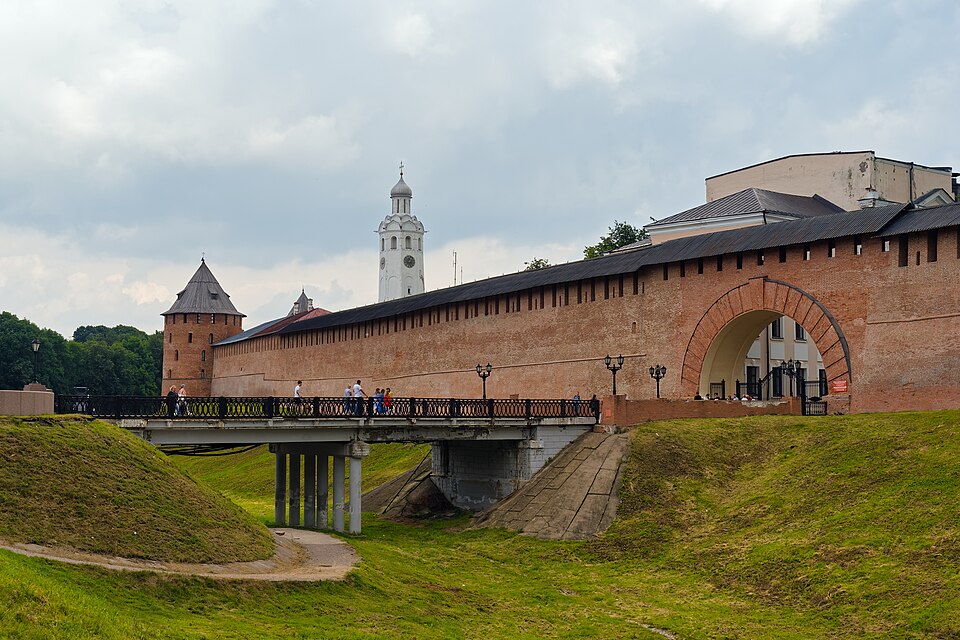
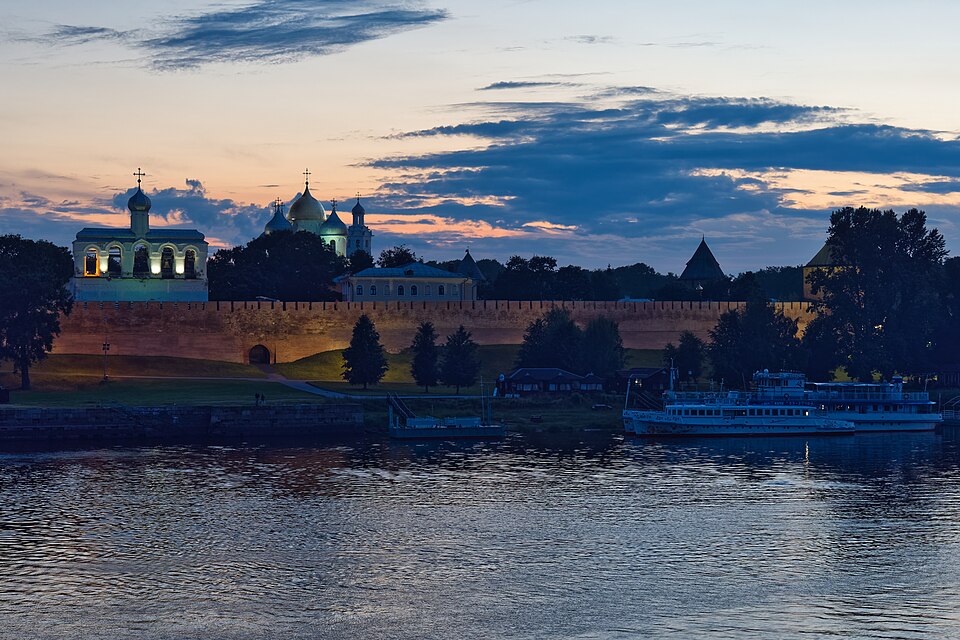
Novgorod's kremlin has an older name: the Detinets. From outside, it appears to be a complete red-brick fortress. Inside, however, its monuments belong to very different periods. Begin with the white Cathedral of Saint Sophia rising behind the walls. Built between 1045 and 1050, it long predates most of the visible fortifications. That gap in time is the first clue that this was never a single project completed in one campaign.
The principal form of the surviving walls dates to the late fifteenth century, under Ivan the Third. Nine of the twelve towers survive. The defensive circuit changed with military requirements and political circumstances, while the cathedral remained a spiritual landmark. As your eyes move from the battlements to the church, they cross several centuries.
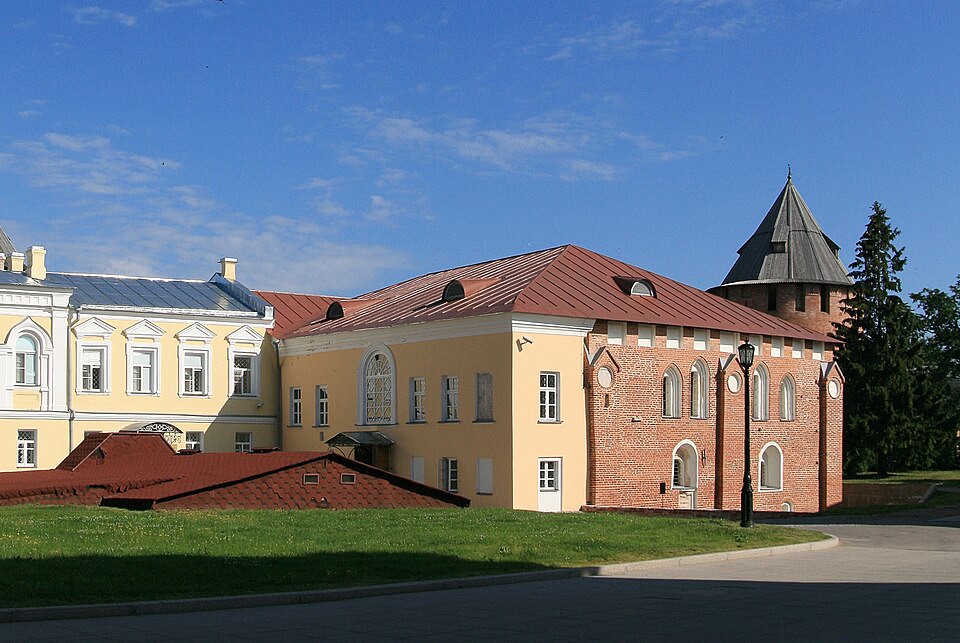
In medieval Novgorod, the Detinets was closely associated with the archbishop. His court occupied its northern part. This is an important local distinction: a Russian kremlin should not automatically be imagined as a prince's palace surrounded by his soldiers. Novgorod's institutions had their own relationships, and the arrangement of the site makes the prominence of ecclesiastical authority visible.
Look towards the Volkhov River. It helps explain the structure of the city, separating the Sophia Side from the Market Side and connecting them through the bridge. Imagine repeated daily journeys between those two banks: towards trade, worship and civic business. The fortress then becomes a junction within a working town rather than an isolated island of antiquity.
The Millennium of Russia monument was unveiled here in 1862. It is much younger than the cathedral or the walls. Its figures present a nineteenth-century interpretation of the preceding national history. Alongside actual medieval buildings stands a later account of the Middle Ages. Those are different kinds of evidence, and seeing them together is part of the pleasure of this place.
Compare three outlines: the heavy defensive wall, the broad forms of Saint Sophia and the densely arranged figures of the monument. Each directs your attention differently. The wall establishes a boundary; the cathedral gathers space around it; the sculpture invites close inspection of individuals. Within a short walk, the way you look changes. Instead of searching for a single photograph that explains the Detinets, let those successive encounters shape the visit: defence, religious life and historical memory, each expressed through a different kind of object.
Learn more
The word kremlin can summon a ready-made picture: a prince, a palace and a military household behind protective walls. That picture misses an important feature of Novgorod. The northern Detinets contained the archbishop's court, including the Faceted Chamber, associated with German craftsmen and Western European Gothic architecture in the fifteenth century.
The combination is revealing: a Russian brick fortress, an ancient Orthodox cathedral and a chamber employing Gothic building ideas. It points towards connections and the movement of expertise rather than an isolated medieval world.
When you examine the chamber, try changing the question you ask. Instead of judging how closely it matches an expected image of medieval Russian architecture, consider what knowledge visiting builders brought and how it was used here. A relatively small building inside the fortress can open a much wider mental map, connecting this local seat of authority to the architectural exchanges of medieval Europe.