LISTEN TO THE PLACE
A story worth knowing
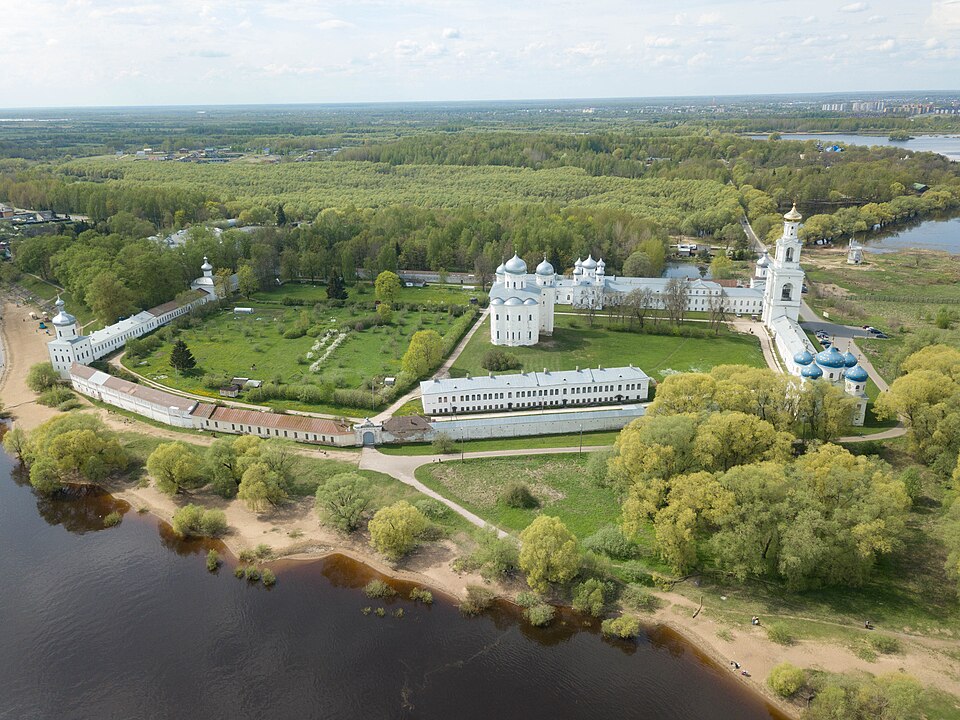
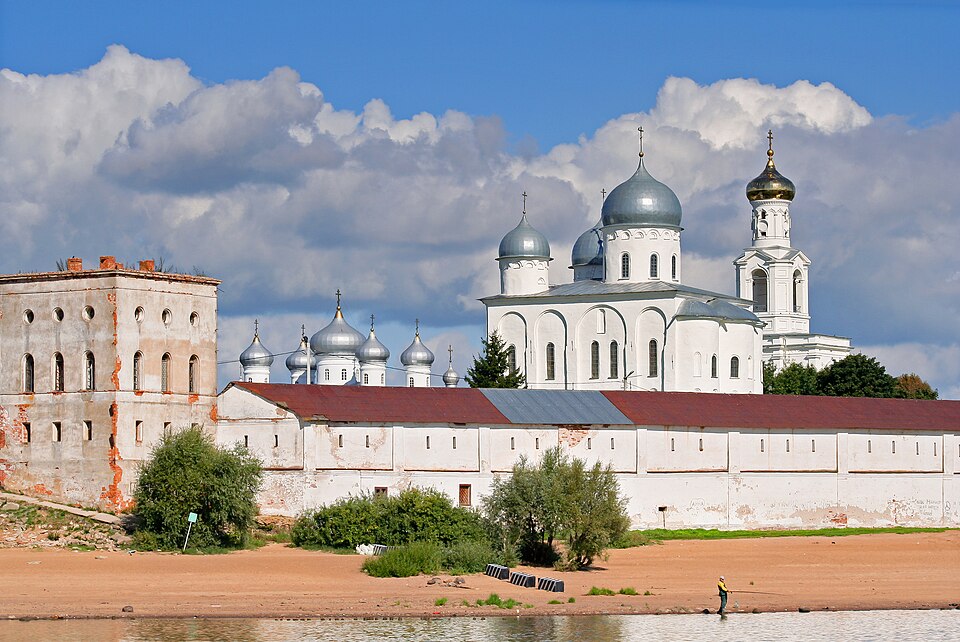
Saint George's Monastery stands beside the Volkhov, away from the dense city centre. River, open ground and large monastic buildings give this part of Novgorod a different scale. Its Russian name, Yuriev, comes from Yuri, a form of George.
Tradition attributes its foundation in 1030 to Yaroslav the Wise. A firmer chronicle reference is 1119, when construction began on the stone Cathedral of Saint George. Distinguishing a foundation tradition from a written record helps us understand precisely what is known.
The cathedral anchors the ensemble. Its powerful form recalls an institution that did far more than provide a place for prayer. In the Middle Ages the monastery held extensive estates and played an important economic role in the Novgorod Republic. Behind these walls lay a network of work, income and relationships.
The chronicle associates the cathedral with a builder named Peter. A surviving architect's name offers a rare personal connection with early Russian architecture. It does not mean that he designed the whole complex visible today: later centuries transformed the monastery repeatedly.
A substantial nineteenth-century phase benefited from the patronage of Countess Anna Orlova-Chesmenskaya. Compare the cathedral with its neighbours and try to distinguish periods through their forms. This is an active monastery, so respect worship and local visiting rules. Allow a dedicated part of your itinerary for the journey here rather than treating it as a few additional steps around the central sights.
Learn more
The river belonged to the monastery's working geography. Water routes connected settlements and estates, making a position beside the Volkhov valuable in practical terms. Look at the water as a road rather than simply a view. The location of a major religious and economic institution then becomes easier to understand.