LISTEN TO THE PLACE
A story worth knowing
From this bank of the Volkhov, it becomes clear that medieval Novgorod lived on both sides of the river. Opposite stand the kremlin and Saint Sophia Cathedral. Here are Yaroslav's Court and the area of the old marketplace, or Torg. The water divided the city while also connecting it with distant places.
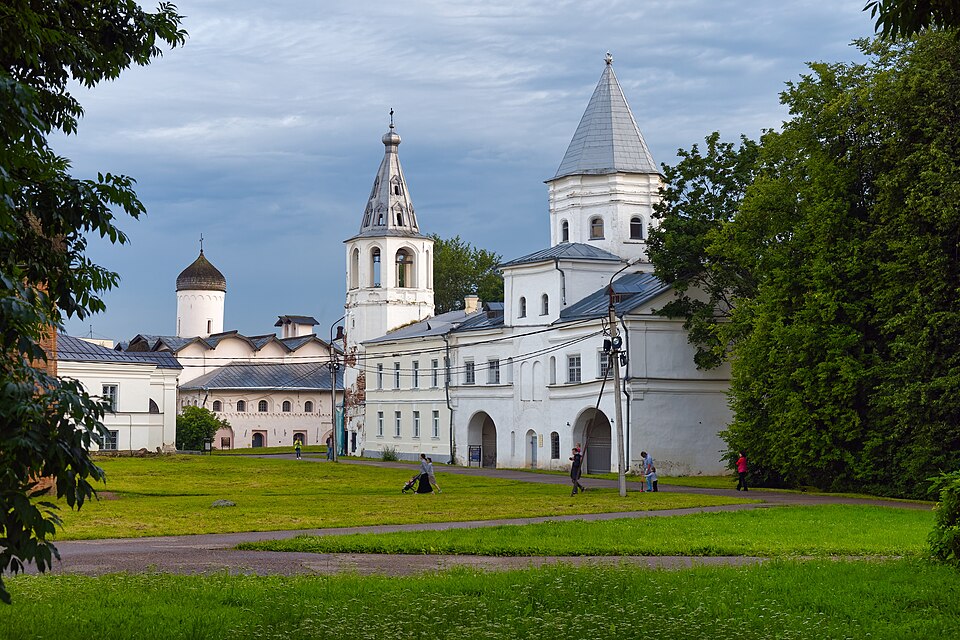
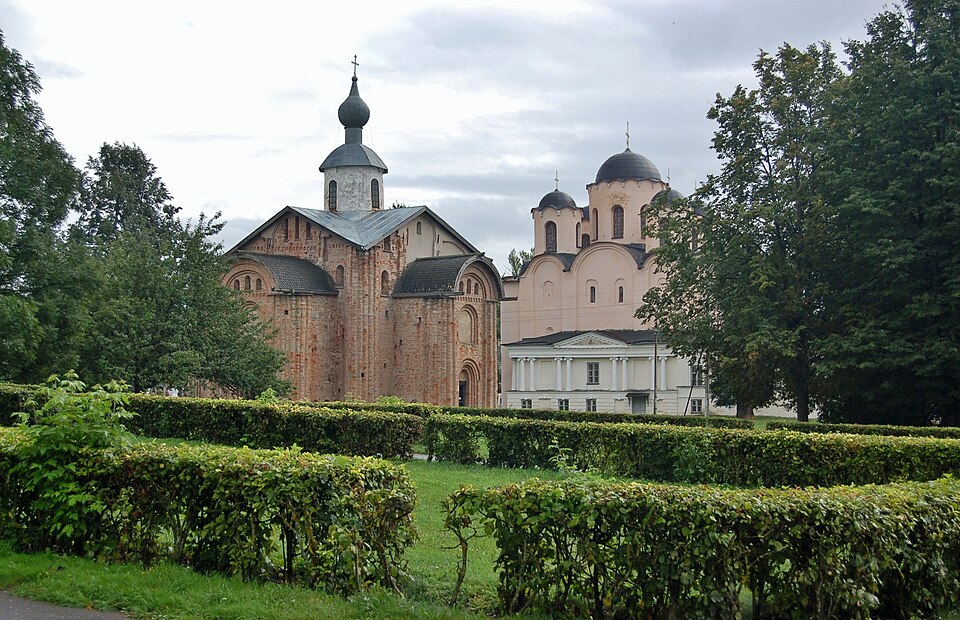
The courtyard's name refers to Prince Yaroslav the Wise, but do not look for his surviving palace among the present buildings. The ensemble contains monuments from different periods, and the early princely residence is not known in every detail. A place's historical name and the age of what survives there are different things.
One of the principal early buildings is Saint Nicholas Cathedral, founded in 1113. Other churches stand nearby. Their concentration may surprise a modern visitor, but it belongs to a city where religious, civic and commercial relationships were closely intertwined.
The marketplace was more than a collection of shops. Residents met visiting merchants, goods changed hands and business was discussed. Novgorod participated in international trade, including connections with Hanseatic towns. Behind today's quiet setting lies a history of movement: objects, money, news and people arrived by river and overland routes.
The area is also associated with Novgorod's veche, its civic assembly. It would be misleading to equate this directly with modern universal voting. Medieval political life had its own practices and tensions. What matters here is that the trading side of the city helped conduct collective affairs as well as exchange goods.
The familiar white arcade beside the river belongs to a much later trading complex, the Gostiny Dvor. It is not a surviving part of Yaroslav's palace. Its openings frame views of the kremlin, bringing different periods into one picture: later commercial architecture sets off the older centre across the water.
Walk slowly instead of treating the site as a single photograph of the arcade. Compare the churches' volumes, the openings towards the river and the changing relationship with the opposite bank. Today's open ground makes monuments easier to examine, but the old market was a much busier place. Mentally restoring some of its people and activities helps reveal Yaroslav's Court as part of a living city, rather than simply an arrangement of historic buildings.
Learn more
The word Torg describes both a place and a function. It means a marketplace, but behind that simple term was the organisation of exchange. Buyers and sellers needed more than goods: trust, agreements, comprehensible measures and ways to settle disagreements also mattered.
The proximity of commerce, churches and civic life should therefore not be judged by a modern preference for separating them into different districts. Medieval urban life brought them together more closely, although each building and organisation still had its own particular history.
Imagine a few simple activities rather than “the past” in general: someone unloading goods, finding an acquaintance, discussing a price or entering a church. This is not a claim about the precise location of a particular stall. It is a way to recover the site's purpose within the city, and to understand why its story extends beyond architecture.