LISTEN TO THE PLACE
A story worth knowing
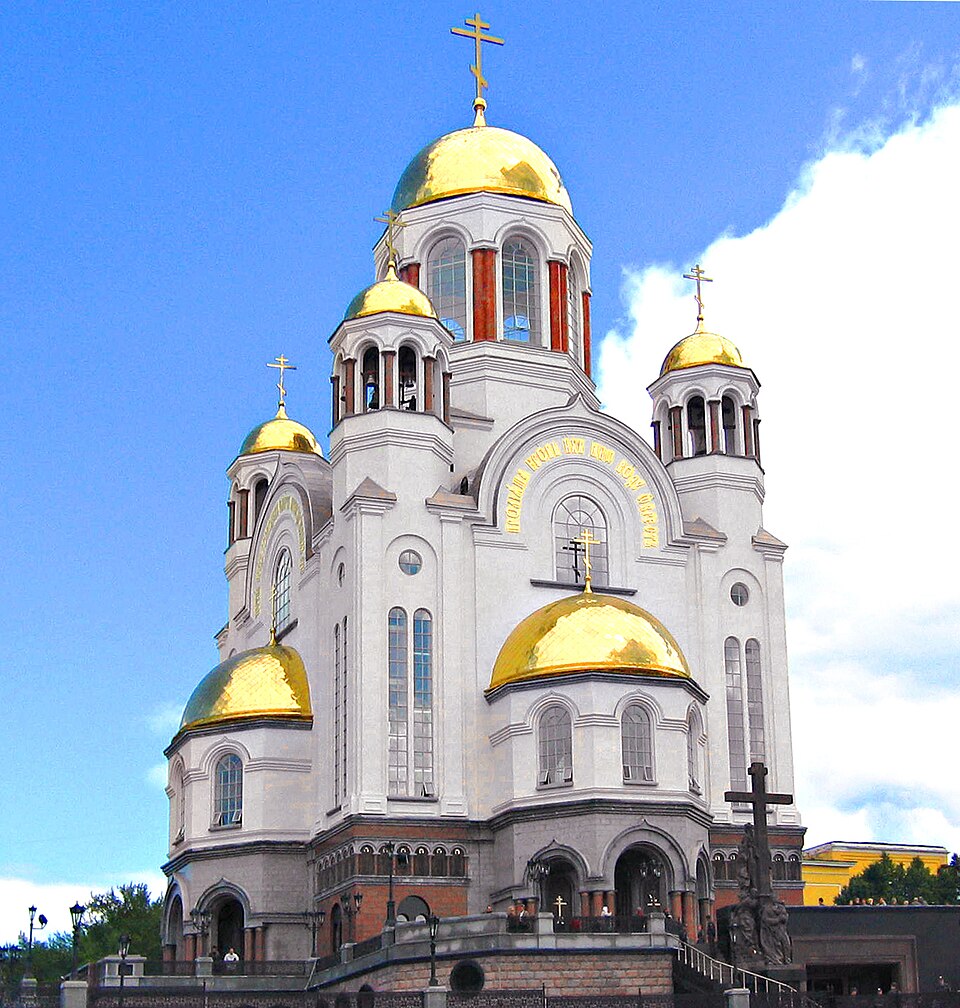
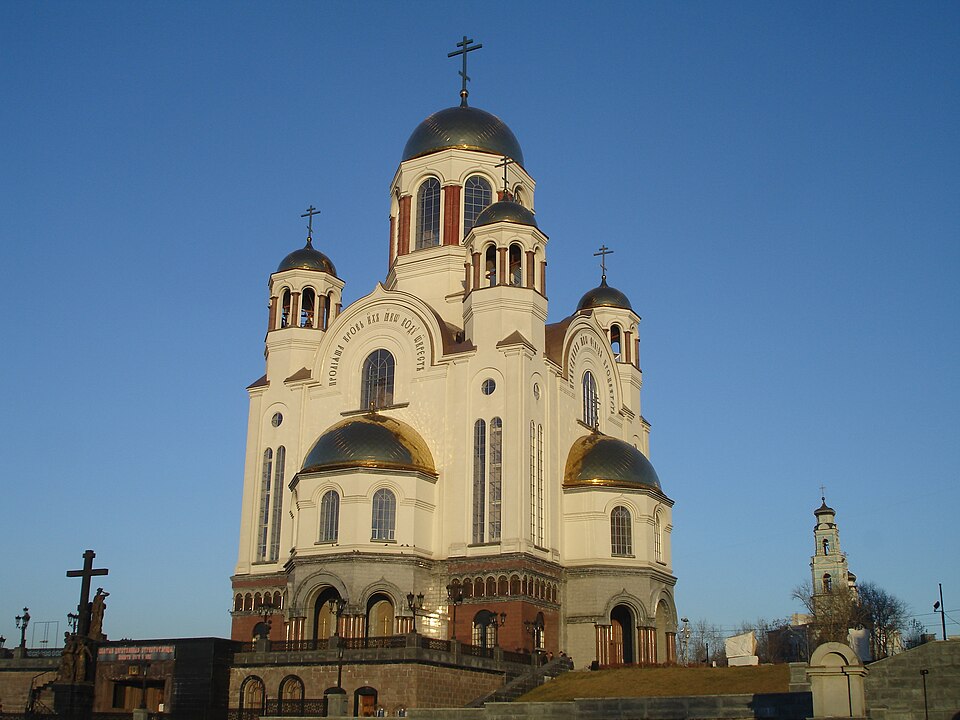
This church looks considerably older than it is. Its golden domes and monumental forms refer to traditional Russian religious architecture, but the building dates from the early twenty-first century. It did not replace an ancient cathedral. Its history is connected with a vanished house and a tragedy that made this address known far beyond Yekaterinburg.
The house of engineer Nikolai Ipatiev stood on this site. In 1918, the former emperor Nicholas II, his wife Alexandra and their five children were held here. During the night of 16–17 July, the family and four members of their household were killed in a lower room. Behind that brief historical description are eleven individual lives.
It is important to distinguish the place of the event from what stands here today. The Ipatiev House was demolished in 1977. The church was built between 2000 and 2003. What we see is a modern act of commemoration, rather than the surviving house with its original rooms and furnishings.
The complex contains upper and lower churches, offering different settings for remembrance. The upper space serves ceremonial worship, while the lower one is closely associated with the place of the killings. In Russian Orthodox tradition, the imperial family is venerated as passion-bearers. A pilgrim may experience the site primarily as a shrine; another visitor may approach it through history. Both encounters take place here.
A sculptural group beside the church depicts members of the family on a staircase, referring to their final descent into the lower part of the house. It is an artistic interpretation made many decades later, not a documentary record of every movement that night. Its focus draws attention back to people whose individual lives can otherwise become lost in political arguments and familiar royal names.
Before trying to take in the whole ensemble, separate three periods in your mind: the house before the revolution, imprisonment and death in 1918, and the creation of the present memorial. This helps explain why the site looks as it does, and why different visitors respond to it in different ways.
A quieter pause suits this stop. You can study the architecture, read historical material or enter with consideration for an active place of worship. Understanding its central significance does not require detailed knowledge of the Romanov dynasty. The name Church on the Blood points to a particular address and to the memory of people killed there.
Learn more
Why is the church dedicated to all saints who shone forth in the Russian land, when visitors associate it chiefly with the imperial family? The full dedication is wider than a single event. Within a large religious complex, individual chapels and memorial spaces may have more specific associations.
This layering of names is not unusual. The dedication of an entire church, that of a chapel and the title of a museum exhibition need not be identical.
Another distinction is helpful here. Religious veneration concerns spiritual meaning, while historical investigation examines events and surviving evidence. A memorial church brings these approaches together. When looking around, consider whether you are seeing a document, a historic object, a later artistic interpretation or a space intended for prayer. Recognising the difference makes it easier to understand both the site's historical significance and its role in the lives of those who worship here.