LISTEN TO THE PLACE
A story worth knowing
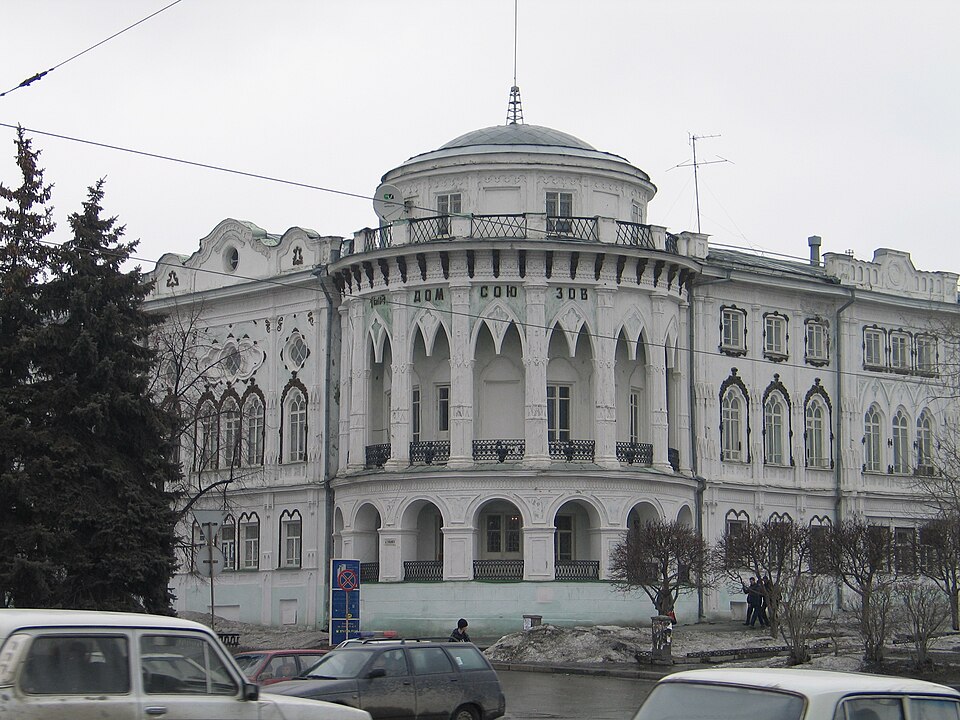
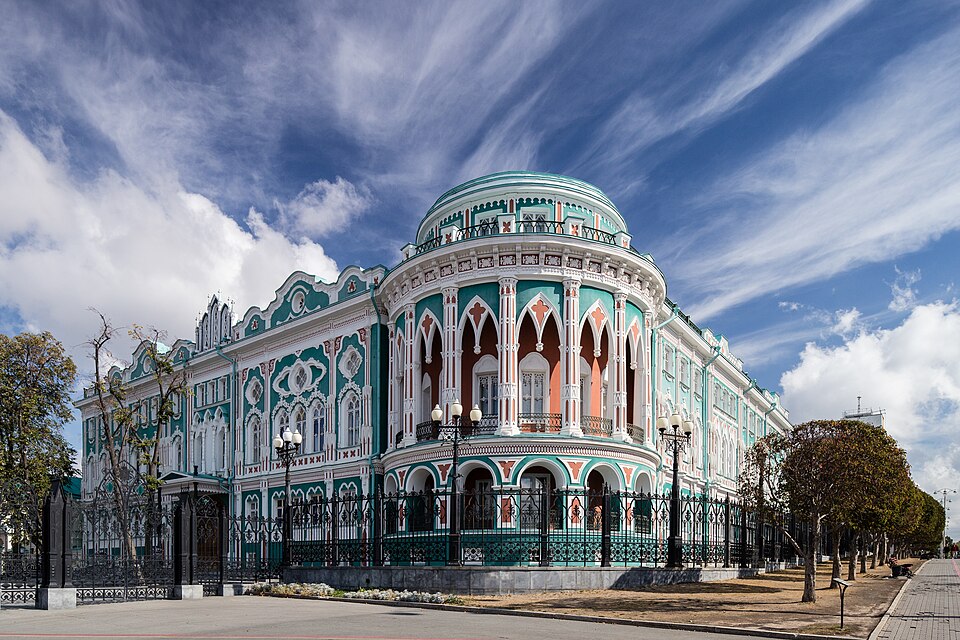
This house seems determined to attract attention by every available means. Green wall surfaces, white ornament, red accents, elaborate windows and a rounded corner with a domed top all compete for a closer look. Beside the City Pond, the effect is especially strong. In a city often associated with factories and practical enterprise, the building displays an obvious pleasure in architectural decoration.
It did not acquire that appearance in a single original design. Its earlier history predates Nikolai Sevastyanov, who bought the property in 1860. The decisive remodelling began in 1866 to a design by Alexander Paduchev. The architect created an elaborate new identity that kept the owner's surname on the city map long after his own residence here had ended.
This combination of artistic references is usually called eclecticism. Gothic and Baroque motifs are among those identified in the decoration. You do not need to recognise every style to enjoy the effect. Notice how pointed details draw the eye upwards, pale surrounds make the windows stand out, and the rounded rotunda softens the street corner. The facade becomes a three-dimensional pattern that changes as you move past it.
In 1874, the state acquired the house for the district court. A private residence became a public institution. During the Soviet period, it was associated with the trade unions. Different organisations used the rooms, while the exterior continued to distinguish the building from its neighbours. Its visual identity outlasted both its owner and successive changes of purpose.
The house underwent reconstruction ahead of international meetings in 2009. According to the Museum of Architecture, this restored a historical colour scheme lost during the Soviet years. What might seem a recent decorative invention therefore has a history of investigation behind it. Colour helps recover the architectural character rather than simply making the building more photogenic.
You may have encountered the house before visiting Yekaterinburg: it appears on the five-thousand-rouble banknote issued in 2023. On paper, it becomes a compact and recognisable emblem. Here, you can discover the details from which that emblem is made. Begin with the overall outline, then choose one window and follow its surround. That movement from a familiar image to a particular piece of workmanship turns a city symbol back into a real building, worth seeing from more than one angle.
Learn more
The best-known legend about Sevastyanov concerns a wish to cover the rotunda's roof in gold. Different versions describe official refusal, and some add a punishment for his excessive pride. These details belong to local folklore rather than a securely documented episode.
The appeal of the story is easy to understand. A house already covered in ornament invites the storyteller to imagine one final extravagance. An architectural impression becomes a portrait of its owner: generous, vain or stubborn, depending on the version.
Try separating what is visible from what has been imagined. The exuberant facade is here; the owner's intentions and supposed conversations with officials require evidence. The legend can remain an entertaining part of local memory without replacing biography. In any case, the house does not need a golden roof to surprise us. Its actual decoration is already bold enough beside a pond created for an industrial city.