LISTEN TO THE PLACE
A story worth knowing
Ganina Yama lies outside a normal walk through central Yekaterinburg and requires a separate journey. It is a place of remembrance for Nicholas the Second's family and the people killed with them in 1918, rather than an ordinary architectural sightseeing stop.
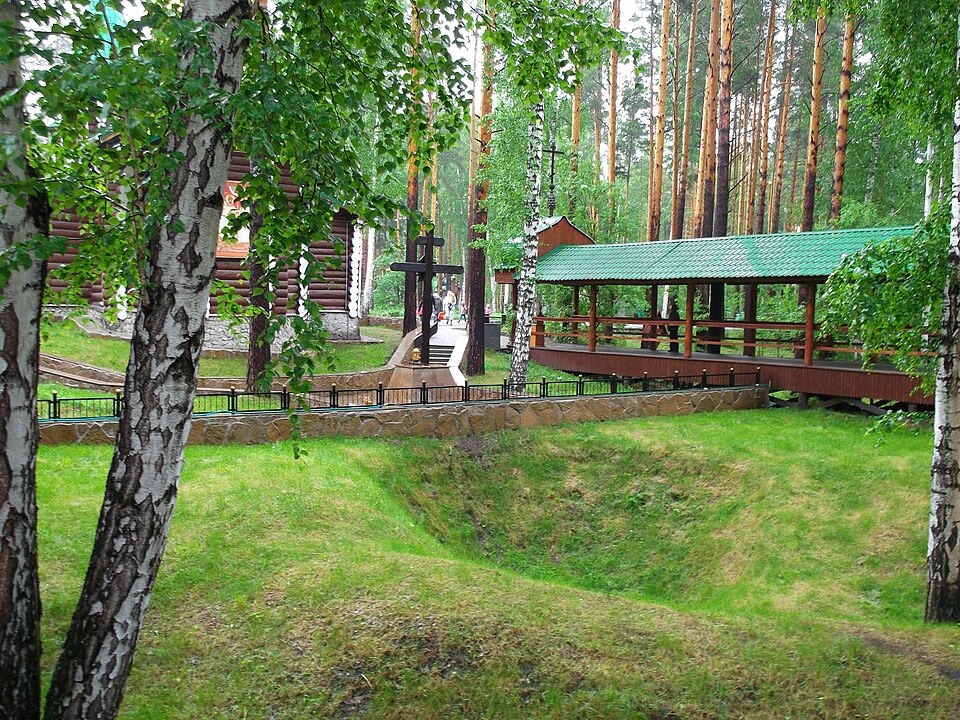
The site was originally a mine. Its name belongs to that mining history and predates the monastery. Woodland and the remains of industrial activity became associated with one of the most tragic episodes in Russian history.
After the killings at the Ipatiev House, the bodies were taken out of the city. Ganina Yama was one of the locations connected with attempts to conceal the remains. It should not be confused with Porosyonkov Log, where burial sites were later discovered and investigated. These are different places. There have also been differences between the conclusions of state investigations and the Church's reception of the findings.
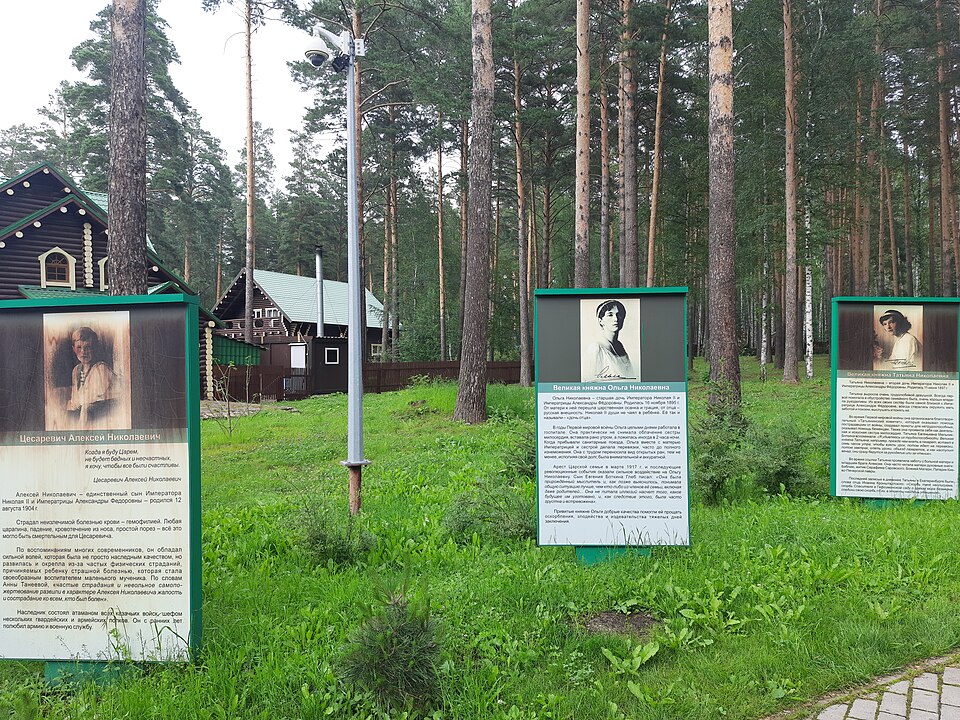
The monastery complex developed around the turn of the twenty-first century. Its wooden churches create a distinctive setting among the trees. They were built long after 1918 as an expression of religious remembrance and should not be imagined as witnesses to the original events.
Keep three layers in mind during your visit: the former mine, the events of the civil-war period and the modern memorial monastery. Together they explain the place more accurately than a single dramatic account.
Observe the monastery's visitor rules and allow room for silence. This is not a site that needs to be approached as a mystery or a search for a striking photograph. Walking the permitted route thoughtfully is enough to see how remembrance has been created where people once tried to erase the evidence of human lives.
Learn more
Historical investigation and a memorial setting serve different purposes. An investigation seeks to establish circumstances and the location of remains; a religious community creates a place for prayer and remembrance. The two can be connected without being identical. Accounts of Ganina Yama therefore require careful wording, particularly when distinguishing locations and separating later memorial architecture from the evidence of 1918.