LISTEN TO THE PLACE
A story worth knowing
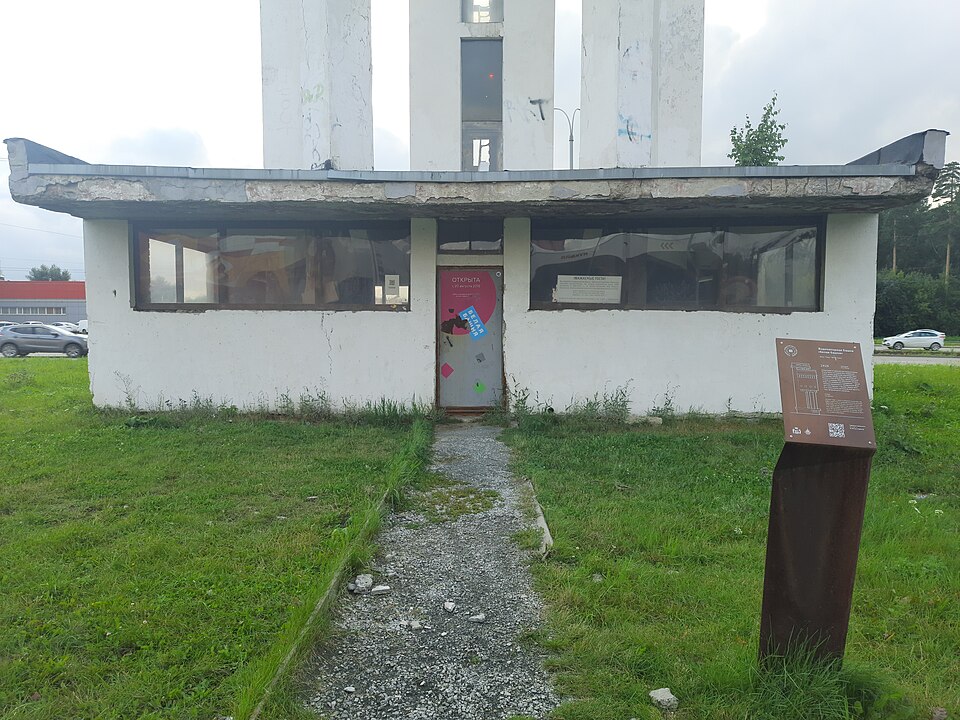
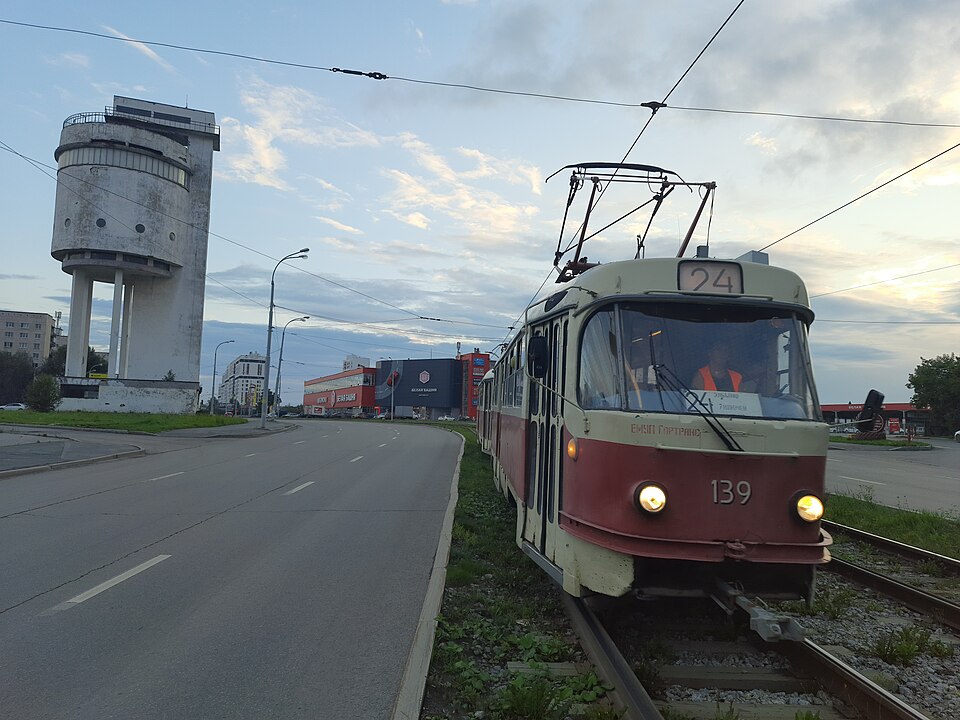
Without knowing its purpose, you might take this building for an experimental sculpture. A large cylinder hangs above the ground beside a tall vertical section, with windows cutting into the surfaces. Yet this is a water tower. Its striking shape grew from the practical task of supplying a new industrial district with water.
Designed by Moisey Reisher and completed in 1931, the White Tower belonged to the development of Uralmash and its residential district. A new industrial community needed more than factory workshops. Homes, streets and utility networks were essential parts of the same undertaking.
The principle of a water tower is straightforward. Water is raised into a reservoir, and the difference in height helps provide pressure in the distribution system. The large volume at the top was therefore not an arbitrary architectural gesture: it housed the tank. Reisher made that engineering requirement into a memorable urban form.
This offers one way to recognise Constructivism. Instead of adding decoration to a conventional façade, the architect works with the building's volumes: a cylinder, a vertical prism, supports and bands of windows. Notice where the shapes meet, then change your viewpoint slightly. What seemed like a flat emblem becomes a three-dimensional composition, with its parts shifting in relation to one another.
The tower is about twenty-nine metres high. That is modest by skyscraper standards, but world records were not essential to its role. Its elevated position and relationship with the line of Kultury Boulevard made it a landmark within the district. A piece of infrastructure became a recognisable public face, rather than something hidden out of sight.
By the 1960s, development of the city's water network had made the original function redundant. The structure remained but lost its everyday job. Reisher proposed adapting it into a café, an idea that was never realised. Years of neglect followed. Later, public efforts to preserve it brought new research and the search for a cultural role.
The tower raises a difficult question: what should happen to a useful structure once its original use disappears? Admiring the outline alone cannot preserve it. Maintenance, investigation and committed people are also required. Its story now includes both the confidence of those building a new industrial district and the determination of later generations to keep this unusual part of it alive.
Learn more
Restoration does not always mean making a new detail look old. The White Tower's conservation project discusses precisely this choice in relation to doors. One option was to invent a design that looked like the 1920s. Another was to make the modern addition clearly identifiable. The team chose the latter approach.
Why show the difference? When a new feature convincingly pretends to be historic, visitors may misunderstand the building. It becomes difficult to distinguish surviving material from something introduced for present-day use.
Try asking the same questions at another restored monument: which elements are original, which have been reconstructed from evidence, and which are contemporary additions? Conservation need not erase every trace of time. It can also make successive periods easier to read. Here, a new cultural role should support the survival of an engineering landmark while allowing its actual history to remain visible.