LISTEN TO THE PLACE
A story worth knowing
The Yeltsin Center explores a past that many visitors remember personally. Its story concerns the upheavals of the late twentieth century: the collapse of the Soviet Union, the creation of a new Russian state and the difficult experience of the 1990s.
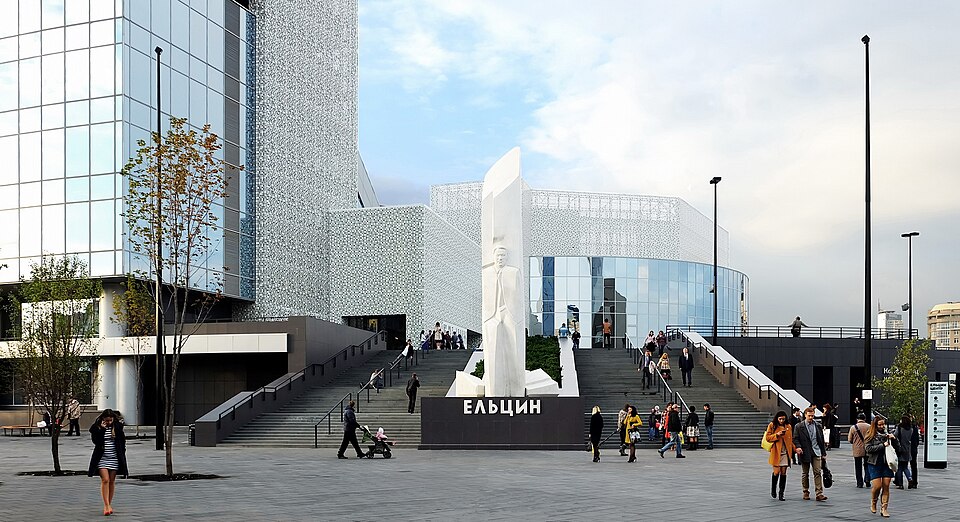
The centre opened in Yekaterinburg in 2015. The city was chosen because Boris Yeltsin studied, worked and began his political career in the Urals. Yet the complex is more than a biography of one person. Alongside the presidential museum are spaces for exhibitions, education and public events.
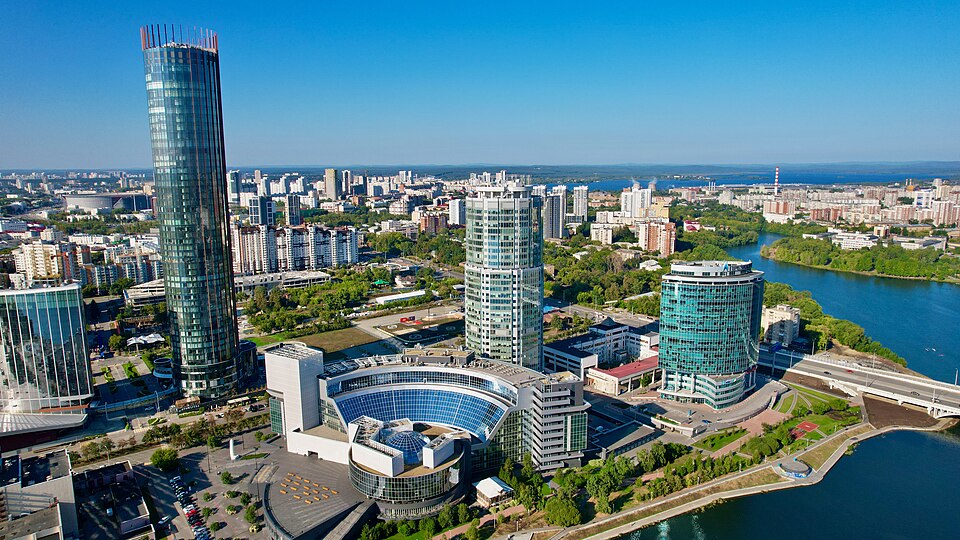
Look at the façade. Its contemporary appearance differs sharply from the familiar idea of a memorial house. The architects had to adapt a building whose construction had already begun for another purpose. The result belongs to a history of transformation as much as new design.
The museum organises its narrative around selected turning points. Documents, objects and multimedia displays create a sequence of experiences through which visitors encounter political change. This can be emotionally effective, but every exhibition is also a selection and interpretation of events.
Assessments of the 1990s differ greatly. Some remember new opportunities; others recall economic loss and insecurity. A productive visit allows personal memories to be compared with documentary evidence without assuming that either can replace the other.
Even from outside, this stop reveals a particular aspect of Yekaterinburg. The city is examining recent political history as well as its industrial heritage. Notice the relationship between the public spaces and the waterfront: a complicated, contested past has been placed within an ordinary urban walking route.
Learn more
A presidential centre differs from a conventional monument. A monument often offers one concise statement, while a museum can present documents, compare circumstances and raise questions. That does not make an exhibition entirely neutral: the selection and arrangement of events still shape its argument. Pay attention to the structure of the story as well as the individual objects on display.