LISTEN TO THE PLACE
A story worth knowing
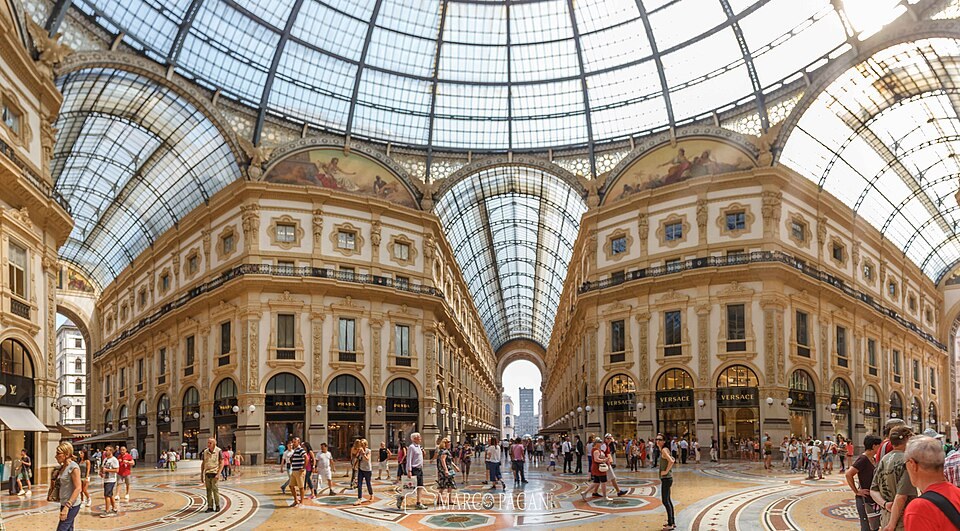
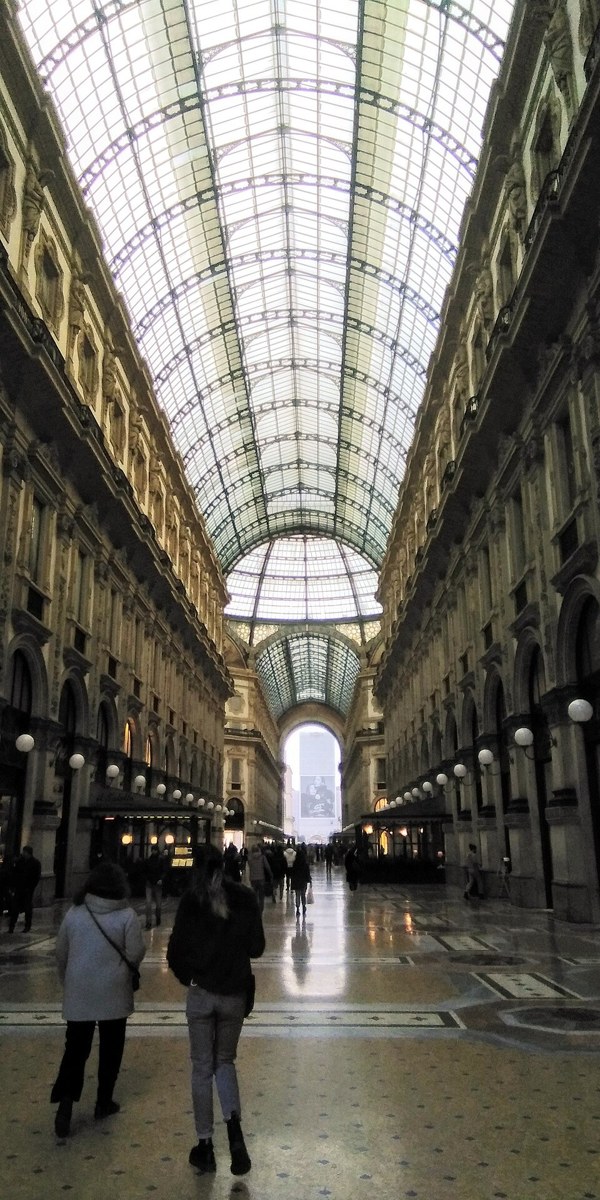
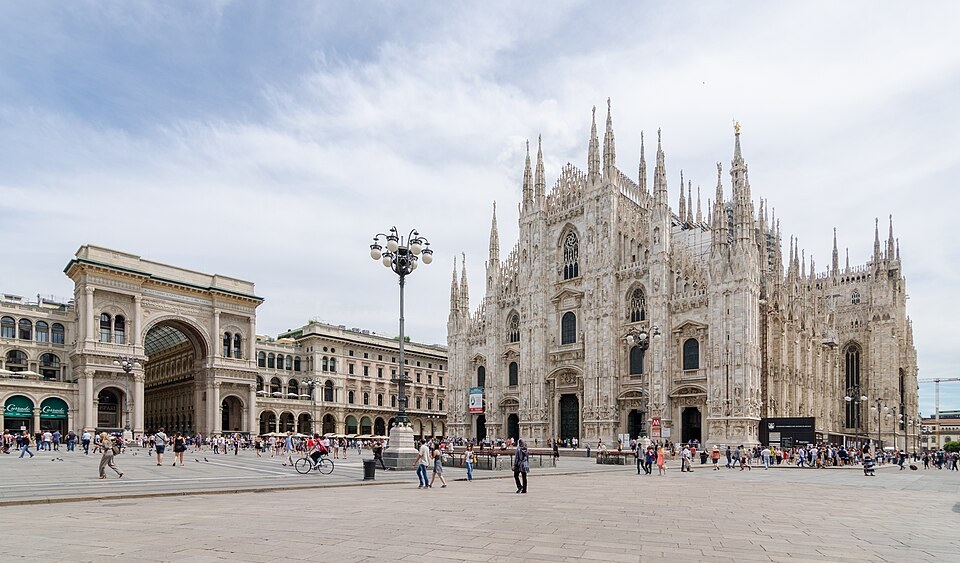
From Piazza del Duomo, the entrance can look like a particularly grand shortcut. Walk a little farther and an immense glass roof opens above you. The street continues, but its light and sound change. Shop windows pull your attention sideways, the patterned floor draws it down, and the dome invites you to look up.
Giuseppe Mengoni designed the Galleria Vittorio Emanuele the Second in the nineteenth century. Its name honours the first king of a united Italy. For Milan, the project combined commerce with a public statement: this was a city presenting itself as modern, prosperous and part of a newly unified country.
Imagine removing the luxury brands for a moment. Most of the splendour would remain. The real spectacle is the covered street itself, with metal and glass above monumental interior facades. Industrial engineering made the roof possible, while the architecture gave shopping and walking the ceremonial setting of a major civic space.
The Galleria links the cathedral square with Piazza della Scala. Its position makes it useful as well as impressive. People cross it to reach another part of the centre, meet friends or continue an ordinary journey. That helps explain its familiar nickname, Milan’s drawing room. A drawing room is a place for conversation, observation and the small performance of being seen.
At the central octagon, pause somewhere clear of the main flow. Watch how the different passages meet beneath the dome. Then look for the coats of arms in the floor. One contains a bull, the emblem of Turin. A well-known local superstition invites visitors to turn on their heel over the mosaic for good luck. It is a belief and a playful custom, rather than a historical guarantee. The wear caused by generations of hopeful feet has become a story of its own.
Raise your eyes from the windows to the upper levels. Repeated openings, balconies and ornament bring the different businesses into a single architectural rhythm. The building turns many separate transactions and meetings into something shared.
You do not need to buy anything to enjoy that effect. Follow the reflections above, listen to footsteps and conversation, and compare the view towards the Duomo with the passage leading to the theatre. Within one short walk, Milan places worship, music, trade and public sociability beside one another. The Galleria makes those connections feel like a natural part of the same city.
Learn more
The Galleria once had a small mechanical celebrity. Its high gas lamps were lit by a device that travelled along rails, carrying a flame from one lamp to the next. Milanese spectators nicknamed it the rattin, or little mouse, because of the way it hurried overhead. The official city guide records this story. Looking up at the roof, imagine the daily work behind the spectacle as well as the grand opening. Milan’s elegant drawing room depended on maintenance, useful machinery and the people who kept everything operating.