LISTEN TO THE PLACE
A story worth knowing
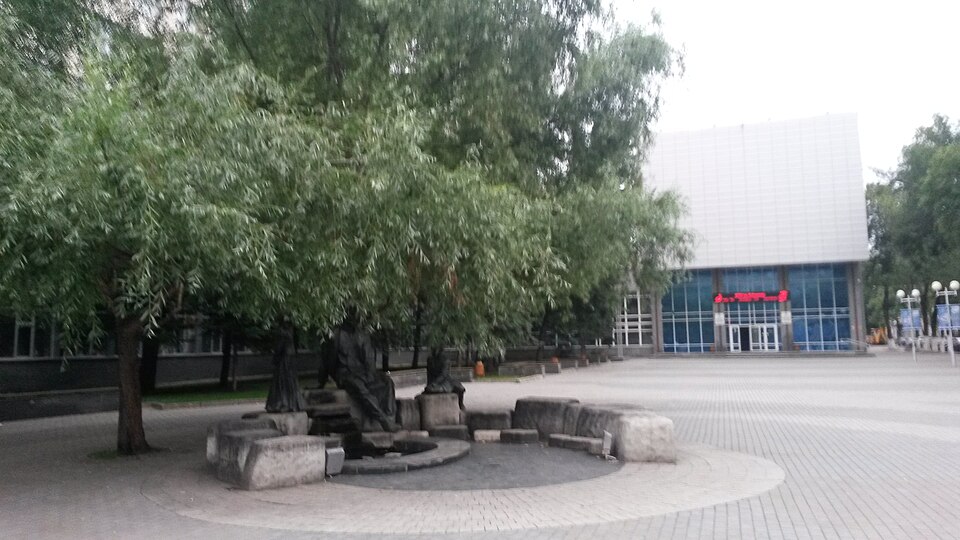
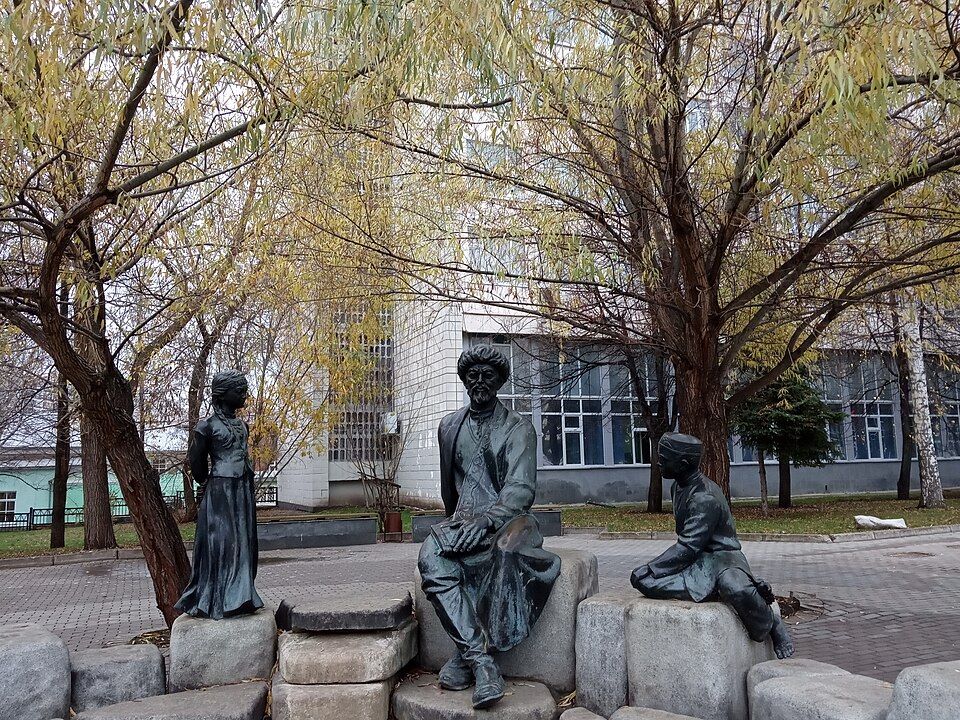
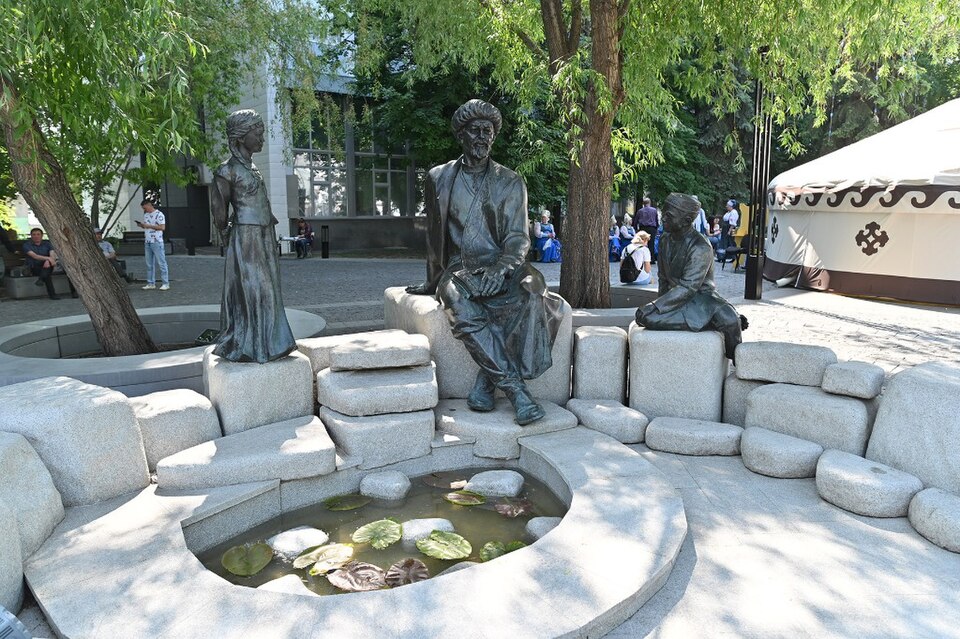
In front of the pedagogical university, this monument invites you to imagine an ordinary conversation between a teacher and children. Miftahetdin Akmulla sits among stones, with young listeners beside him. There is no tall column separating him from people passing through the square. The group is close to human level, so you can read it as a small scene: who is speaking, who is listening, and where are their eyes directed?
Akmulla was a nineteenth-century poet and educator. Encouraging people to learn was an important theme in his work. That makes the setting beside a university especially meaningful. Future teachers study in the building, while the sculpture outside presents the encounter through which knowledge is shared. Think for a moment of someone who explained something important to you. You may remember their voice and patience as clearly as the lesson itself.
The monument opened on October 8, 2008. Sculptor Vladimir Dvornik and architect Damir Magafurov created the composition, and the bronze figures were manufactured by Lit Art. Those facts reveal the work behind a finished public sculpture: arranging the figures, deciding how they relate to their surroundings, choosing a material, and turning a model into something durable.
Move a few steps to one side, keeping to the path. Notice how the figures change in relation to one another. From one angle, the teacher’s face may draw your attention. From another, you may notice the children listening. Small changes like these make walking around a sculpture more rewarding than taking a single photograph from the front. The scene stays still, but its emphasis shifts with your viewpoint.
There is no need to invent words for the characters. This is an artistic image of education, rather than a record of one particular conversation. It leaves room for your own experience. Most of us know the moment when an explanation suddenly becomes clear. Finding a reminder of that moment in a city square can bring a historical name closer to everyday life.
Before leaving, look at the university and the group together. Their connection is tangible: learning continues inside the building, while the figures outside remind us of conversation between generations. On a walk through Ufa, this is a place to pause and consider something simple: what would you still like to learn?
Learn more
Try a small experiment with your viewpoint. First look at the whole group from a distance. Then come closer along the path and choose one detail: the turn of a head, the position of a hand, or the space between the figures. What helps you understand the scene without reading an explanatory sign?
Sculpture has to tell its story without a speaking voice. Posture, direction of attention, and the arrangement of bodies do that work. Here, the teacher’s role is expressed through the presence of listeners. The person sharing knowledge matters, but so do the people receiving it. Imagine the composition without the children. Would it mean the same thing?
You do not need specialist vocabulary for this kind of looking. Compare your first impression with what you notice after moving around the group. Perhaps a familiar name caught your attention at first, and a human relationship emerged afterward. That can be a good reason to stay beside a public sculpture for another minute.